Widely Used Birth Control Comes With Brain-shaped Asterisk

Vial of Depo-Provera and syringe on medical tray

Per the CDC, roughly 1 in 4 sexually active American women have used the form of birth control Depo-Provera. Studies, though, found that the effects of this injectable go beyond contraception. The government paper trail also keeps growing, regarding the risks it may cause.  A JAMA Neurology study found a 2.43-fold higher risk for developing a brain tumor among users. Just this month, on July 2, 2026, another JAMA study flagged the injection as having the strongest risk of brain tumor development of any contraceptive. (This study also reported reassuring news: risk fades within roughly five years of stopping. Additionally, absolute risk stays low, as less than 5 in 10,000 women have this extremely negative effect.)

According to the Mayo Clinic, “Depo-Provera is a birth control shot that has the hormone progestin.” In actuality, it injects medroxyprogesterone acetate, a synthetic version of the natural hormone progesterone.  Long-term use of this injection can result in meningiomas, which are usually benign brain tumors. Meningiomas, though, can crowd the brain, triggering headaches, vision loss, and seizures. In December 2025, the U.S. Food and Drug Administration ordered a warning on the Depo-Provera label.

Meanwhile, Pfizer reached a June 2026 settlement covering over 5,500 federal lawsuits alleging it downplayed the danger. Though this number may seem large, the percent of Depo-Provera users it represents is small. So, users shouldn’t panic but should talk to their doctor about duration of use.

The Post-TBI Weight Gain No Diet Could Stop Until Now

For some survivors, uncontrollable gain weight can be a consequence of a brain injury. The condition, known as acquired hypothalamic obesity, strikes when there is damage to the hypothalamus, the brain region that regulates hunger and energy balance. Once that control center is disrupted, patients are left with relentless hunger and rapid weight gain that resists diet and exercise alone. (Most often, the condition follows treatment for brain tumors, but traumatic brain injuries and strokes can trigger it too.)

Pharmacist pointing at a medication bottle while a woman and a young man listen

Those with this condition previously have nowhere to turn for real help, but that changed on March 19, 2026: the U.S. Food and Drug Administration approved setmelanotide, sold as Imcivree, as the first therapy specifically designated for this rare disease. The drug works by restoring hormone signaling along the MC4R pathway, which is the same circuit the injury disrupts.

The approval followed the largest placebo-controlled study ever conducted for this condition, published in the New England Journal of Medicine on July 8, 2026. Patients on the drug saw a 16.5 percent average drop in BMI, compared with a 3.3 percent increase among those on the placebo. Trial co-author Dr. Reema Habiby confirms, “These results offer real hope to children and families who have had very few options.”

A Dangerous TBI Two-Way Street

A traumatic brain injury doesn’t just raise your risk of later neurological disorders; preexisting neurological disorders may raise the risk of brain injury, concludes a recent 2026 study from the San Francisco Veterans Affairs Health Care System.

Diagram showing circular relationship between brain injury and epilepsy with arrows indicating feedback loop and mutual exacerbation of seizures and brain damage

Published June 17, 2026. in the journal Neurology, the Department of Defense-supported study tracked more than 55,000 older veterans. Scientists found that traumatic brain injury was tied to higher rates of stroke, dementia, epilepsy, and Parkinson’s disease both before and after the injury. “Our findings raise the possibility that… [pre-existing brain diseases] are themselves risk factors for TBI in older people,” said study author Carrie Peltz, PhD, of the San Francisco Veterans Affairs Health Care System.

In the year before a TBI, older veterans were about three times more likely to have been diagnosed with stroke, dementia, or Parkinson’s and more than four times more likely to have epilepsy. After a TBI, they were roughly twice as likely to have a stroke or epilepsy. This results greatly build on an Oxford Academic, PubMed-accessible, 2025 study that found, “Among those with TBI, patients with pre-injury dementia had particularly high chronic mortality.” While causality has not firmly been medically defined, the study’s results are clear.

Women With Brain Injuries Less Likely to Reach Trauma Centers – But the Full Picture Matters

Male patient with head injury eating with visitor and female patient with head injury writing

A major new study published June 15, 2026, in the Canadian Medical Association Journal (CMAJ), and found in the PubMed database, reveals a striking inequity: women hospitalized with traumatic brain injury (TBI) in Ontario are significantly less likely than men to be admitted to specialized (Level I or II) trauma centers. After adjusting for age, injury severity, comorbidities, and income, women’s odds for prompt treatment remain 26% lower (OR 0.74) than that of men.

The finding echoes earlier work: a 2022 US study found that female trauma patients, including those with TBI, experienced longer delays to reach trauma care than men even after accounting for injury severity and type. An accompanying editorial was pointedly titled “Sex Disparities in Trauma Care -Why Are the Women Waiting?” Other U.S. research similarly documents women being undertriaged in emergency departments despite comparable injuries.

Yet context is essential. Per CDC data reported in 2018 and 2020, males were nearly two times more likely to be hospitalized for a TBI (79.9 age-adjusted rate versus 43.7) and three times more likely to die from one than females (28.3 versus 8.4). Even in the Ontario study, men had more severe head trauma (33% vs 25%). The disparity in care is real and demands attention, but men remain more likely to sustain, and die from, TBI overall.

VA’s MDMA Trial Offers New Hope, Particularly for the Brain Injured

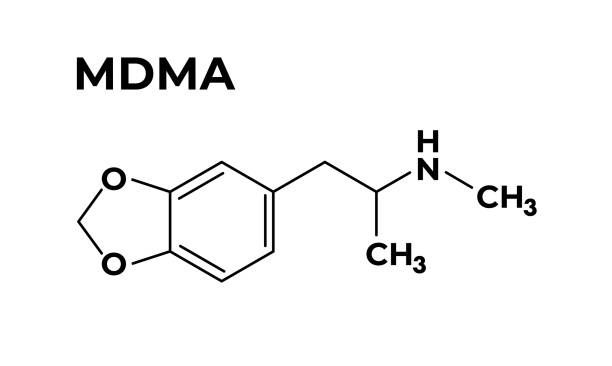
On May 26, 2026, the VA announced a clinical trial to test MDMA-assisted therapy for veterans battling PTSD and alcohol use disorder. The study, which began enrollment quietly on May 18, is one of 19 psychedelic trials the VA is funding through $23 million in external grants, enrolling approximately 80 veterans at facilities in Providence, Rhode Island, and West Haven, Connecticut, with results expected in May 2030.

The trial will study the safety and effectiveness of MDMA-assisted therapy to address conditions that do not fully respond to standard treatments. For those living with traumatic brain injury, the treatment’s benefit may be significant. Research shows that patients with head injuries are more likely to develop PTSD than those without a TBI history. Studies confirm that veterans with probable TBI have 1.72 times greater odds of developing PTSD.

“This trial represents an important step in safely evaluating new approaches and innovations to treat Veterans with severe mental health conditions,” said VA Secretary Doug Collins. For the hundreds of thousands of veterans carrying both a damaged brain and a traumatized mind, it may represent something even more profound: a second chance at healing.

Another Study Links TBI & PTSD to Cognitive Decline – But Not Through Brain Plaques

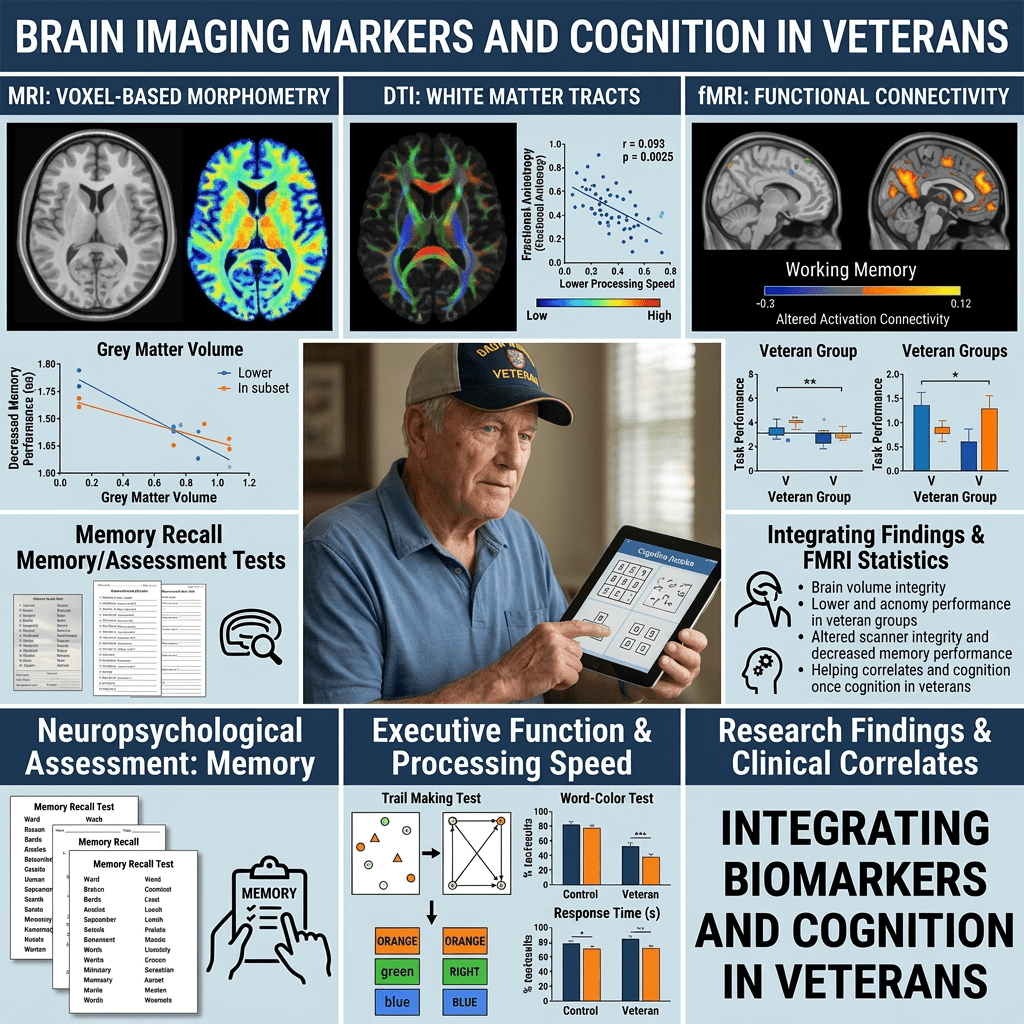
A study published May 30, 2026, in the Journal of Alzheimer’s Disease is reshaping how researchers understand cognitive decline in combat veterans. Using data from the Department of Defense’s Alzheimer’s Disease Neuroimaging Initiative, USC researchers examined how TBI and PTSD affect brain imaging markers and cognition in a U.S. veteran population.

Brain imaging results and cognitive test data assessing memory and executive function in veterans

The study found that greater PTSD symptom severity was linked to poorer performance across all three cognitive tests used, and higher TBI severity correlated with lower scores on the Mini-Mental State Examination. What is striking about these findings is that they did not show that TBI severity nor PTSD symptoms were associated with neuroimaging biomarkers of neurodegeneration or vascular damage.

This discovery suggests that cognitive impairment in veterans may not stem directly from the accumulation of Alzheimer’s pathologies or vascular injuries. This matters enormously for treatment. It suggests veterans’ cognitive struggles may require targeted interventions beyond standard dementia pathways – a finding directly relevant to legislative reauthorizing of funding for federal TBI surveillance and research programs.

FDA Fast-Tracks Bayer’s Prescription Protection Against Secondary Stroke

Modern Bayer U.S. headquarters building with glass windows and flags outside

Bayer’s OCEANIC-STROKE trial found asundexian cut recurrent ischemic stroke, secondary stroke, by 26% without significantly raising bleeding risk, revealed a study, published April 15, 2026. After these encouraging study results, on May 19, 2026, Bayer announced the U.S. Food and Drug Administration granted priority review for asundexian, an investigational once-daily pill, for patients following a non-cardioembolic ischemic stroke* or transient ischemic attack**.

Stroke is an acquired brain injury and surviving one does not eliminate the danger. The CDC estimates stroke costs the U.S. $56.2 billion annually, straining Medicare and Medicaid. Federal programs like Million Hearts, co-led by CDC and CMS, reflect Washington’s focus on this crisis.”Secondary stroke remains a serious and persistent challenge, and the FDA’s Priority Review designation underscores the urgency of advancing potential new approaches,” said Yesmean Wahdan, M.D., of U.S. Medical Affairs at Bayer. Affecting roughly one in ten survivors within one year, a secondary stroke occurs when the same underlying conditions that caused the first, such as arterial damage and clot formation, go unresolved. Recurrences are often more severe, causing greater disability or death.

Reserved for treatments that could improve care for serious conditions, the designation accelerates the FDA’s review from ten months to six.

*Per NIH: A non-cardioembolic ischemic stroke occurs when a blood clot blocks an artery supplying blood to the brain, but the clot originates locally (e.g., from narrowed neck arteries or plaque rupture) rather than traveling from the heart.

**Per NIH: A transient ischemic attack (TIA) is a medical emergency. It is defined as a transient episode of neurologic dysfunction due to the focal brain, spinal cord, or retinal ischemia without acute infarction or tissue injury. 

Rethinking Fish Oil

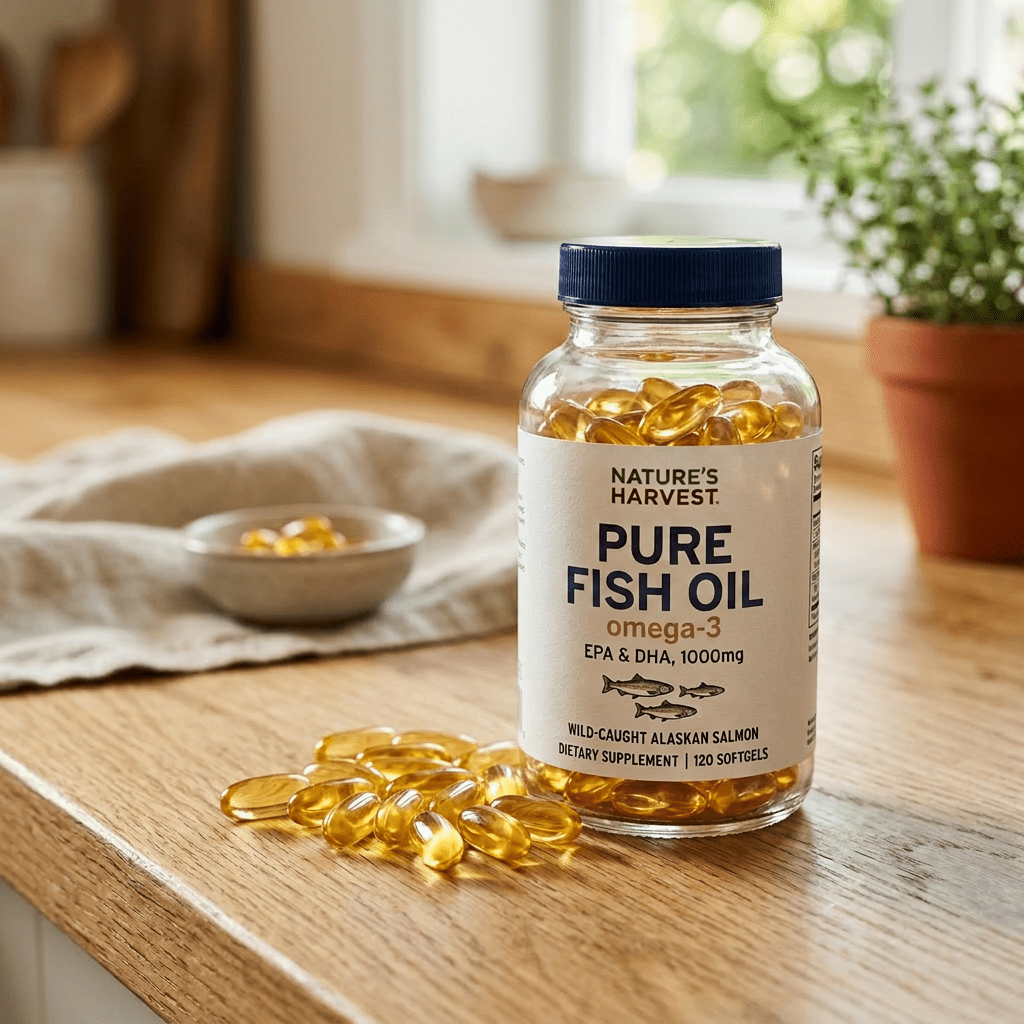
Bottle of Nature's Harvest Pure Omega-3 fish oil softgels with some capsules spilled on the counter

For years, fish oil has been championed as a go-to supplement for brain health, with athletes, military veterans, and concussion patients reaching for it as a matter of routine. But a landmark 2026 study by researchers at the Medical University of South Carolina, Cold Spring Harbor Laboratory, and Boston University is casting serious doubt on that assumption.

The issue is EPA, which is one of the two major omega-3 fatty acids in most fish oil supplements. Researchers found that EPA may disrupt the brain’s natural blood-vessel repair process after repeated head injuries, and elevated EPA levels were also detected in postmortem CTE brain tissue. Crucially, DHA, the other primary omega-3, showed no such harmful effect.

Adding to the concern are the results of a separate 2026 study using the Alzheimer’s Disease Neuroimaging Initiative. This cohort independently linked omega-3 supplement use to faster cognitive decline in older adults.

Researchers are careful to stress these findings don’t make fish oil universally dangerous. The message, however, is clear: for anyone with a history of head trauma, a conversation with your doctor is now essential before continuing supplementation.

Omega-3 May Alleviate Aggression After Brain Injury

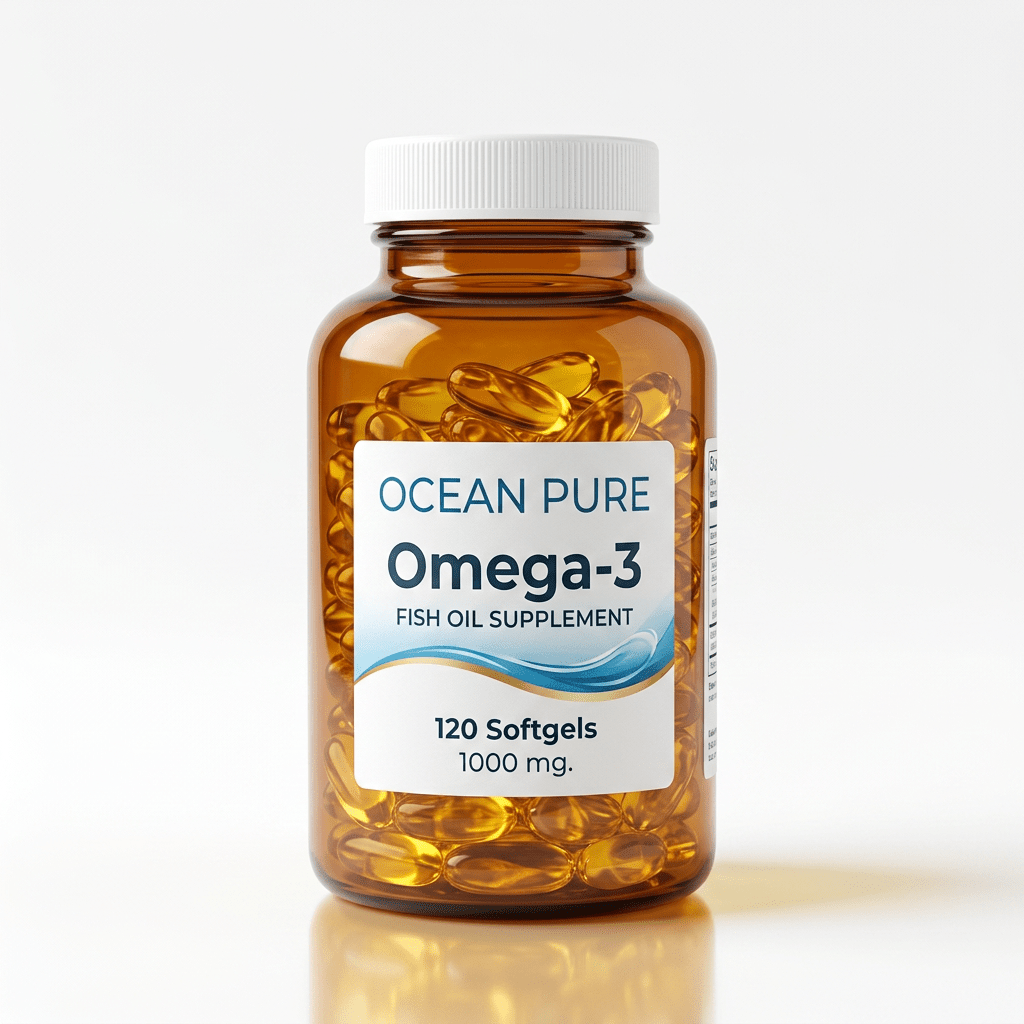
Amber bottle containing 120 Omega-3 fish oil softgels with white cap

For those with traumatic brain injury (TBI), aggression is a medical consequence, not a character flaw. The National Library of Medicine’s PubMed database documents aggression in up to 28% of severe TBI survivors within three months of injury, while research from the Model Systems Knowledge Translation Center notes that up to 75% experience significant irritability. Damage to the prefrontal cortex, which is the brain’s critical impulse regulator, is a primary driver of these behavioral changes.

New research offers a promising nutritional direction. A University of Pennsylvania meta-analysis, available on PubMed and re-amplified by ScienceAlert in May 2026, reviewed 28 randomized controlled trials with 3,918 participants and found omega-3* supplementation reduced aggression by up to 28%. Lead researcher Adrian Raine concluded, “I think the time has come to implement omega-3 supplementation to reduce aggression, irrespective of whether the setting is the community, the clinic, or the criminal justice system.”

The biology is persuasive. DHA, the dominant omega-3 in brain tissue, concentrates in the prefrontal cortex – precisely the region TBI disrupts most – while EPA suppresses the neuroinflammatory cascade that worsens secondary injury. No TBI-specific clinical trial has yet directly targeted post-injury aggression as a primary outcome, but for survivors, omega-3 offers a low-risk, evidence-informed complement to existing care.

*Previous articles on TBIontheHill have noted additional benefits of Omega-3. Cherry-Picking Superfoods to Aid TBI Recovery (3/13/26) reported, “A cherry-chocolate brain smoothie is a good snack (tart cherries blended with cocoa powder, spinach, chia seeds, and almond milk) that delivers anthocyanins and omega-3s in one glass.” A Broader View of Diet’s Role in TBI Recovery (10/3/25) noted, “fruits, vegetables, healthy fats, and omega-3 fatty acids… These dietary interventions offer hope for… improving neurological outcomes without pharmaceutical interventions.”

Laughter May Be the Brain’s Best Medicine

Man and woman laughing with a therapy dog wearing a Doctor Bark vest

After a car accident in 2023, the therapists of a brain injured 19-year-old Kansas teen had an unconventional tool ready: dad jokes. The groan-worthy punchlines weren’t just comic relief, they were medicine. And a growing body of science backs that up.

Research indexed in the National Library of Medicine confirms that laughter triggers real, measurable changes in the injured brain. A 2023 PLOS ONE meta-analysis found that a single bout of spontaneous laughter slashes cortisol, the body’s chief stress hormone, by up to 36.7%. Since high cortisol after TBI is linked to poorer survival outcomes, anything that lessens it matters enormously. A 2017 PET-imaging study in the Journal of Neuroscience showed that laughing with others floods the brain’s reward centers with natural opioids, promoting calm and connection.

New 2026 research adds another dimension. A comprehensive neurodevelopmental analysis published in May 2026 found that processing humor is genuinely cognitively demanding – activating working memory and the frontal lobes in ways that stimulate neuroplasticity, essentially giving the recovering brain a workout. Separately, a University of Vienna brain-scanning study published in January 2026 in Frontiers in Neuroscience, and available in the National Library of Medicine database, found that laughter behavior directly predicted bonding, pro-sociality, and social liking between people – outcomes that matter deeply to TBI survivors rebuilding their lives.

As vis turns out, the best medicine may truly be free.