Tiny “Brain” Yields Big Answers About Concussions

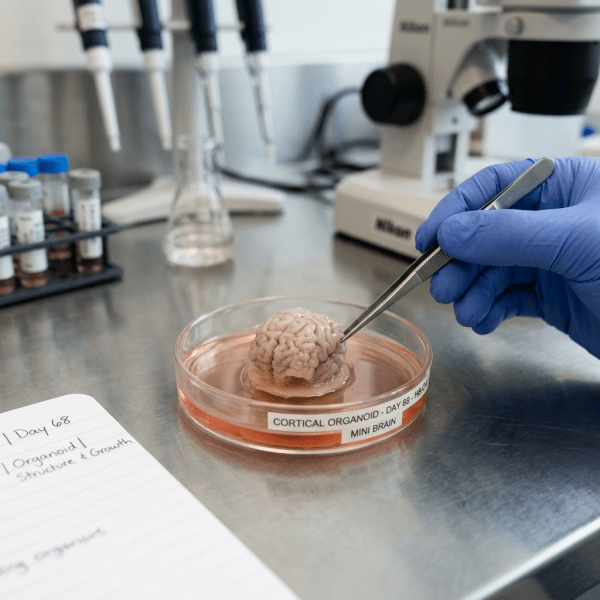
Gloved hand holding tweezers manipulating a miniature brain organoid in a petri dish on a lab bench

What if a pea-sized cluster of lab-grown cells could unlock the mysteries of brain injury? Researchers at the University of Cincinnati’s College of Engineering and Applied Science have been doing just that:

Reported by UC on April 21, 2026, UC Assistant Professor Volha “Olga” Liaudanskaya has engineered a tiny, functioning replica of human brain tissue that researchers can safely study. Termed a “mini-brain”, these lab-grown models combine three types of brain cells with two vascular cell types. This, then, creates a complex five-cell system she can observe in living tissue. Simulating concussions and mild traumatic brain injuries on this model, UC engineers can uncover how blunt-force impacts trigger cellular chain reactions that may ultimately lead to long-term neurodegenerative diseases. (Prior models lacked the vascular components, which researchers now recognize as key, driving brain inflammation and degeneration, perhaps reshaping how America protects its athletes, veterans, and kids.)

According to 2026 estimates by the Centers for Disease Control and Prevention, children alone sustain nearly 4 million concussions every year, so the results of this “mini” innovation may be enormous.

CDC Determines the Price of Brain Injury

Model of a human brain made from folded US one-dollar bills on a wooden desk

Traumatic brain injury (TBI) is not just a health crisis, it’s a financial one for the individual and the government, at large. According to a March 2026 CDC report, a compilation of more than a decade of research, “the average cost of nonfatal TBI injuries per person initially treated in an emergency department was approximately $4,530 in related medical spending and $1,500 in work loss over one year. These costs are higher for those who need inpatient care, with $51,241 in medical expenses and $6,110 in lost work.”

As everyone is at risk for a brain injury, understanding these costs is an important component in evaluating the impact of brain injury.

(Visit the CDC’s Economics of Injury and Violence Prevention page, published on March 16, 2026, to explore the full data and learn what policymakers are doing to address it.)

Generation Alpha’s Trending Trauma

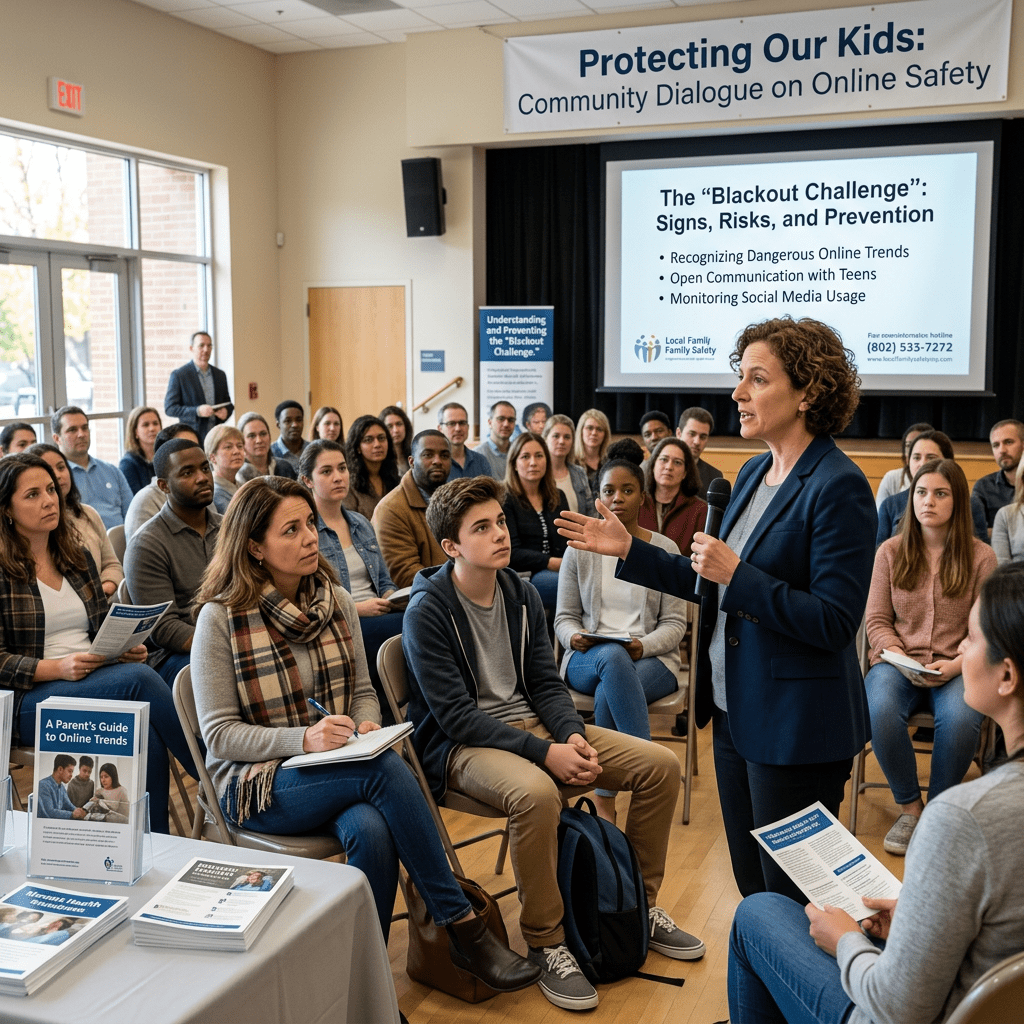
Speaker presenting to attentive diverse audience about online safety and 'Blackout Challenge' risks and prevention

In February 2026, nine-year-old JackLynn Blackwell died in her Stephenville, Texas backyard with a cord around her neck after seeing the “blackout challenge” online. A repackaging of the “choking game” that was first catalogued by the CDC in 2008, the blackout challenge is causing yourself to pass out. (This, in turn, causes “permanent, irreversible brain damage”.) It exploded on TikTok in 2021, as the For You algorithm began pushing self-strangulation videos to young users chasing a brief euphoric high from cerebral hypoxia. The trend has shown its lasting power: In South Orange Middle School in New Jersey, two students passed out after engaging in the challenge in 2024.

The blackout challenge has been noticed by politicians: on October 8, 2024, a bipartisan coalition of 14 attorney generals filed separate enforcement actions. “TikTok claims that their platform is safe for young people … [but] young people have died or gotten injured doing dangerous TikTok challenges,” remarked the group’s co-leader Letitia James (NY). In a March 23, 2026 press release, Congressman Jimmy Patronis (FL) stated, “As a parent, I cannot ignore the very real danger [the blackout challenge] poses to our children. Too many families have already suffered unimaginable loss.”  

Beyond concern, this childhood “thrill-seeking” has prompted some schools to take action. In New York, New Jersey and other states, schools have issued parental advisories in an attempt to protect children’s developmentally immature brains. One can hope that this trend is waning in popularity, and will soon be remembered only as an unfortunate episode in Generation Alpha’s past.