Generation Alpha’s Trending Trauma

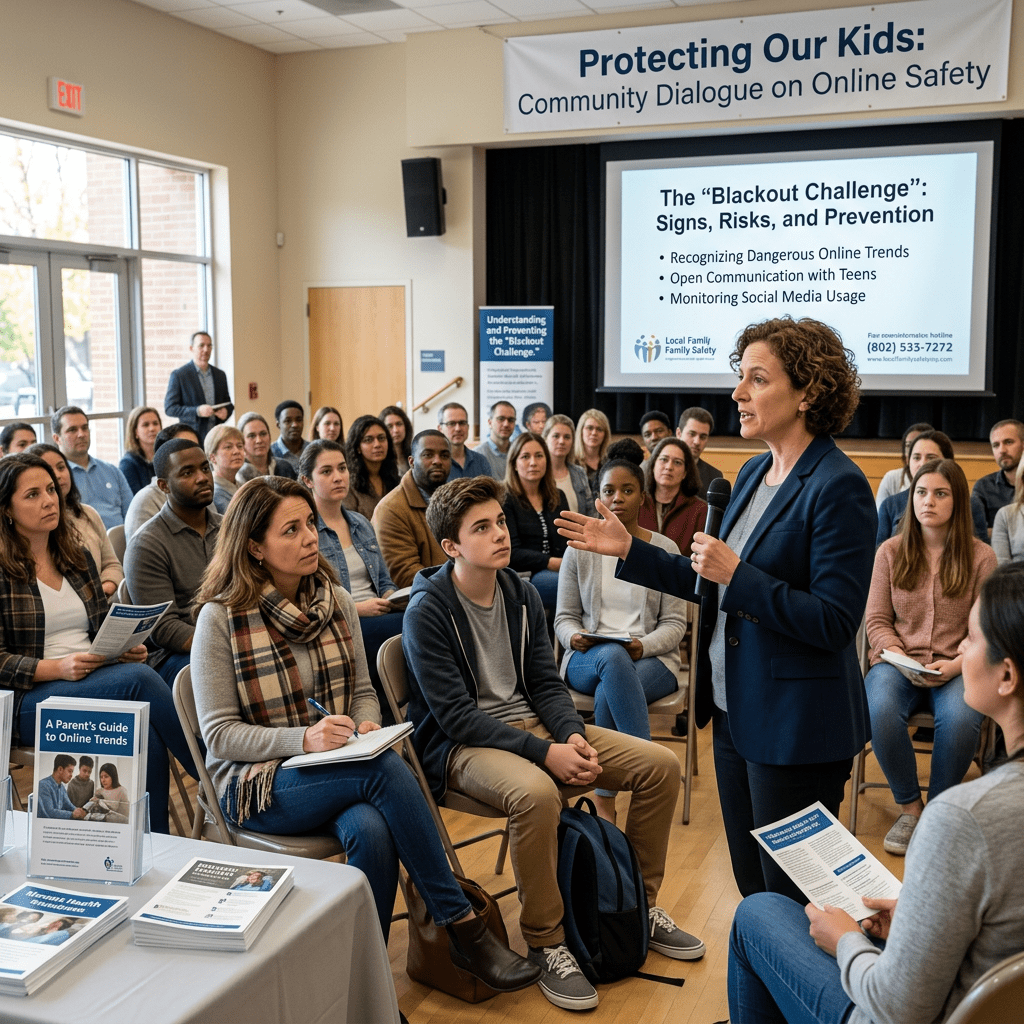
Speaker presenting to attentive diverse audience about online safety and 'Blackout Challenge' risks and prevention

In February 2026, nine-year-old JackLynn Blackwell died in her Stephenville, Texas backyard with a cord around her neck after seeing the “blackout challenge” online. A repackaging of the “choking game” that was first catalogued by the CDC in 2008, the blackout challenge is causing yourself to pass out. (This, in turn, causes “permanent, irreversible brain damage”.) It exploded on TikTok in 2021, as the For You algorithm began pushing self-strangulation videos to young users chasing a brief euphoric high from cerebral hypoxia. The trend has shown its lasting power: In South Orange Middle School in New Jersey, two students passed out after engaging in the challenge in 2024.

The blackout challenge has been noticed by politicians: on October 8, 2024, a bipartisan coalition of 14 attorney generals filed separate enforcement actions. “TikTok claims that their platform is safe for young people … [but] young people have died or gotten injured doing dangerous TikTok challenges,” remarked the group’s co-leader Letitia James (NY). In a March 23, 2026 press release, Congressman Jimmy Patronis (FL) stated, “As a parent, I cannot ignore the very real danger [the blackout challenge] poses to our children. Too many families have already suffered unimaginable loss.”  

Beyond concern, this childhood “thrill-seeking” has prompted some schools to take action. In New York, New Jersey and other states, schools have issued parental advisories in an attempt to protect children’s developmentally immature brains. One can hope that this trend is waning in popularity, and will soon be remembered only as an unfortunate episode in Generation Alpha’s past.

Bounce, Track, Heal: The Surprising Science Behind Roofball and Brain Injury Recovery

Roofball is exactly what it sounds like: players throw or hit a ball onto a sloped roof, and opponents return it before it stops. Originating in America as early as the 1960s*, the sport exploded in popularity after a 2023 Reddit post showcased the Roofball World Championships, racking up 500,000+ views. In 2024, the Roofball World Championship even aired on ESPN.

The game uses simple equipment: a ball, a roof, and competitive spirit. Players score points based on ball placement, with gutters and roof angles adding unpredictable bounces that demand quick reflexes. It can be played one-on-one or with a team, usually during the warmer months of spring and summer. Now governed by the Roofball Federation of America (RFA), which has a presence in multiple states, from New Jersey to Oklahoma, it features regional tournaments. Recreationally, the sport can be played one-on-one or with teams.

Beyond fun, roofball’s rapid tracking and catching may benefit brain injury recovery. A 2025 randomized controlled trial published in Archives of Physical Medicine and Rehabilitation, and available on the PubMed database, found that ball-sport-based exercise therapy significantly improves motor function, balance, and quality of life in acquired brain injury patients. As hand-eye coordination disruption is among the most common deficits after brain injury, the repetitive coordination of handling a bouncing ball drives the neuroplasticity essential for recovery.

Roofball shows that healing can start on your own roof.

*Other reports state that it originated is Oregon in 1998.

E-Bikes and Brain Injury: The Risks, the Recovery, and the Law

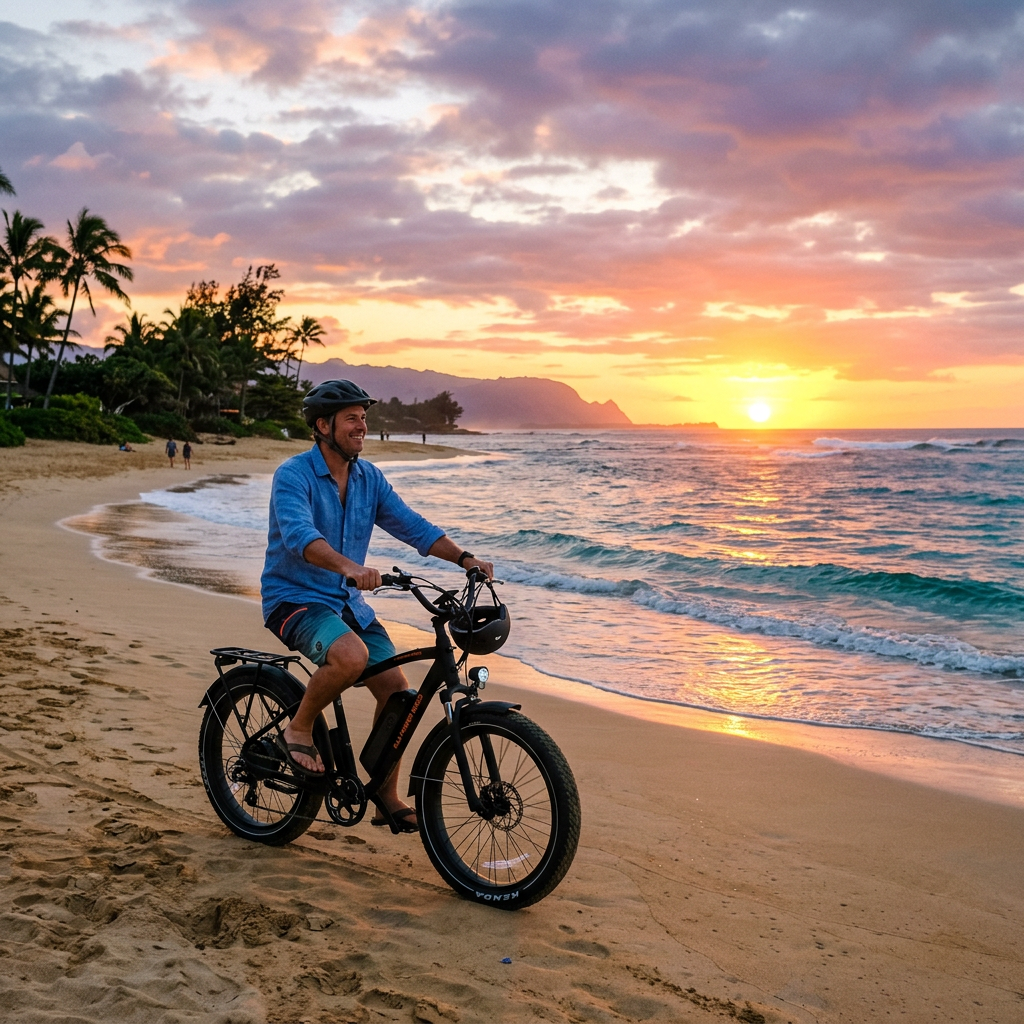
E-bikes continue to grow in popularity, allowing one to avoid automobile traffic. But because e-bikes can reach speeds of 20 to 28 mph or more, crashes carry serious consequences, including severe traumatic brain injuries. More so, studies have found that young e-bikers suffer traumatic brain injuries at nearly twice the rate of traditional cyclists (37.8% vs. 19.4%). Notably, only 44% of hospitalized e-bike riders were wearing helmets, and helmetless riders were almost twice as likely to sustain a head injury.

The case of Bella Prince, a Utah teenager who crashed her e-bike into a retaining wall at 40 mph and tumbled 25 feet down a cliff, brought special attention to the e-bike issue in the State. The teen survived because of emergency neurosurgery, but she was left with a severe traumatic brain injury. Horrific stories like Bella’s are driving legislative action. Utah’s HB 381, Electric Mobility Device Amendments, passed both the House and Senate with broad support on February 13, 2026. The bill requires helmets for e-bike riders under 21 and empowers police to impound e-bikes from unsafe riders. (As of March 16, 2026, HB 381 has not been signed into law by the governor.)

Currently, only Alabama, Connecticut, and Massachusetts require helmets for all e-bike riders of every age and class. California, Georgia, Louisiana, Ohio, Tennessee, and Virginia, mandate helmets for all Class 3 e-bike riders, with Class 3 defined as bikes that are pedal-assist up to 28 mph. California also enacted a package including AB 1778 in 2024, which created a Marin County pilot program requiring all Class 2 riders to wear helmets and banning riders under 16 from Class 2 e-bikes. In New York, pending bill S2526 would require helmets for all e-bike and bicycle riders in larger cities, though the same bill has failed in prior years. New Jersey S4834/A6235 abolished the three-class system entirely and reclassified all e-bikes as “motorized bicycles” requiring licensing, registration, insurance, and mandatory helmets beginning in January 2026. However, as of now, no federal e-bike helmet law exists.

Yet e-bikes can also be part of traumatic brain injury recovery. The pedal-assist feature allows TBI survivors with limited stamina, balance issues, or motor challenges to engage in outdoor physical activity, which research links to improved cognitive function and mental health during rehabilitation.

Ultimately, the message is clear: e-bikes offer real benefits, but only when ridden safely.

NJ’s Proposed Step Forward May Be a Step Too Far

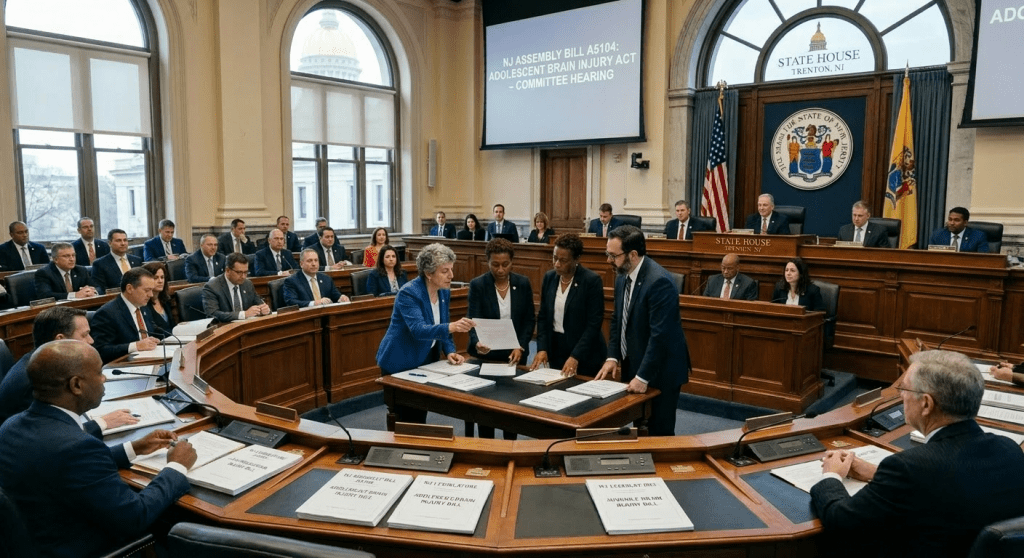
New Jersey Senate Bill S192, introduced January 13, 2026, would allow residents diagnosed with a traumatic or acquired brain injury to voluntarily add a designation to their driver’s license or state ID. The notation, stored in a Motor Vehicle Commission registry accessible to law enforcement, aims to improve interactions between officers and brain-injured individuals.

The bill is sponsored by Senate Transportation Committee Chair Senator Patrick Diegnan, with Senator Parker Space among its co-sponsors, making it a bipartisan measure. “[Individuals with brain injuries] often have differing communication styles and body language, which an officer could misinterpret. Having a designation would help to lower the risk of negative encounters,” states Diegnan.  This is not Diegnan’s first push on the issue. Predecessor bills S3673 and A2961 carried over from the 2024 – 2025 session.

Other states have already enacted comparable measures. Virginia allows residents to voluntarily add a traumatic brain injury designation to their driver’s license or ID card through the DL-145 form. Maine has codified acquired brain injury identification cards under Title 29-A, §1410-A of state statute. While New Jersey, Virginia and Maine may politically lean left, the contents of the bill are bipartisan, in relation to state. In right-leaning Tennessee, Code § 55-50-307 provides a similar acquired brain injury designation for driver’s licenses and photo ID cards.

Proponents argue the bill saves lives by reducing dangerous miscommunications during traffic stops. Critics, however, raise civil liberties concerns, as a visible disability marker could expose individuals to stigma, implicit bias, or unequal treatment. Well-intentioned protection could inadvertently promote discrimination against the brain-injured population.

What will happen to S192 in New Jersey remains uncertain. Since introduction, the Senate Transportation Committee passed it with amendment by a unanimous 6–0 vote on February 5, 2026. It now sits in Senate Budget and Appropriations Committee, before being sent to the Senate and Assembly.

Stroke Detection Mandate Comes to RAA

Richmond Ambulance Authority became Virginia’s first government-funded emergency medical service to train staff on advanced stroke detection, implementing the American Heart Association’s Essential Stroke Life Support program in December 2025. The initiative equips approximately 175 paramedics and EMTs with the BEFAST protocol – assessing balance, eyes, face, arms, speech, and symptom timing – allowing strokes to be identified faster.

During an untreated stroke, 1.9 million neurons die every minute, according to NIH-funded research. Patients receiving early treatment for this brain injury show remarkably improved outcomes, with some studies reporting 40% relative increases in independent ambulation.

With reports showing that approximately 205,000 annual EMS activations nationwide are related to suspected stroke, prehospital detection is critical. Stroke continuing education mandates, though, remain limited. States with requirements include Massachusetts, New Jersey, Virginia, California, Illinois, North Carolina, and Texas. New Jersey law N.J.S.A. 27:5F-27.1 mandates that “each emergency medical services [EMS] provider… shall incorporate training on the assessment and treatment of stroke patients”.

“Time is tissue,” explained RAA Training Coordinator Harold Mayfield. “[Most] brain tissue does not regenerate. The sooner we identify and treat, the better the outcome.”

Brain Injury Prevention on the Slopes

Katie Watt, captain of the Bates College Nordic ski team, filed suit in December 2025 after a 597-pound unsecured bench shelter struck her during track practice in October 2024, causing a skull fracture and traumatic brain injury. The case, still pending, alleges the college failed to anchor equipment despite 30 mph winds.

Maine’s ski statute 32 M.R.S. §15217 establishes that skiers accept inherent risks, including terrain, weather, and collisions, “as a matter of law,” while preserving claims for negligent operation or maintenance. Similar statutes exist in Colorado, New Hampshire, and Utah, while Vermont statues uniquely void all liability waivers. (I was told by a lawyer that, based on their experience in New Jersey, a ski slope operator is culpable only when gross negligence is proven, such as if they dug a deep hole in the slope terrain.)

Evidence-based TBI prevention emphasizes helmet use which reduces head injury risk by 29-60%. Additionally, avoid terrain parks (31% higher head injury risk), and stop skiing by mid-afternoon when 40% of injuries occur. Groomed intermediate runs, proper lessons, and pre-season conditioning significantly reduce risk.

With proper precautions, skiers can enjoy the slopes safely while understanding their legal responsibilities.

Cursive Writing Benefits to Students & the Brain Injured

Cursive writing functions as a complex motor skill that can remarkably persist even when brain injury patients lose explicit memory of how to perform it. This surprising phenomenon occurs because cursive engages procedural memory systems stored in the basal ganglia and cerebellum, which often remain intact when other cognitive functions are impaired. Recent NIH-funded research demonstrates that “attempting to write each letter produces a unique pattern of activity in the brain,” as Stanford’s Dr. Frank Willett explained in a 2025 study. A comprehensive 2025 analysis published by the NIH found that cursive writing creates enhanced connectivity across motor, visual, and memory regions.

For brain injury survivors, studies suggest cursive practice offers superior rehabilitation benefits. Unlike typing, which “relies on repetitive finger movements,” cursive engages “fine motor coordination and smooth transitions between letters,” activating broader neural networks crucial for recovery, according to recent university research. The continuous motor control required for cursive helps rebuild damaged neural pathways and enhances fine motor skills essential for rehabilitation.

Currently, many states have been dropping cursive instruction as a curriculum requirement, but recent neurological evidence has prompted policy reversals. New Jersey State Senator Angela McKnight recently advanced legislation requiring cursive proficiency by fifth grade, stating: “We’re doing our children a disservice by not teaching them a vital skill they will need for the rest of their lives.” California, Kentucky, and New Hampshire have reinstated requirements after recognizing cursive’s cognitive benefits. This resurgence reflects growing understanding that cursive writing enhances memory retention, motor control, and neural integration—benefits particularly valuable for cognitive development and including for those with a brain injury.

Linking Li to the Brain

In 2014, the National Institute of Health deemed lithium (Li) to be of medical assistance in the treatment of traumatic brain injury.  However, the NIH determination came only from the promising results of a preclinical study.  Now, Rutgers University has released the findings of a three year study, funded by the New Jersey Commission of Brain Injury Research, that corroborates the NIH’s findings.

Commonly used to treat bipolar disorder, “Rutgers researchers discovered that lithium, as well as rapamycin (an immunosuppressant used to treat cancer), protects healthy brain cells from a toxic buildup of a chemical.”  Specifically, this study identified the massive buildup of glutamate.  Glutamate is a chemical in the body that, in healthy doses, promotes learning and memory.  However, in the high doses that can result from the body’s innate response to brain injury, it can be toxic to the cells.

The current results apply to recovery only from concussion.  However, given the positive results thus far, further studies are likely to be in the works.