VT Acknowledges Your Brain Has Rights

Vermont state flag flying on a pole with mountainous landscape in background

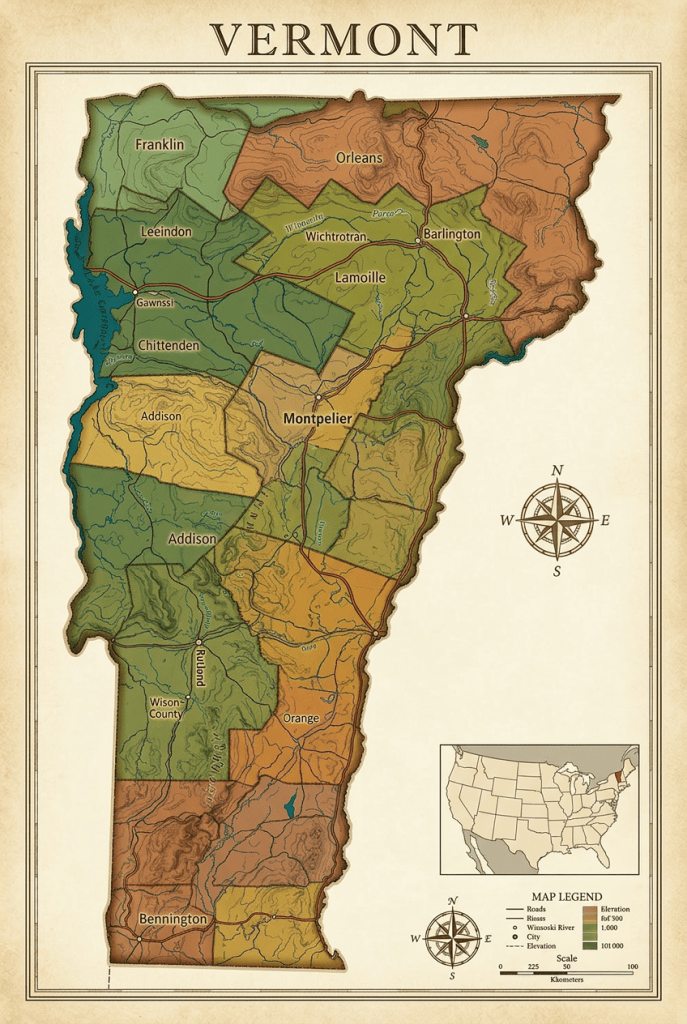
When Vermont Governor Phil Scott signed H.814 into law on May 18, 2026, it marked a quiet but historic moment: every Vermonter gained a legal right to the privacy of their own mind. For the brain injury community, which is a population that increasingly relies on brain-computer interfaces, AI-powered rehabilitation tools, and wearable neurotechnology, the law provides a crucial layer of protection for some of the most intimate data imaginable.

Formally titled “An act relating to neurological rights and the use of artificial intelligence technology in health and human services,” H.814 takes effect July 1, 2026. The bill legally recognizes what should already be commonsense: every Vermonter has a right to “mental and neural data privacy,” “the freedom of thought,” and protection from “unauthorized access to or manipulation of an individual’s brain activity.” For those with brain injuries who depend on neurotechnology for communication, mobility, or cognitive support, that last phrase is a safeguard for the data generated at the most vulnerable intersection of their lives.

With this bill, Vermont joins Colorado, California, Montana, and Connecticut, though each of which has taken a distinct approach to neurological privacy. Colorado and California moved first in 2024, amending existing consumer privacy statutes to classify neural data as sensitive personal information. Montana went further with a standalone law amending its Genetic Information Privacy Act, requiring robust consent and uniquely prohibiting the storage of neural data in U.S.-sanctioned countries. Connecticut’s 2025 amendment was narrower, covering only the central nervous system. Vermont’s law aligns most closely with Connecticut’s, in that it establishes specific rights, while directing the state’s AI Advisory Council to develop further ethical guidelines, which extends through 2030.

Sponsored by State Representative Brian Cina, a clinical social worker, Vermont’s new legislation, and beyond the aforementioned five states that have similar laws, Massachusetts, Minnesota, Illinois, and New York are currently advancing similar bills. For the brain injury community, the question is no longer whether neurotechnology will be part of care and recovery, as it already is. The question is whether the law will keep pace.

Brain Injury Prevention on the Slopes

Katie Watt, captain of the Bates College Nordic ski team, filed suit in December 2025 after a 597-pound unsecured bench shelter struck her during track practice in October 2024, causing a skull fracture and traumatic brain injury. The case, still pending, alleges the college failed to anchor equipment despite 30 mph winds.

Maine’s ski statute 32 M.R.S. §15217 establishes that skiers accept inherent risks, including terrain, weather, and collisions, “as a matter of law,” while preserving claims for negligent operation or maintenance. Similar statutes exist in Colorado, New Hampshire, and Utah, while Vermont statues uniquely void all liability waivers. (I was told by a lawyer that, based on their experience in New Jersey, a ski slope operator is culpable only when gross negligence is proven, such as if they dug a deep hole in the slope terrain.)

Evidence-based TBI prevention emphasizes helmet use which reduces head injury risk by 29-60%. Additionally, avoid terrain parks (31% higher head injury risk), and stop skiing by mid-afternoon when 40% of injuries occur. Groomed intermediate runs, proper lessons, and pre-season conditioning significantly reduce risk.

With proper precautions, skiers can enjoy the slopes safely while understanding their legal responsibilities.

Congressional Visit Highlights CU COMBAT Center’s Great Work

Rep. Jeff Crank (CO, 5th District) recently toured the CU Anschutz Center for COMBAT Research, the nation’s largest academic military health research program. Crank, who serves on the House Armed Services Committee and who’s district is home to five military installations, the United States Air Force Academy and a large veteran population, praised the center’s “great work” saving servicemembers’ lives. (Previously, Crank co-sponsored the bipartisan SMART for TBI Act with Rep. Jason Crow, requiring the military to develop AI-driven traumatic brain injury treatments.)

The COMBAT Center, focused on blast-related injuries, including brain injury, has robust government engagement through over 80 Department of War-funded research grants and educational partnerships with the Defense Health Agency, Uniformed Services University, and the U.S. Air Force Academy. These collaborations have updated 13 military clinical practice guidelines and modernized training for thousands of combat medics.

This partnership between congressional leadership and academic research continues advancing innovative solutions that benefit both military and civilian communities.

University Pays Millions for Treatment Positioning Outcome

The Iowa State Appeal Board approved a $4.16 million settlement on December 2, 2025, following Conrad Colombo’s catastrophic brain injury during prone (lying flat on stomach) restraint at a University of Iowa Hospital.

Colombo, 38, sought emergency psychiatric help in April 2022 after days without sleep or medication for bipolar and schizoaffective disorder. After striking a security officer during a psychotic episode, 16 University of Iowa Health Care employees restrained him face-down while administering the sedatives droperidol and midazolam. During this time, hospital staff failed to consistently monitor his breathing. When he was finally rolled over, his lips were blue and he had no pulse. Resuscitation took eight minutes and left permanent brain damage.

Such tragedies aren’t isolated. A patient died in Virginia in 2023 during prone restraint at a psychiatric hospital, resulting in an $8.5 million settlement. In Toronto General Hospital, a patient suffered fatal brain injury from restraint asphyxia in 2020.

Instead of prone restraint, experts recommend supine (lying flat on back) positioning, verbal de-escalation, and trauma-informed systems, which can reduce the use of restraints by up to 99%. In 2024, Colorado passed HB 24-1372, which restricts prone restraint.