
When Bears Attack

Rocky forest trail leading toward snow-capped mountains and winding river

On Sept. 14, a 20-year-old bowhunter near Augusta, Montana, surprised a grizzly near a cow carcass. Badly hurt, the injured man still drove himself home. In May, a mother grizzly with cubs mauled two brothers at Yellowstone. The older brother needed facial reconstruction and care for a head wound.

Unfortunately, head injuries are a relatively common consequence of a bear attack, as bears typically strike the head, face or neck first. These strikes can then result in skull fractures and traumatic brain injury. In one study of 417 bear-attack victims, 55% had head injuries. While bear attacks are rare, roughly 11 brown-bear attacks a year occur in North America. These attacks are clustered, with Alaska, Montana, Wyoming and British Columbia known to be grizzly bear backcountry.

Western governors want control of grizzly management to return to the states. “The endangered species list is not a dean’s list,” Wyoming Gov. Mark Gordon said in July. “It’s time that [the grizzly] bear graduates.” Peak season for bear attacks is from July through September, as bears eat up to 20,000 calories a day to fatten up before hibernation.  According to 2024 information found in the NLM database, “upper‐body injury results from bears often attacking from a standing position, targeting the head and neck,” so be wary of a standing bear.

Year round, caution is recommended for those who traverse bear-friendly terrain: carry bear spray, travel in groups and make noise. The U.S. National Park Service and other wildlife authorities advise that if a grizzly attacks, lie face-down with your hands clasped over your neck. Fight back against black bears.
VT Acknowledges Your Brain Has Rights

Vermont state flag flying on a pole with mountainous landscape in background

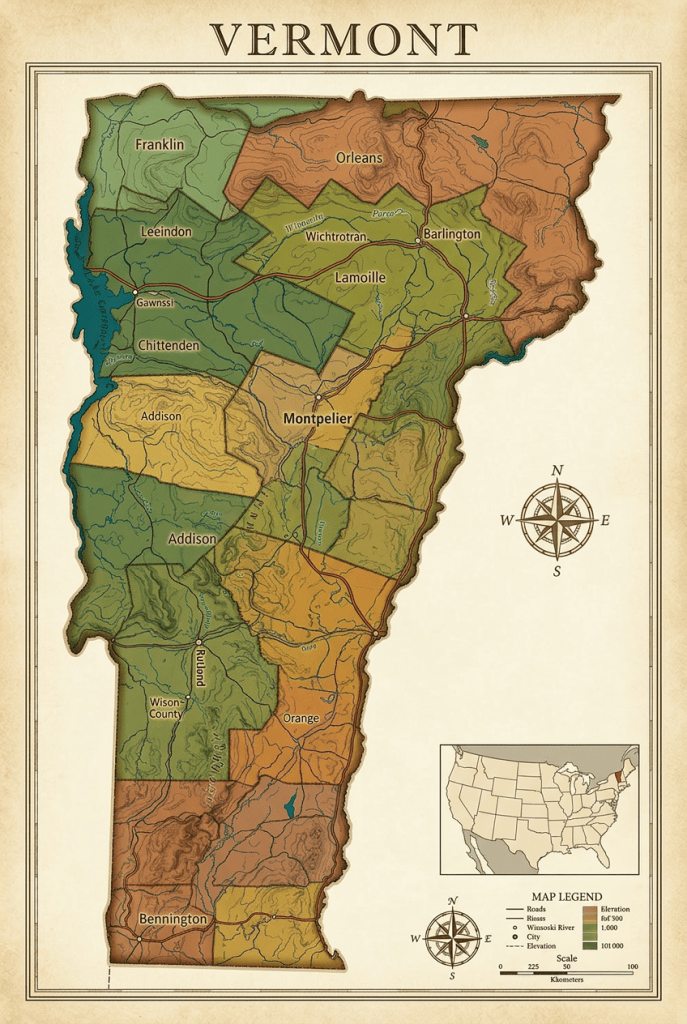
When Vermont Governor Phil Scott signed H.814 into law on May 18, 2026, it marked a quiet but historic moment: every Vermonter gained a legal right to the privacy of their own mind. For the brain injury community, which is a population that increasingly relies on brain-computer interfaces, AI-powered rehabilitation tools, and wearable neurotechnology, the law provides a crucial layer of protection for some of the most intimate data imaginable.

Formally titled “An act relating to neurological rights and the use of artificial intelligence technology in health and human services,” H.814 takes effect July 1, 2026. The bill legally recognizes what should already be commonsense: every Vermonter has a right to “mental and neural data privacy,” “the freedom of thought,” and protection from “unauthorized access to or manipulation of an individual’s brain activity.” For those with brain injuries who depend on neurotechnology for communication, mobility, or cognitive support, that last phrase is a safeguard for the data generated at the most vulnerable intersection of their lives.

With this bill, Vermont joins Colorado, California, Montana, and Connecticut, though each of which has taken a distinct approach to neurological privacy. Colorado and California moved first in 2024, amending existing consumer privacy statutes to classify neural data as sensitive personal information. Montana went further with a standalone law amending its Genetic Information Privacy Act, requiring robust consent and uniquely prohibiting the storage of neural data in U.S.-sanctioned countries. Connecticut’s 2025 amendment was narrower, covering only the central nervous system. Vermont’s law aligns most closely with Connecticut’s, in that it establishes specific rights, while directing the state’s AI Advisory Council to develop further ethical guidelines, which extends through 2030.

Sponsored by State Representative Brian Cina, a clinical social worker, Vermont’s new legislation, and beyond the aforementioned five states that have similar laws, Massachusetts, Minnesota, Illinois, and New York are currently advancing similar bills. For the brain injury community, the question is no longer whether neurotechnology will be part of care and recovery, as it already is. The question is whether the law will keep pace.