When Bears Attack

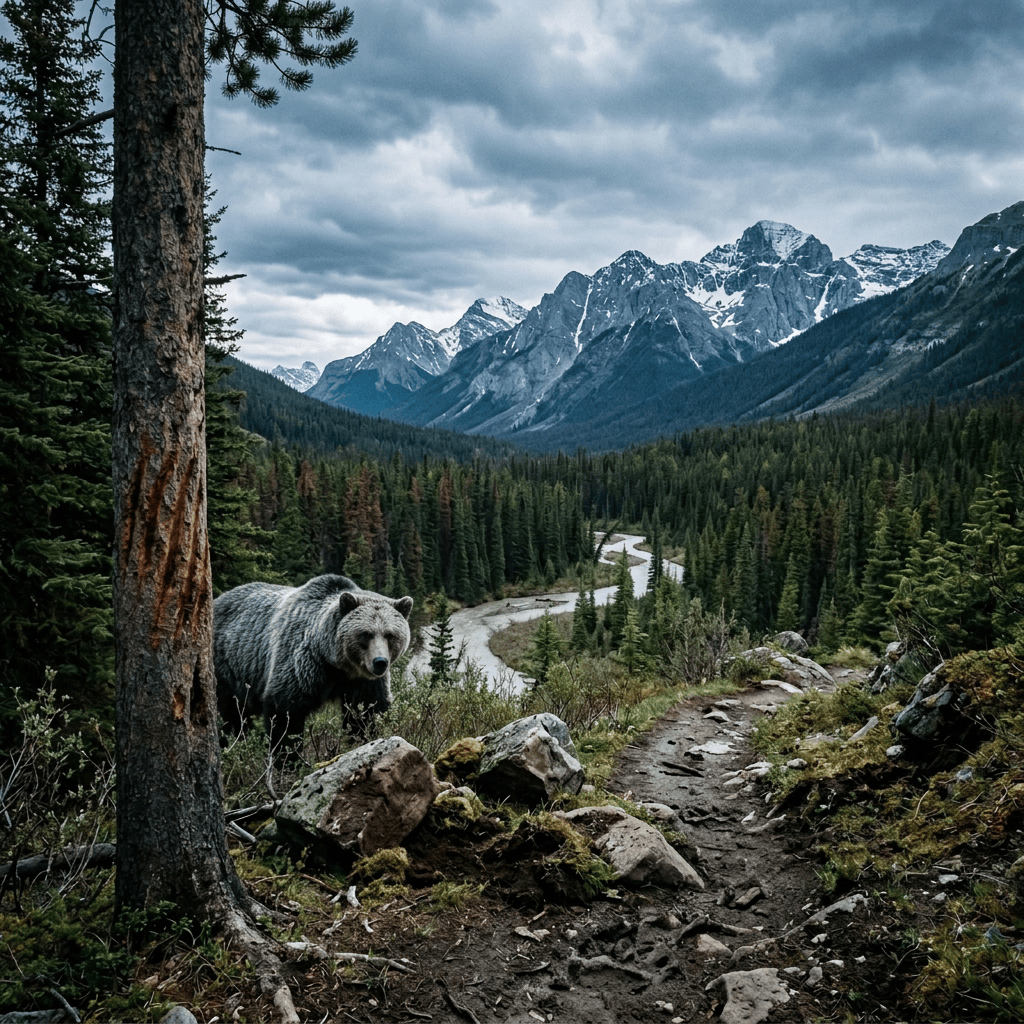
Rocky forest trail leading toward snow-capped mountains and winding river

On Sept. 14, a 20-year-old bowhunter near Augusta, Montana, surprised a grizzly near a cow carcass. Badly hurt, the injured man still drove himself home. In May, a mother grizzly with cubs mauled two brothers at Yellowstone. The older brother needed facial reconstruction and care for a head wound.

Unfortunately, head injuries are a relatively common consequence of a bear attack, as bears typically strike the head, face or neck first. These strikes can then result in skull fractures and traumatic brain injury. In one study of 417 bear-attack victims, 55% had head injuries. While bear attacks are rare, roughly 11 brown-bear attacks a year occur in North America. These attacks are clustered, with Alaska, Montana, Wyoming and British Columbia known to be grizzly bear backcountry.

Western governors want control of grizzly management to return to the states. “The endangered species list is not a dean’s list,” Wyoming Gov. Mark Gordon said in July. “It’s time that [the grizzly] bear graduates.” Peak season for bear attacks is from July through September, as bears eat up to 20,000 calories a day to fatten up before hibernation.  According to 2024 information found in the NLM database, “upper‐body injury results from bears often attacking from a standing position, targeting the head and neck,” so be wary of a standing bear.

Year round, caution is recommended for those who traverse bear-friendly terrain: carry bear spray, travel in groups and make noise. The U.S. National Park Service and other wildlife authorities advise that if a grizzly attacks, lie face-down with your hands clasped over your neck. Fight back against black bears.
Spring Forward, Fall Down: Neurological Effect of Time Change

Every March, we lose an hour of sleep, or we gain an hour of sunlight, depending on your perspective. For TBI survivors, this forced clock shift has medically been proven to be particularly cruel. Up to 70% of survivors already struggle with disrupted sleep and circadian rhythms. Unfortunately, that is the same biological clock that drives the neural repair process itself.

The twist, though, is that the extra daylight we are about to gain can actually help injured brains heal. Powered by sunlight, studies have shown that Vitamin D is typically low in brain injury patients, particularly at rehab admission, and deficiency is linked to worse survival. While adding a Vitamin D supplement into your daily pill regiment is good, natural Vitamin D absorption is always best.   

While it may seem a biannual norm, it wasn’t until March 19, 1918 that time became a legislative concern in the United States. President Woodrow Wilson signed the Standard Time Act of 1918, also known as the Calder Act, “to save daylight and to provide standard time, for the United States.”. (On January 20, 1942, President Roosevelt established War Time, which halted the time shift from 1942 – 1945.)

More recently, opposition to time change has increased and a large minority of Americans say that they do not want to keep switching their clocks. In Congress, S.29, Sunshine Protection Act of 2025, sponsored by current Secretary of State, former Florida Senator, Marco Rubio and Rep. Vern Buchanan (FL) would have made Daylight Savings Time permanent. This Congressional year, Rep. Greg Steube (FL) introduced H.R. 7378, Daylight Act of 2026, that would permanently move U.S. clocks forward by 30 minutes and eliminate the biannual time change. As of March 4, 2026, this Act is in the House.

*British Columbia will permanently adopt year-round daylight saving time in 2026, with the final “spring forward” occurring on Sunday, March 8, 2026. It may be useful to observe how this change, or lack there of, functions in another country that has same time zones before passing legislation.