Generation Alpha’s Trending Trauma

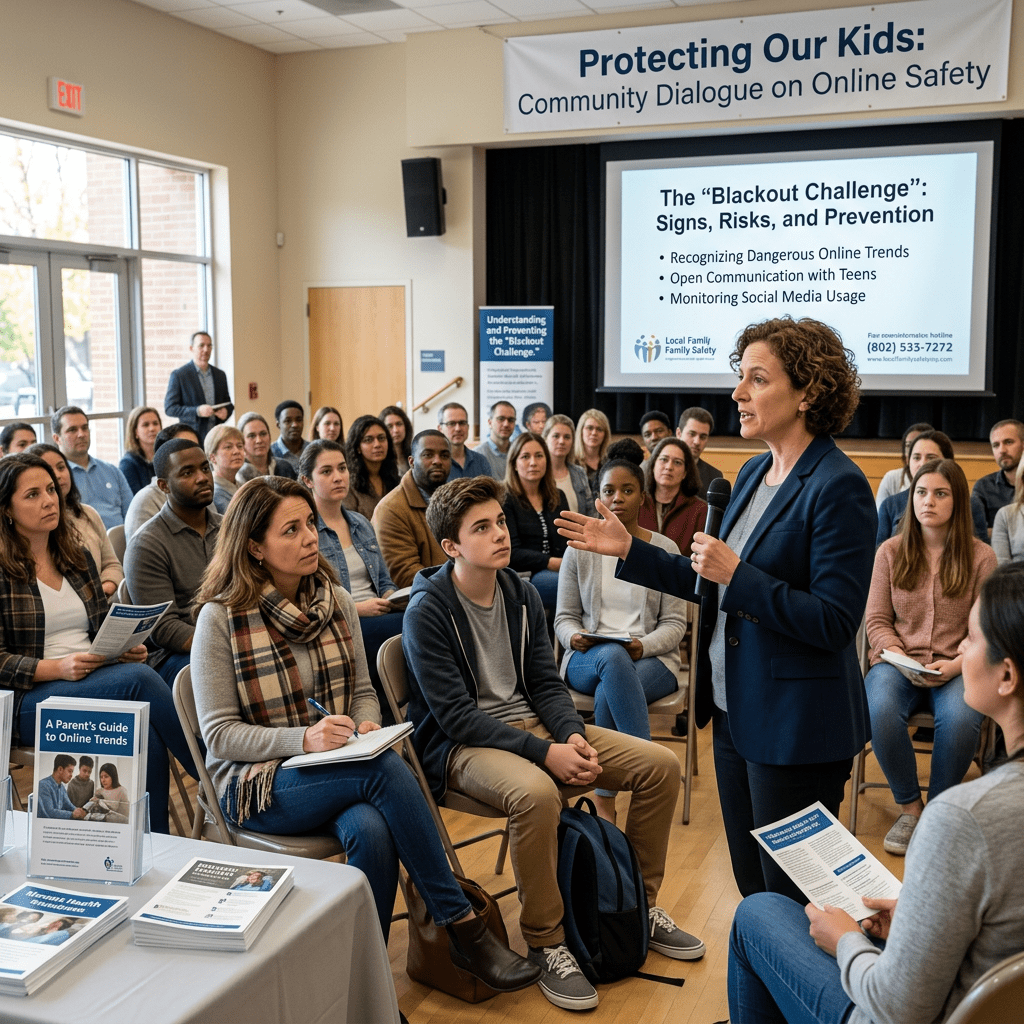
Speaker presenting to attentive diverse audience about online safety and 'Blackout Challenge' risks and prevention

In February 2026, nine-year-old JackLynn Blackwell died in her Stephenville, Texas backyard with a cord around her neck after seeing the “blackout challenge” online. A repackaging of the “choking game” that was first catalogued by the CDC in 2008, the blackout challenge is causing yourself to pass out. (This, in turn, causes “permanent, irreversible brain damage”.) It exploded on TikTok in 2021, as the For You algorithm began pushing self-strangulation videos to young users chasing a brief euphoric high from cerebral hypoxia. The trend has shown its lasting power: In South Orange Middle School in New Jersey, two students passed out after engaging in the challenge in 2024.

The blackout challenge has been noticed by politicians: on October 8, 2024, a bipartisan coalition of 14 attorney generals filed separate enforcement actions. “TikTok claims that their platform is safe for young people … [but] young people have died or gotten injured doing dangerous TikTok challenges,” remarked the group’s co-leader Letitia James (NY). In a March 23, 2026 press release, Congressman Jimmy Patronis (FL) stated, “As a parent, I cannot ignore the very real danger [the blackout challenge] poses to our children. Too many families have already suffered unimaginable loss.”  

Beyond concern, this childhood “thrill-seeking” has prompted some schools to take action. In New York, New Jersey and other states, schools have issued parental advisories in an attempt to protect children’s developmentally immature brains. One can hope that this trend is waning in popularity, and will soon be remembered only as an unfortunate episode in Generation Alpha’s past.

Brain Injury Emerging as Signature Wound of Iran War

Traumatic brain injury has become the defining wound of America’s war with Iran, with U.S. officials confirming that more than 75% of the 303 service members wounded since Operation Epic Fury began on February 28 have suffered TBIs — the highest such ratio in U.S. military history. Approximately 50,000 American troops were already stationed across the Middle East when the conflict began, with thousands more since deployed.

The injuries are driven overwhelmingly by Iranian drone and missile strikes. When an Iranian drone struck a U.S. operations center at Kuwait’s Shuaiba port in early March, killing six Army Reserve soldiers, dozens more were hospitalized with brain trauma from invisible blast overpressure waves that damage tissue without leaving any external wound.

TBI was already labeled the “signature wound” of the Iraq and Afghanistan wars, where the Department of Defense recorded over 518,000 military TBIs since 2000, peaking at 33,000 diagnoses in 2011 alone. The current TBI rate — roughly three times the Iraq-era figure — has alarmed lawmakers on both sides of the aisle. Sen. Joni Ernst warned that the injury “has become prevalent among hundreds of thousands of service members in recent years,” while Sen. Elizabeth Warren has called TBI research “the minimum that we owe” those who serve.

Family Trauma Means Mullin’s Mission Goes Beyond Political Party

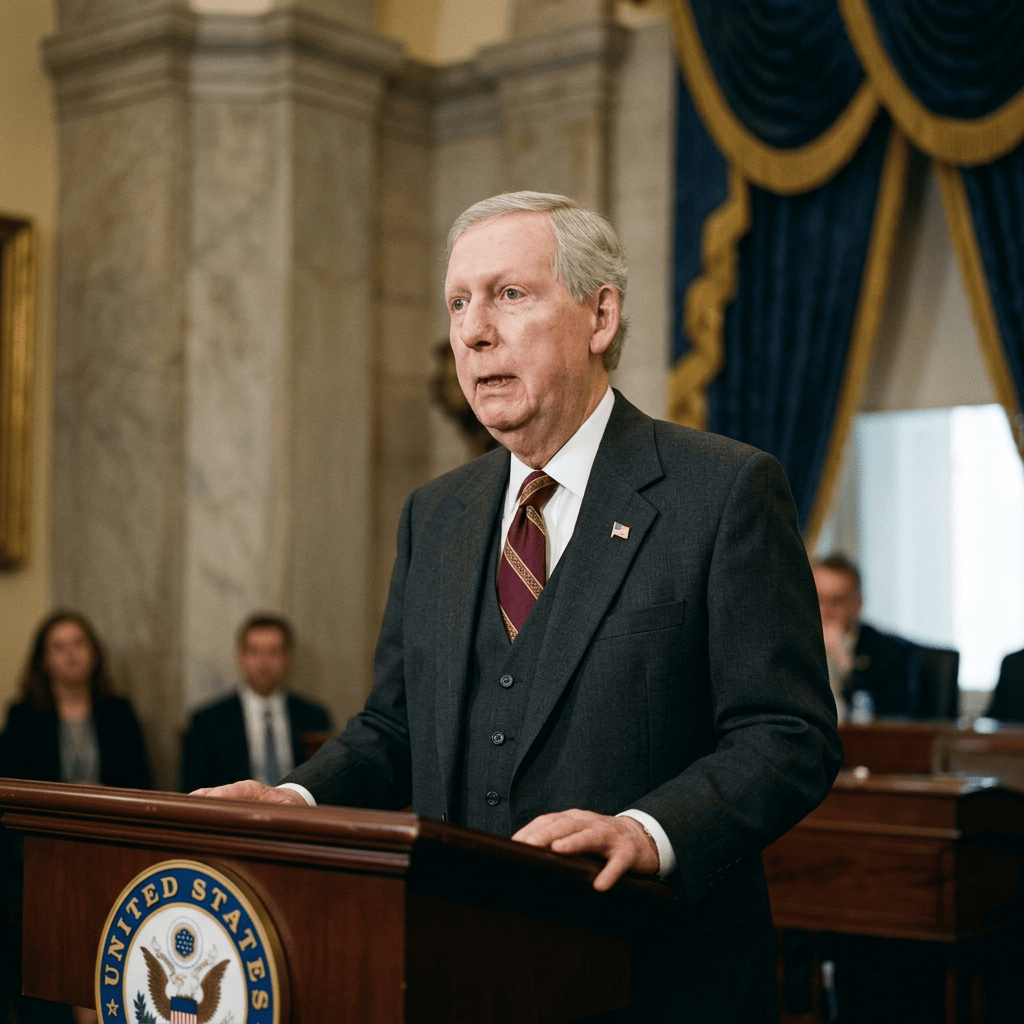
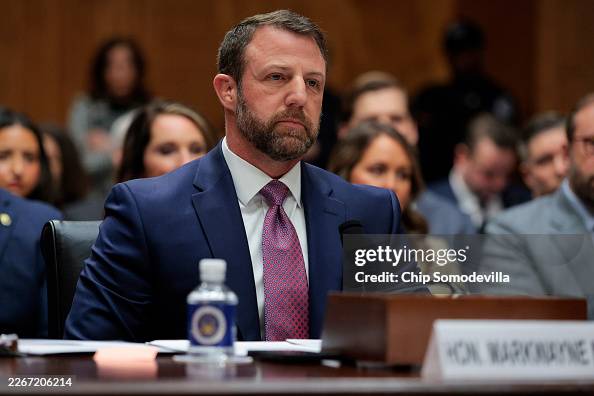
As President Trump’s nominee to lead the Department of Homeland Security, Senator Markwayne Mullin (OK) has been subject to an extremely contentious confirmation. However, previously, Mullin has worked with both Republicans and Democrats. Specific to this site, he has worked across party lines to pass bills that are very important and extremely dear to him, related to traumatic brain injury. Therefore, as a TBI survivor myself, I find it important to look back at his record, related to the topic:

In January 2020, Sen. Markwayne Mullin’s 15-year-old son was subject to a severe traumatic brain injury during a wrestling match. (Apparently, during his son’s most trying time, President Trump called almost daily and offered his personal plane. The President also later visited his son at the rehab center.) Rehabilitation, which professionals estimated would take years, was completed within 9 months and Mullin’s son is now in college.

Since the unfortunate incident, Senator Mullin has channeled his anguish and frustration into finding answers. His legislations related to TBI tend to focus on research funding and diagnostic standardization for brain injury. Only six months ago, the Senator earnestly reaffirmed his devotion to the issue when he stated, “That is why we must continue to bring awareness to this critical injury. I am honored to join my colleagues on this resolution to recognize Friday, September 19th, as National Concussion Awareness Day.”

Concrete examples of his bipartisan push forward for the brain injured community include S. 4755, Traumatic Brain Injury Program Reauthorization Act of 2024, co-led with Senator Bob Casey (D). When that bill expired, Mullin reintroduced it as the TBI Program Reauthorization Act of 2025, S. 2898, on September 23, 2025, with co-sponsors Senators Andy Kim (D), John Cornyn (R), Alex Padilla (D), and Catherine Cortez Masto (D).  (The 2025 version expanded coverage to include all acquired brain injuries.)

(Devotion to issues that relate to brain injury do not represent the entirety of legislation introduced by Senator Mullin while he has been in the Senate. Additionally, this article is not a comment on Senator Mullin’s nomination to head the DHS.)

From Supporter to Survivor: Legacy of America’s 40th President

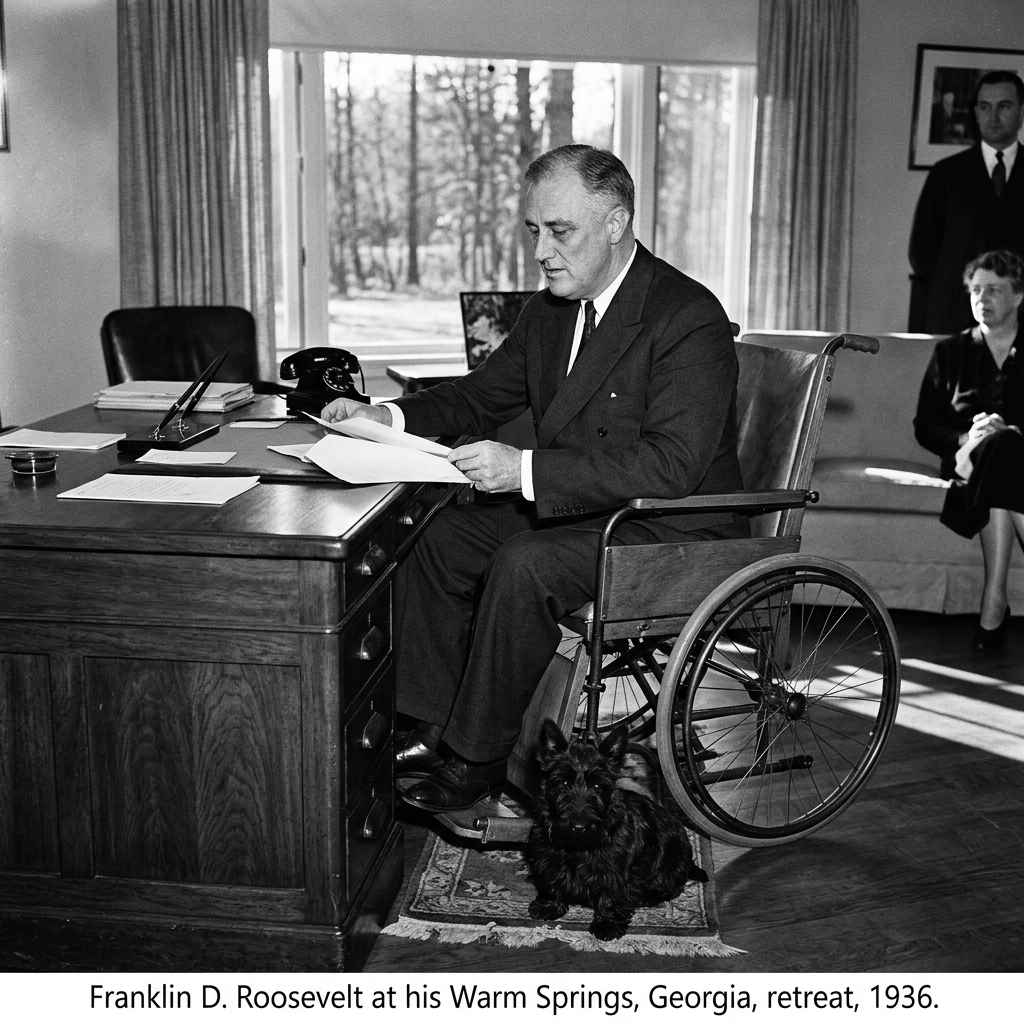
On what would have been his 115th birthday, TBIontheHill honors Ronald Reagan, America’s 40th President of the United States:

President Ronald Reagan left an enduring mark on the brain injury community when he signed Proclamation 5262 in October 1984, designating National Head Injury Awareness Month. This landmark action acknowledged the 700,000 Americans hospitalized annually for head injuries and called for greater research and support.

Reagan himself experienced traumatic brain injury firsthand. On July 4, 1989 – just months after leaving office – the 78-year-old was thrown from a bucking horse at a friend’s ranch in Mexico. The fall caused a subdural hematoma, a dangerous blood clot between the brain and skull. After initial treatment, doctors discovered a second clot requiring brain surgery at the Mayo Clinic in September 1989.

Because the accident occurred after his presidency, it did not affect his time in office. However, Nancy Reagan later wrote that she believed the severe head injury “hastened the onset” of her husband’s Alzheimer’s disease, diagnosed in 1994. Research supports this connection, as moderate brain injuries increase Alzheimer’s risk 2.3 times, while severe injuries raise it 4.5 times.

Reagan’s presidency transformed America – ending the Cold War, spurring economic growth, and restoring national optimism. His personal experience with brain injury adds poignant context to his earlier advocacy, creating a legacy for millions affected by neurological conditions.

Texas Governor Declares Disaster to Combat Screwworm Threat

Governor Greg Abbott issued a statewide disaster declaration Thursday, January 29th to prevent a certain species of screwworm fly from entering Texas, mobilizing state resources against a parasite. “Although… not yet present in Texas or the U.S., its northward spread from Mexico toward the U.S. southern border poses a serious threat,” Abbott stated.

Cochliomyia hominivorax, also called Coquerel or New World screwworms, are parasites endemic in South America and the Caribbean. Not new to America, the U.S. was declared free of the parasite in 1966 by the US Department of Agriculture, after successful eradication efforts. A small outbreak occurred in the Florida Keys in 2017.

According to the US Embassy in Costa Rica, “screwworm flies predominantly affect cattle, but frequently affect dogs… and occasionally affect humans.” Experts warn that maggots can burrow into vulnerable tissue like the brain, causing sepsis. Sepsis can cause severe brain damage through systemic inflammation, disrupting the blood-brain barrier (BBB), oxygen deprivation, and neuroinflammation, leading to acute issues like delirium and coma, and long-term cognitive deficits. The Embassy further discusses the story of a 15-year-old girl developed intense headaches after 45 larvae infested a scalp wound, demonstrating risks to children and representing the first human death since the 1990s.

Protection requires cleaning and covering all wounds, wearing long-sleeved clothing, and using EPA-registered insect repellents.

Trump Wants Greenland; Greenland Wants Neurosurgeons

Currently, President Trump’s renewed push to acquire Greenland dominates the headlines. Though many dismiss the President’s statements as mere diplomatic trolling, it brings new attention to the challenges faced by this Arctic territory. Specific to this website, those in Greenland face real medical challenges related to brain injury that deserve attention.

Of Greenland’s 56,500 residents, it is reported that 10-20 suffer severe traumatic brain injuries annually, with falls and snowmobile accidents being primary causes. (The territory also holds the world’s highest rate of fall-related spinal cord injuries.) Although this is a statistically small number, the healthcare reality is stark. Queen Ingrid’s Hospital in Nuuk, the country’s capital and largest city, remains the only facility with CT and MRI scanners, and no neurosurgeons practice in Greenland. Patients requiring brain surgery generally face evacuation to Copenhagen, Denmark, for which minimum transport time exceeds seven hours.

A 2025 study available to view on the NIH database offers hope with the introduction of teleneurosurgery. As of recently, the Department of Neurosurgery at the University Hospital of Copenhagen, Rigshospitalet has the ability to provide, “training [to] local [Greenland] surgeons to perform cranial neurosurgical procedures using smart glasses, enabling real-time supervision from neurosurgeons in Copenhagen.” Since May 2024, it is reported that multiple successful operations have been performed. Unfortunately, while the Danish publicly funded healthcare system may cover all residents, geographic isolation has created life-threatening delays.

New NYC Mayor’s Socialist Vision Raises Questions for Brain Injury Care

Zohran Mamdani, New York City’s incoming ‘democratic socialist’ mayor, has declared that “socialism means a commitment to dignity, a state that provides whatever is necessary for its people to live a dignified life.” Mamdani’s personability and oxymoronic political stance gained the support of the majority of the City’s voting public. For New Yorkers with brain injuries, this philosophy carries both promise and peril.

Some socialist healthcare systems have demonstrated genuine achievements in brain injury rehabilitation. Denmark’s centralized model delivers specialized rehabilitation to 84% of severe traumatic brain injury survivors, far exceeding other nations. Cuba’s CIREN [International Center for Neurologic Restoration, located in Havana] self-reports that it “has gained international recognition for its innovative approaches to neurological treatment and rehabilitation”, since its founding in 1989.

Lest this political stance be seen only for its benefit, troubling patterns emerge. Sweden’s universal healthcare system reaches only 46% of its most severe TBI patients with specialized care. Cuba, despite world-renowned facilities, suffers 70% medication shortages that cripple daily care. The Soviet Union’s legacy of “there are no invalids in the USSR” reminds us that socialist rhetoric can mask institutional neglect.

Mamdani’s proposed $363 million mental health investment and public hospital commitments sound transformative. If enacted, and beyond the fact that the City likely will not be able to achieve that number because of movement from NYC after the needed massive tax hikes, these grand plans often stumble against bureaucratic realities. Simply, many highly skilled doctors may relocate. Ultimately, whether Mamdani’s vision delivers meaningful improvements for brain-injured New Yorkers or becomes another case of ambitious promises meeting harsh constraints remains uncertain. For now, cautious observation is wisest – New Yorkers must wait and see.

Should 2026 Fiscal Year Funding Concern the Brain Injured?

President Trump signed S.1071 into law on December 18, 2025. The National Defense Authorization Act for Fiscal Year 2026 was sponsored by Sen. John Cornyn (TX), and co-sponsored by Sen. Ted Cruz (TX), and received bipartisan support in Congress. The House passed the measure 312-112 on December 10, with the Senate approving it 77-20 one week later.

Similar to the redesignation of the Department of Defense as the Department of War, the $900 billion defense package appears to focus more on military action than research  As early as May 2025, ESPN reported, “The Trump administration’s 2026 fiscal budget request to Congress eliminates major federal funding for traumatic brain injury (TBI) research and education, potentially undercutting efforts to address head injuries in sports, particularly at the high school and youth levels.” The 2024 funding bill also included decreased funding for brain injury research. 

Whether the bill affects treatment options and research, and to what level, is to be seen.* It appears that some broader funding can be given to any study, even if it goes above the mandated TBI research amount. Additionally, most of the plentiful research I report on seems to be unrelated to the Department of War.

*Only one day prior to the signing of S.1071, Rep. Lori Trahan (MA) introduced H.R.6823 – “To direct the Secretary of Defense to establish a pilot program to facilitate the development of certain traumatic brain injury diagnostics for members of the Armed Forces.” On that day, December 17, 2025, it was referred to the House Committee on Armed Services. Since that time, no further action has been taken.

McNabb Continues to Address “Cruelty”

Over 69,000 TBI-related deaths occur annually in the United States, yet survivors face mockery rather than support:

Recently, Payton McNabb—who suffered a traumatic brain injury during a 2022 volleyball game—was mocked by transgender comedian Stacy Cay, who called footage of McNabb’s injury “pretty funny” and criticized her for falling “like a toddler.” McNabb responded powerfully to those repugnant so-called jokes: “A grown man mocking a teenage girl’s traumatic brain injury isn’t comedy—it’s cruelty.” This is particularly notable since transgender discrimination is often at the foreword of the news and “cruelty” is one note that is used to rightfully describe it.

In schools, students with TBI face bullying from peers and even faculty. As for American adults, the percentage who have had a TBI, and are living with its consequences, ranges from 19-29%, according to recent statistics. Adults experience workplace discrimination in many ways, despite federal protections. These laws, specifically the 1996 TBI Act and Section 504 of the Rehabilitation Act of 1973, ostensibly protect survivors from discrimination but do not eliminate the problem.

Unrelated to McNabb’s trauma, President Trump previously dismissed TBIs as “just a headache”, in reference to service members. This 2020 ignorant statement is, unfortunately, shared by many who have no first- or second-hand experience with brain injury. As commonly is the case for those who interact with those who have a neurological injury, President Trump’s understanding of brain injury and respect for brain injury survivors has since changed. Recently, he honored Payton McNabb at his Congressional address. (McNabb also addressed the North Carolina General Assembly in 2023 and her bio is currently available to view in the congressional record.)

Congressional Visit Highlights CU COMBAT Center’s Great Work

Rep. Jeff Crank (CO, 5th District) recently toured the CU Anschutz Center for COMBAT Research, the nation’s largest academic military health research program. Crank, who serves on the House Armed Services Committee and who’s district is home to five military installations, the United States Air Force Academy and a large veteran population, praised the center’s “great work” saving servicemembers’ lives. (Previously, Crank co-sponsored the bipartisan SMART for TBI Act with Rep. Jason Crow, requiring the military to develop AI-driven traumatic brain injury treatments.)

The COMBAT Center, focused on blast-related injuries, including brain injury, has robust government engagement through over 80 Department of War-funded research grants and educational partnerships with the Defense Health Agency, Uniformed Services University, and the U.S. Air Force Academy. These collaborations have updated 13 military clinical practice guidelines and modernized training for thousands of combat medics.

This partnership between congressional leadership and academic research continues advancing innovative solutions that benefit both military and civilian communities.