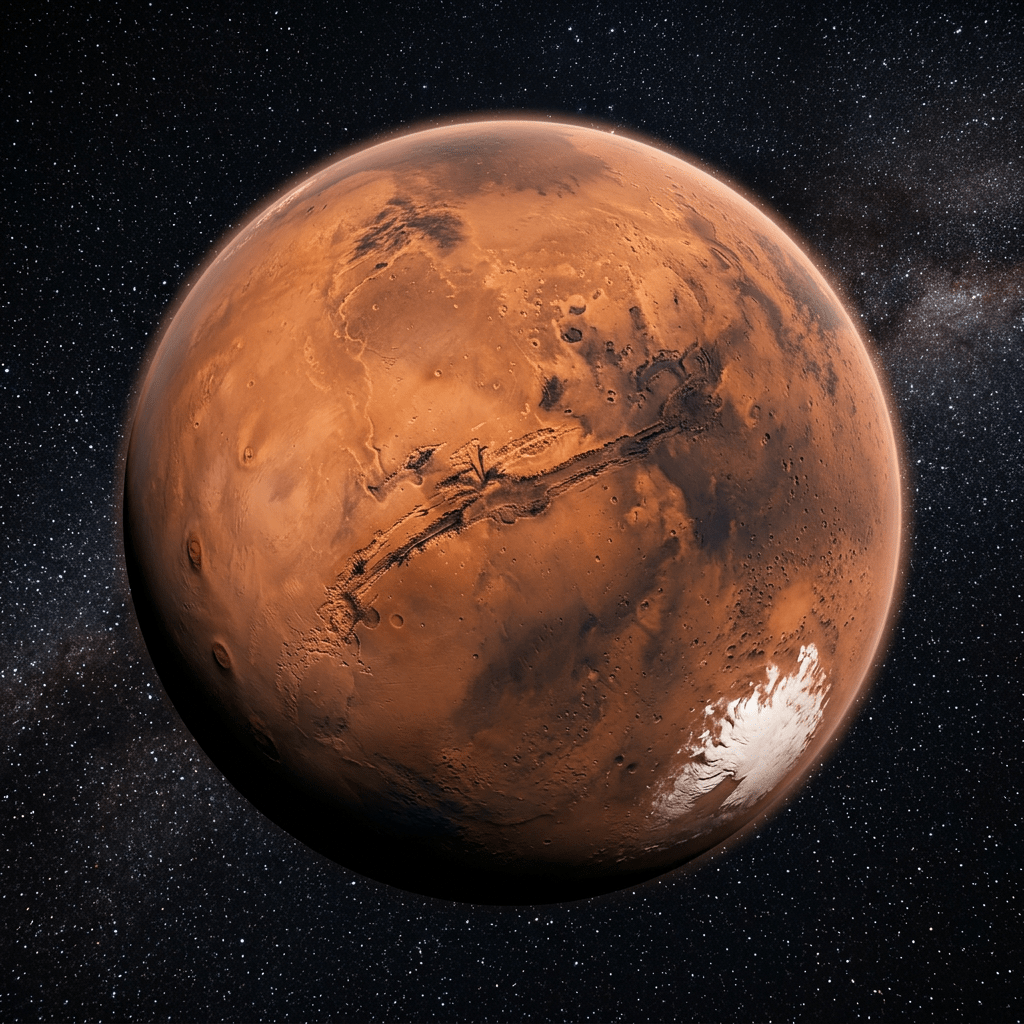
In 2015, Matt Damon was part of a team that traveled to Mars. Specifically, in the film The Martian, he starred in the story of an astronaut who traveled to Mars and was left behind by his fellow astronauts. The film had a budget of about $100 million and grossed over $225 million at the box office. It was nominated for 172 awards, including 7 Academy Awards, and won 33 awards. Essentially, The Martian played on the fantasy that many humans have: to travel to another planet. With new technology continually being developed, this fantasy has become much more likely to happen in recent years. However, the 2015 film, based on a 2011 book of the same name, discounts one of the probable issues when traveling to and from the Red Planet: radiation exposure.
According the National Aeronautics and Space Administration (NASA), “The Martian highlights the neurological, radiation-related dangers that could occur on a round trip to Mars.” However, simply showing the astronauts living in a radiation-shielding habitat, does not really show why radiation-shielding would be of upmost importance. The Guardian notes the inaccuracies of the film, such as, “Everyone would die… due to excessive radiation.” Broadly defined, radiation is “the emission or transmission of energy in the form of waves or particles through space or through a material medium.” While rare on Earth, it can be emitted by things as televisions and x-rays. It is, however, prevalent in space and the Mayo Clinic confirms that “radiation sickness is serious and often fatal.”
If they travel to another planet, “The astronauts are not going to come back with full-blown Alzheimer’s… but… there will be some mild cognitive impairment,” says Charles Limoli, professor of radiation oncology at the University of California. To prevent these cognitive impairments, which may lead to problems seen in other neurological disorders, such as impaired decision-making and depression, NASA is looking for a way to protect the neural circuitry of the body in space. In fact, “Researchers hope that the initiatives in place to help send humans on deep space missions will also help those on Earth suffering from diseases like Alzheimer’s and Parkinson’s, as well as depression or traumatic brain injury.” Currently, they have exposed mice to similar amounts of radiation that the astronauts will receive and found, “their learning, memory, multitasking, cognitive flexibility in changing situations and even behavioral adaptation were altered or negatively impacted.” As the study notes, humans are not mice and our brains are different; however, they do believe this is a good example of the effects radiation will have on our brains.
People and the media rarely want to think of any negatives related to the possibility of doing something that has always been a mythical dream. Travel to Mars will happen. NASA is working on technology to eliminate radiation exposure and to prevent the negative effects of the radiation exposure that will occur during the trip to the Red Planet and on the surface of the planet. (Mars has three ozone layers, but still less ozone protection than the Earth.) NASA has already set a manned mission to Mars for the 2030’s. People just need to let the scientists, and their mice, at NASA find a way to make this international orbital journey to Mars safe for all those aboard. In the meantime, their research can help humans on Earth, astronauts or not, who suffer from brain injury and other neurological issues.
* Some have proposed that the first trip to Mars be a one-way trip, meaning that astronauts would travel to Mars to permanently inhabit the planet. While this may be the most cost-effective way for people to travel to the Red Planet, proponents of this idea do not consider many of the risks involved in an interplanetary trip. For example, the organization Mars One, led by Dutch billionaire Bas Lansdorp, has promised to colonize Mars by 2026. On the Project’s website, there is a page that answers the question: How safe is the journey? According to the site, the following risks are conceivable: accident(s) during launch, vital components could malfunction during the journey there, a number of issues might present themselves when entering Mars’ atmosphere, and there could be problems when landing. The page does not mention the certainty of radiation absorption while on the trip to the planet.