Erika’s Law Spotlights Strangulation’s Toll on the Brain

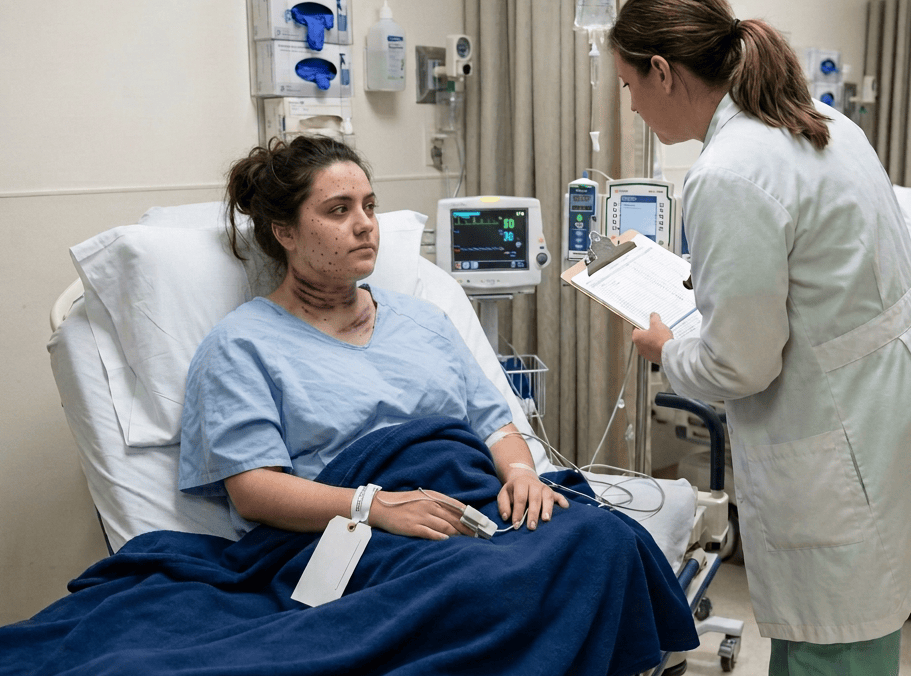
Healthcare professional reviewing a chart beside a hospitalized patient on monitoring equipment

In June 2022, a stranger strangled Erika Rothenberger unconscious in a Blue Bell, PA, parking lot. On Oct. 28, Pennsylvania State Representative Donna Scheuren introduced Erika’s Law, three bills (House Bills 2517, 2518, and 2519) now before the House Judiciary Committee. HB 2517 would make stranger strangulation a felony, as opposed to the misdemeanor that it currently is. After emergency medical care is performed, and as soon as practicably possible, HB 2519 would require police to warn victims of delayed outcomes, as the bill states, “Health consequences may develop or become apparent after the incident and may include internal bleeding, brain injury, thyroid damage, miscarriage, stroke or death. of delayed brain injury and stroke.”

The warnings embedded in Erika’s Law matter. Pressure on the neck cuts off oxygen-rich blood to the brain. Roughly 11 pounds of pressure on the carotid arteries can cause unconsciousness in about 10 seconds, and brain damage within minutes. (According to the Mayo Clinic, “Carotid arteries are a pair of major blood vessels located on each side of your neck that supply oxygen-rich blood to your brain, face, and head.”)

Survivors of strangulation can have a brain injury, and other side effects that are often associated with brain damage like depression and memory loss. In a 2024 emergency medicine study, 49% of patients with brain-oxygen-loss symptoms followed by amnesia couldn’t recall losing consciousness.
Generation Alpha’s Trending Trauma

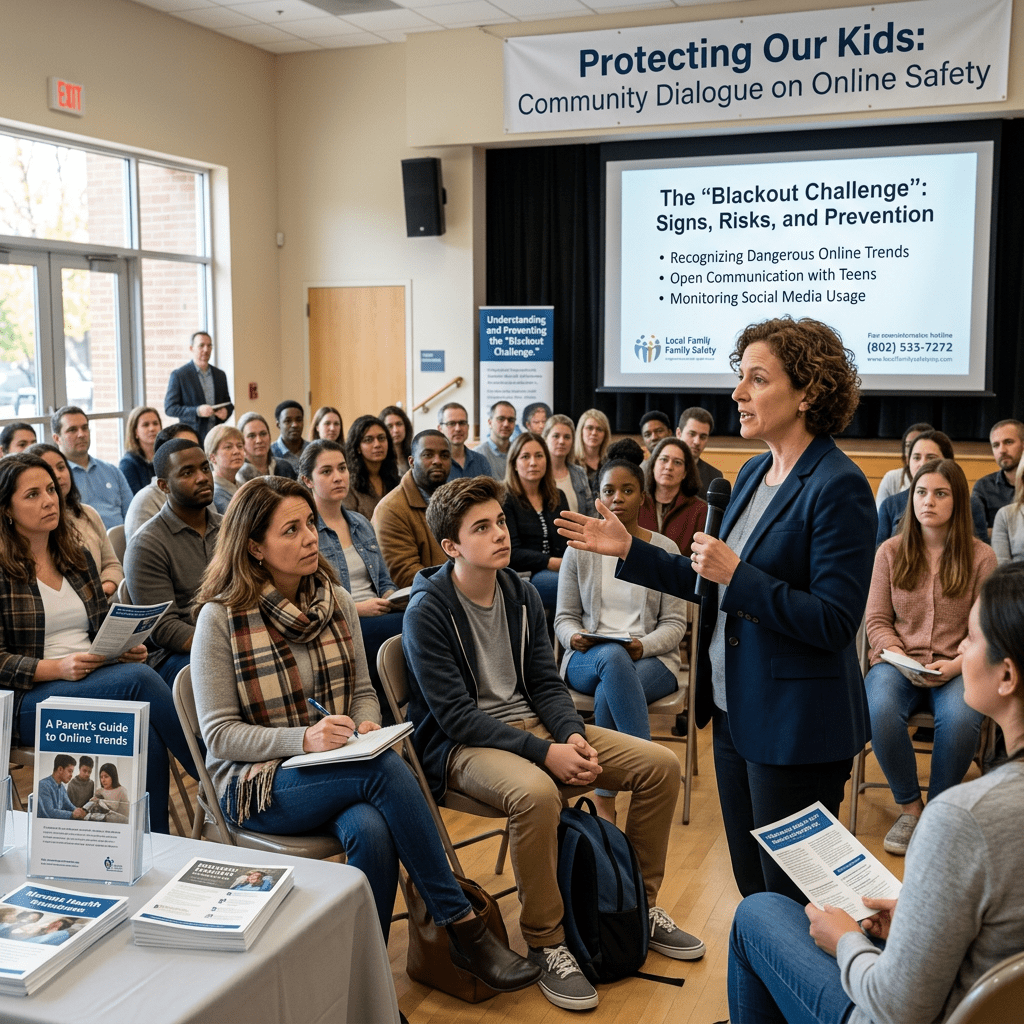
Speaker presenting to attentive diverse audience about online safety and 'Blackout Challenge' risks and prevention

In February 2026, nine-year-old JackLynn Blackwell died in her Stephenville, Texas backyard with a cord around her neck after seeing the “blackout challenge” online. A repackaging of the “choking game” that was first catalogued by the CDC in 2008, the blackout challenge is causing yourself to pass out. (This, in turn, causes “permanent, irreversible brain damage”.) It exploded on TikTok in 2021, as the For You algorithm began pushing self-strangulation videos to young users chasing a brief euphoric high from cerebral hypoxia. The trend has shown its lasting power: In South Orange Middle School in New Jersey, two students passed out after engaging in the challenge in 2024.

The blackout challenge has been noticed by politicians: on October 8, 2024, a bipartisan coalition of 14 attorney generals filed separate enforcement actions. “TikTok claims that their platform is safe for young people … [but] young people have died or gotten injured doing dangerous TikTok challenges,” remarked the group’s co-leader Letitia James (NY). In a March 23, 2026 press release, Congressman Jimmy Patronis (FL) stated, “As a parent, I cannot ignore the very real danger [the blackout challenge] poses to our children. Too many families have already suffered unimaginable loss.”  

Beyond concern, this childhood “thrill-seeking” has prompted some schools to take action. In New York, New Jersey and other states, schools have issued parental advisories in an attempt to protect children’s developmentally immature brains. One can hope that this trend is waning in popularity, and will soon be remembered only as an unfortunate episode in Generation Alpha’s past.