NE Joins States to Promote Veteran Brain Injury Bill – Congress Has Run Out of Excuses

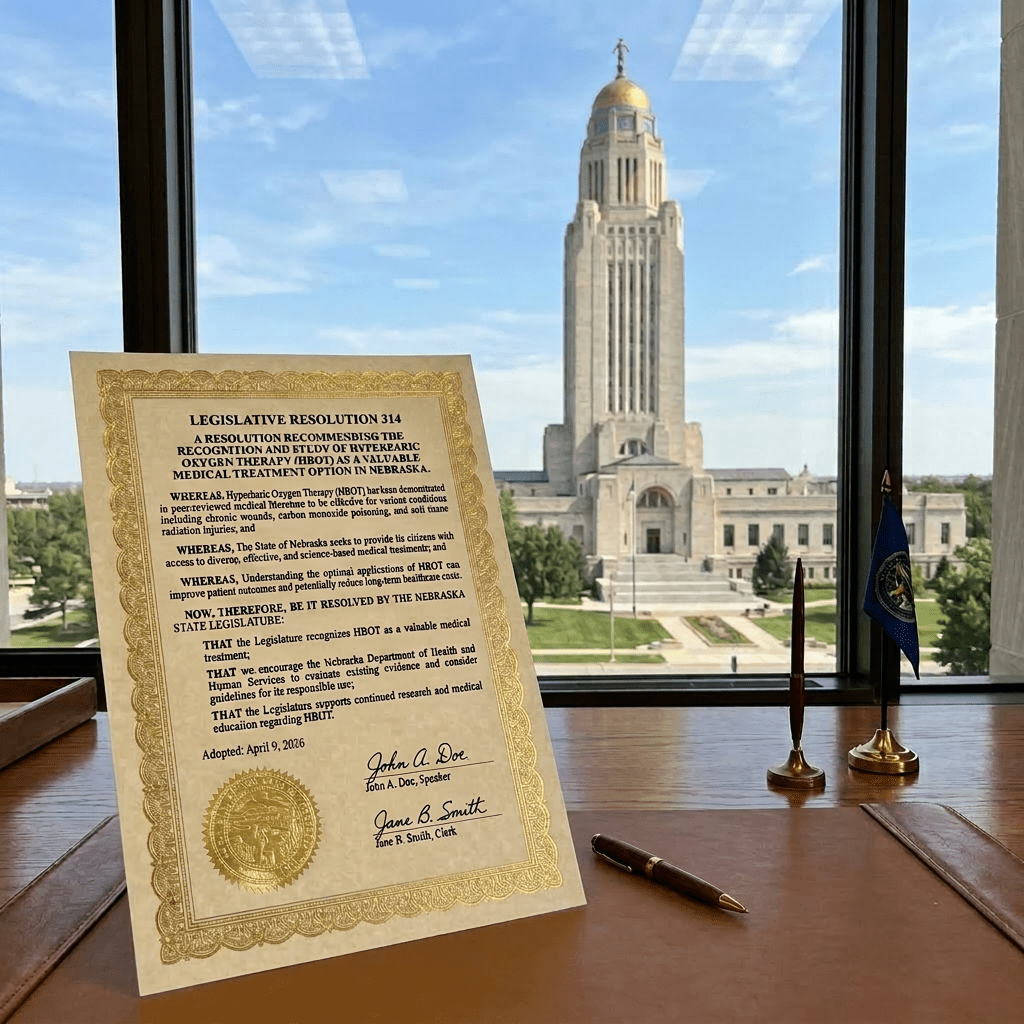
Legislative Resolution 314 on hyperbaric oxygen therapy with Nebraska Capitol building in background

On April 9, 2026, Nebraska’s Legislature passed Legislative Resolution 293 in a 43-0 vote, making it the 14th state – alongside Oklahoma, Texas, Indiana, Kentucky, Arizona, Florida, North Carolina, Wyoming, Maryland, Virginia, North Dakota, Tennessee and Missouri – to formally urge Congress to expand treatment access for veterans suffering from traumatic brain injury and post-traumatic stress disorder, one of the most pressing issues facing American veterans.

Introduced by Nebraska State Senator Kathleen Kauth, the resolution, “[urges] the United States Congress to swiftly enact legislation to provide for veterans’ access to treatments for traumatic brain injury (TBI) and post-traumatic stress disorder (PTSD).”

In particular, states’ resolutions seek to encourage Congress to move forward on hyperbaric oxygen therapy. “A 4-week course of HBOT may alleviate depressive symptoms in PTSD patients, an effect associated with increased serum BDNF and β-NGF levels,” according to a 2026 study, available to view on the NLM database. The United States loses more than 17 veterans per day to suicide, with TBI and PTSD among the leading contributing factors.

Now that 14 states are aligned behind this legislation, the pressure on Congress to act is mounting.

Federal Research Reveals Complex Relationship Between Antidepressants & Brain Injury

For years, doctors worried that antidepressants might worsen brain bleeding after traumatic brain injury. A 2026 study published in Neurology and cataloged in the U.S. National Library of Medicine challenges that fear. Finnish researchers tracked 54,876 brain injury patients over thirteen years and found something unexpected: those taking antidepressants showed no increased risk of death or emergency surgery. “These findings provide reassurance for people who take antidepressants that antidepressant use does not appear to worsen early recovery after traumatic brain injury,” said lead author Dr. Jussi P. Posti of Turku University Hospital in January 2026.

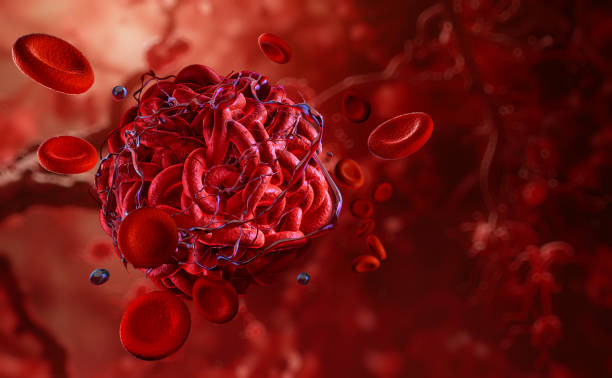
The picture grows more complex when considering blood clots. Multiple studies indexed by the NLM show a modest statistical link between antidepressants and clotting. Researchers, though, suggest this association may reflect depression itself rather than the medication, since these drugs actually thin the blood.

This distinction matters enormously. According to federally funded research tracked by the National Institutes of Health, over half of brain injury patients develop depression within their first year of recovery, and they face eight times the general population’s depression risk. The CDC explicitly recommends screening and treating this depression because untreated cases impair cognitive recovery and triple non-adherence to rehabilitation.

Most critically, NIH-hosted research shows brain injury survivors face nearly twice the suicide risk of others, with depression as the strongest predictor. The government’s message is clear: not treating depression after brain injury can carry serious, documented dangers.