2026 Update: Mitigation for Morality and Murder

Brain injury may not excuse a crime, but increasingly it has been used in courtrooms to shape punishment. This month, October 2026, Alberto Sierra’s lawyers showed penalty-phase jurors a 3D-printed model of frontal-lobe damage from childhood car crash, in Miani-Dade. (Their expert, though, did not say the injury caused the triple murder.) In Raleigh, Austin Thompson’s brain injury didn’t prevent five life-without-parole terms in February. However, in Indiana, Jeffrey Weisheit is seeking brain scans to support clemency before his November execution date.
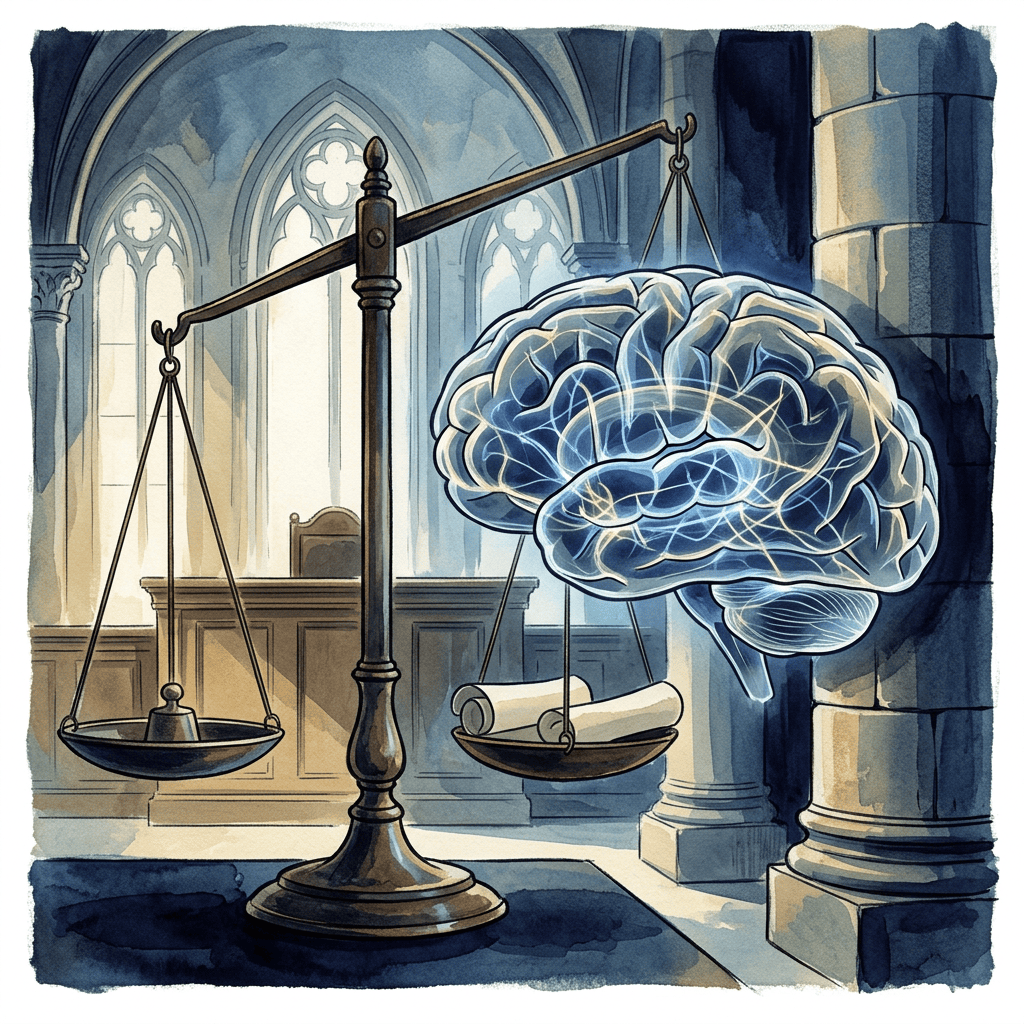
Glowing brain and scrolls balanced on scales inside a Gothic courtroom

The CDC has reported that almost half (46%) of incarcerated adults and about 1 in 3 detained juveniles have a TBI history his. While NIH-indexed studies find only a “modest causal link” between TBI and later convictions, it’s notable that less than 2 percent of the general public has a TBI history. It is uncertain, though, to what side and to what level the cause-and-effect aligns. A small 2023 PubMed-available study of 31 TBI patients found moral decision-making “not uniformly impaired”; lesion location and age at injury matter more.

The conclusion seems to be that brain injury buys mercy, not acquittal.
NE Joins States to Promote Veteran Brain Injury Bill – Congress Has Run Out of Excuses

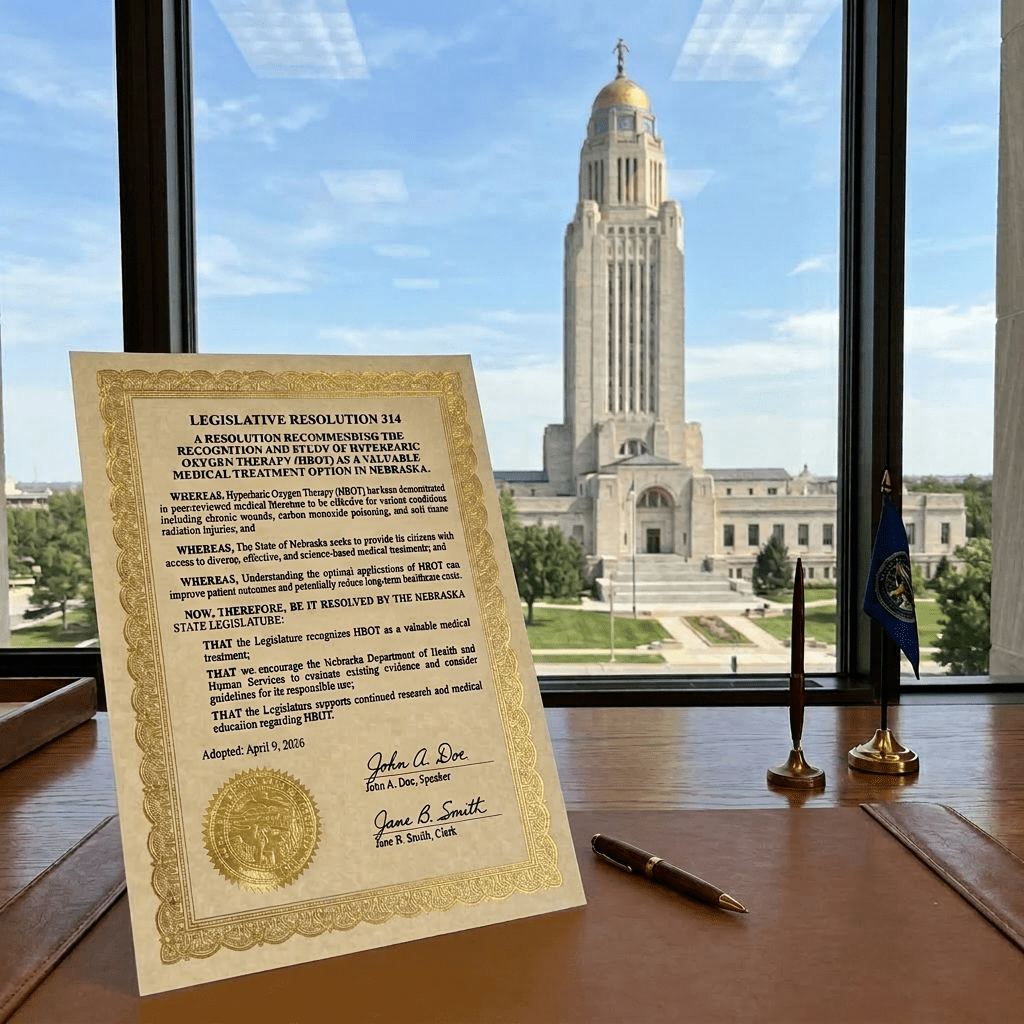
Legislative Resolution 314 on hyperbaric oxygen therapy with Nebraska Capitol building in background

On April 9, 2026, Nebraska’s Legislature passed Legislative Resolution 293 in a 43-0 vote, making it the 14th state – alongside Oklahoma, Texas, Indiana, Kentucky, Arizona, Florida, North Carolina, Wyoming, Maryland, Virginia, North Dakota, Tennessee and Missouri – to formally urge Congress to expand treatment access for veterans suffering from traumatic brain injury and post-traumatic stress disorder, one of the most pressing issues facing American veterans.

Introduced by Nebraska State Senator Kathleen Kauth, the resolution, “[urges] the United States Congress to swiftly enact legislation to provide for veterans’ access to treatments for traumatic brain injury (TBI) and post-traumatic stress disorder (PTSD).”

In particular, states’ resolutions seek to encourage Congress to move forward on hyperbaric oxygen therapy. “A 4-week course of HBOT may alleviate depressive symptoms in PTSD patients, an effect associated with increased serum BDNF and β-NGF levels,” according to a 2026 study, available to view on the NLM database. The United States loses more than 17 veterans per day to suicide, with TBI and PTSD among the leading contributing factors.

Now that 14 states are aligned behind this legislation, the pressure on Congress to act is mounting.