President Jackson’s Badge of Freedom

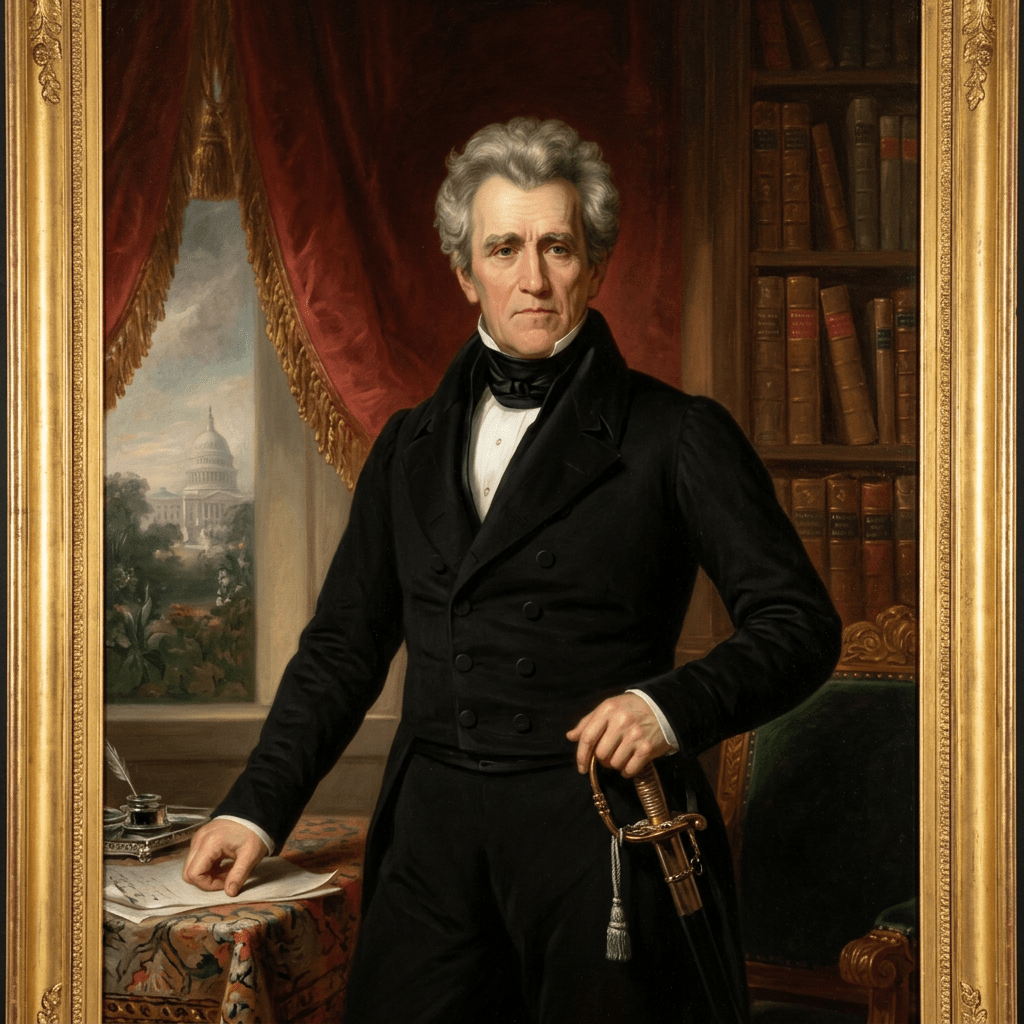
Portrait of a 19th-century man in black suit holding a sword with U.S. Capitol visible through window

Long before he became the seventh president, 13-year-old Andrew Jackson was a prisoner of war. As America’s last president to have served in the Revolutionary War, he and his brother were captured during the British invasion of the Carolina backcountry in 1781. Jackson was then ordered to clean a British officer’s boots. When he refused, the officer answered with a saber, slashing Jackson’s hand and head.

Revolutionary War soldiers in Carolina backcountry 1781

The wound never fully left him. Reports from his friends later stated that they could lay a finger in the dent it left in his skull. In fact, he wore this scar as a badge of freedom rather than a mark of defeat. Historians have long debated what role that early head trauma may have played in the headaches and volatile temperament that shadowed him for life, though no clinical record can say for certain.

This July 4, The Museum of the Waxhaw, in Waxhaw, NC, steps from young Jackson’s refusal, and the resulting wound, honors this moment in American history with a reading of the Declaration of Independence.

NE Joins States to Promote Veteran Brain Injury Bill – Congress Has Run Out of Excuses

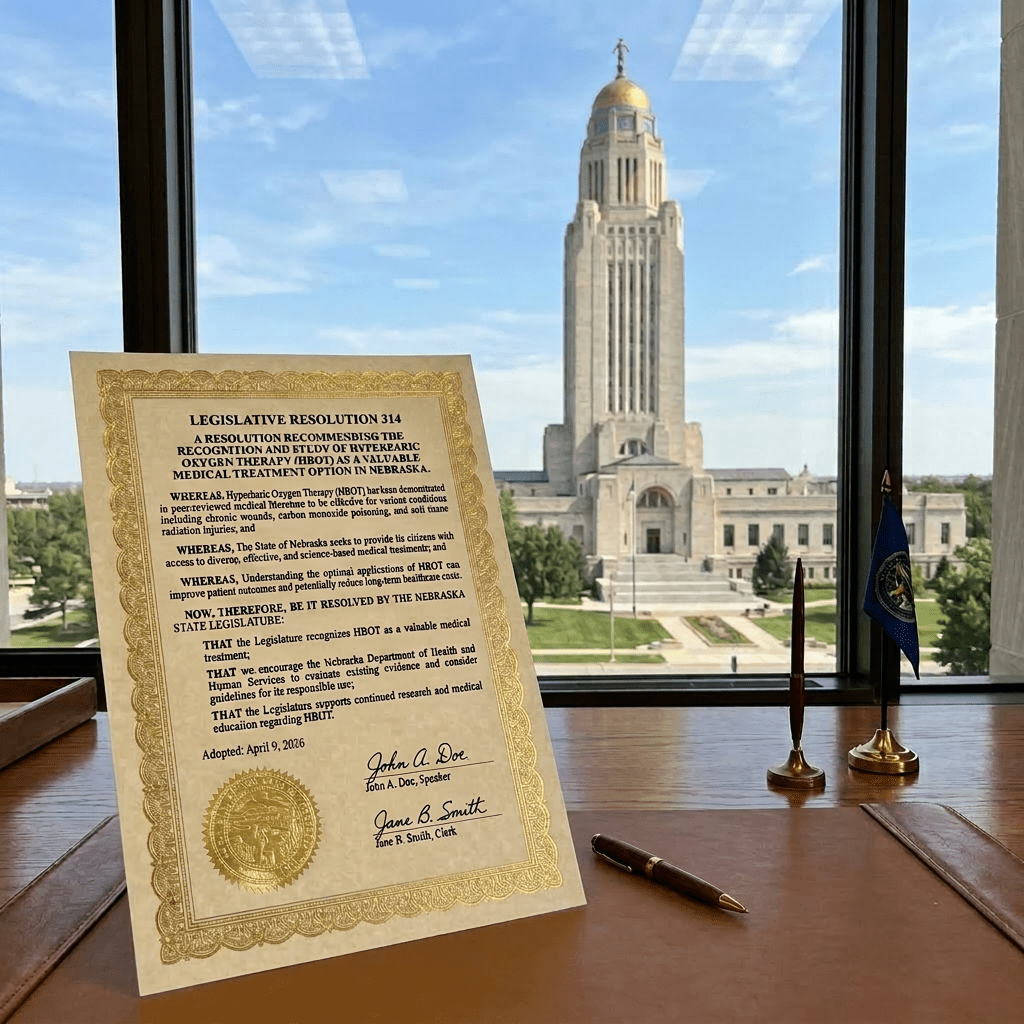
Legislative Resolution 314 on hyperbaric oxygen therapy with Nebraska Capitol building in background

On April 9, 2026, Nebraska’s Legislature passed Legislative Resolution 293 in a 43-0 vote, making it the 14th state – alongside Oklahoma, Texas, Indiana, Kentucky, Arizona, Florida, North Carolina, Wyoming, Maryland, Virginia, North Dakota, Tennessee and Missouri – to formally urge Congress to expand treatment access for veterans suffering from traumatic brain injury and post-traumatic stress disorder, one of the most pressing issues facing American veterans.

Introduced by Nebraska State Senator Kathleen Kauth, the resolution, “[urges] the United States Congress to swiftly enact legislation to provide for veterans’ access to treatments for traumatic brain injury (TBI) and post-traumatic stress disorder (PTSD).”

In particular, states’ resolutions seek to encourage Congress to move forward on hyperbaric oxygen therapy. “A 4-week course of HBOT may alleviate depressive symptoms in PTSD patients, an effect associated with increased serum BDNF and β-NGF levels,” according to a 2026 study, available to view on the NLM database. The United States loses more than 17 veterans per day to suicide, with TBI and PTSD among the leading contributing factors.

Now that 14 states are aligned behind this legislation, the pressure on Congress to act is mounting.