UC Leads National Study of Support for Brain Injury Caregivers

The NIH announced on October 6, 2026, that they have provided a R01 grant of $2.5 million to University of Cincinnati researchers. Building on the positive results of an earlier and smaller study, this five-year study is instead a larger national trial of a wellness program for families caring for loved ones with traumatic brain injuries.
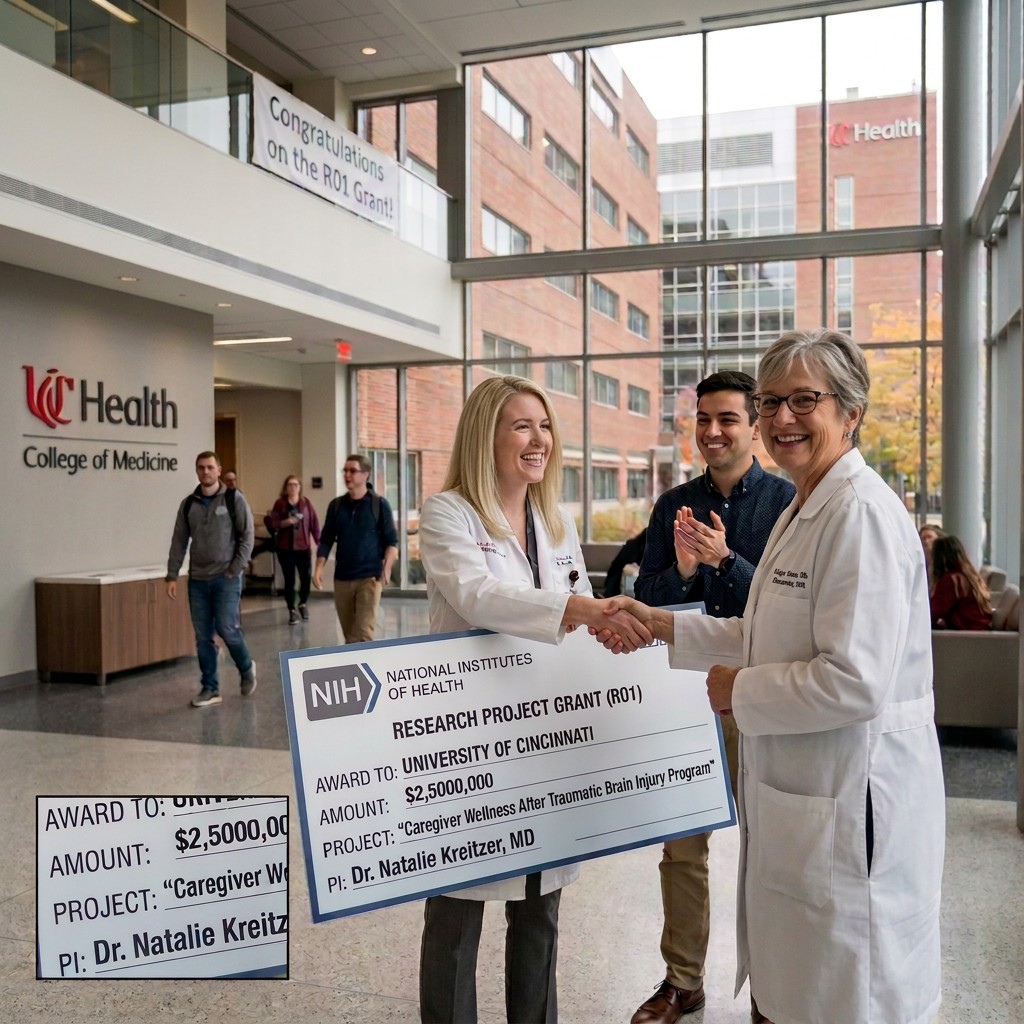
Researchers present a $2,450,000 NIH research grant check at UC Health College of Medicine; banner reads “Congratulations on the R01 Grant!” and check names University of Cincinnati, Caregiver Wellness After Traumatic Brain Injury Program, and Dr. Natalie Kreitzer, MD.

Led by Natalie Kreitzer, MD, UC, the Caregiver Wellness After Traumatic Brain Injury Program tests a web- and phone-based program. Caregivers will be guided through personal stress and distress, coping, patient outcomes and cost following a loved one’s traumatic brain injury, in addition to other related topics, such as medical leave, the move from the ICU to rehab, and preparing the home. Involving input not only from UC, but also The Ohio State University, Washington University in St. Louis and the University of Washington, the goal is for 354 patient-caregiver pairs to enroll, with a set start date in early 2027.
Diagnose TBI, No Blood Draw Necessary

The military’s effort to create a system to easily and quickly test for a brain injury did not end with the i-STAT blood test, that I first reported in 2017. The DHA (Defense Health Agency), a federal Combat Support Agency, is now promoting a new product with the same goal. However, this new DHA product takes a different route.

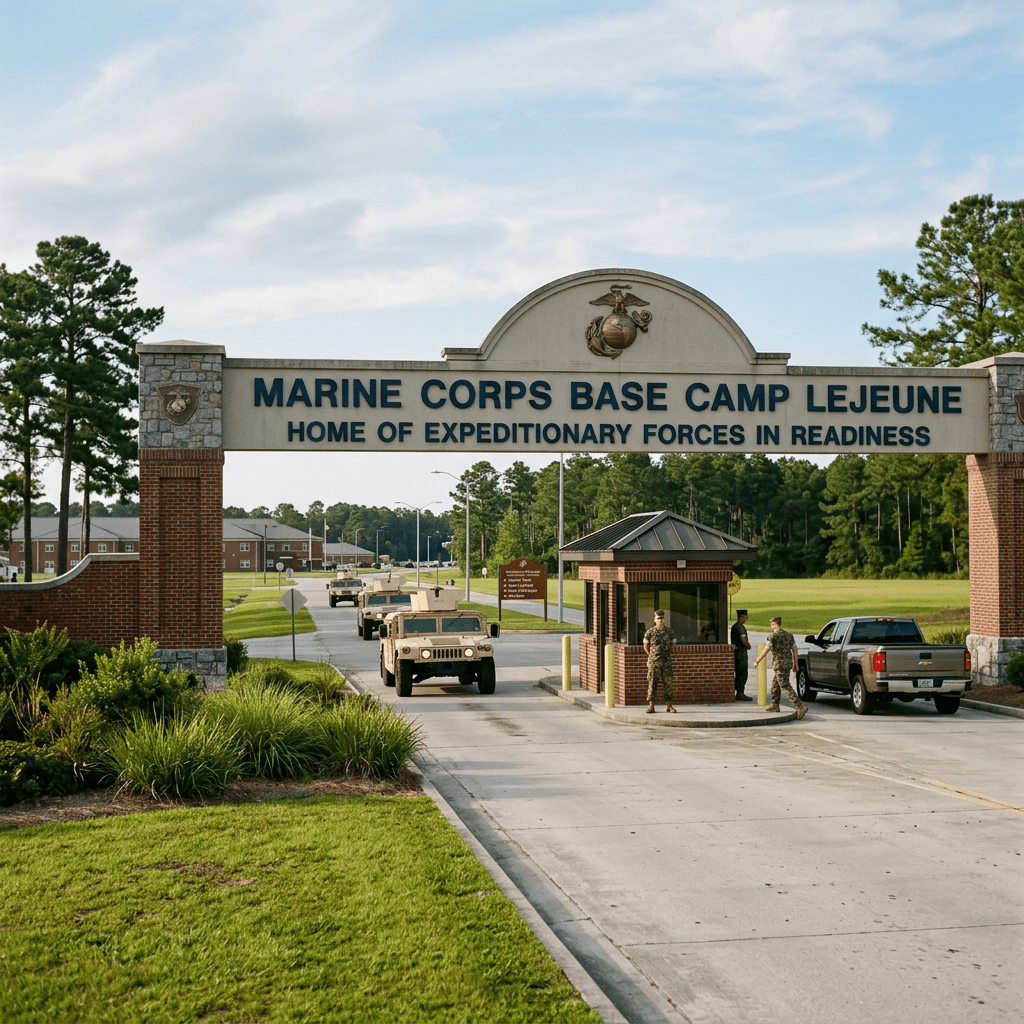
Camp Lejeune entrance sign reading Marine Corps Base Camp Lejeune

On June 30, Navy Hospital Corpsmen from II Marine Expeditionary Force, located at Camp Lejeune, North Carolina, tested diagnoses prototypes under the Traumatic Brain Injury Field Assessment Program: A handheld hemorrhage detector, a non-invasive scanner like low-power radiofrequency waves, was tested, as it measured changes in optical density or electromagnetic fields. Additionally, medics tested a number of digital neurocognitive assessments. This testing software can be stored on a phone or tablet, thereby replacing paper-and-pencil assessments. Importantly, the prototypes tested do not require blood proteins and, therefore, no blood draw is needed for diagnosis.