UC Leads National Study of Support for Brain Injury Caregivers

The NIH announced on October 6, 2026, that they have provided a R01 grant of $2.5 million to University of Cincinnati researchers. Building on the positive results of an earlier and smaller study, this five-year study is instead a larger national trial of a wellness program for families caring for loved ones with traumatic brain injuries.
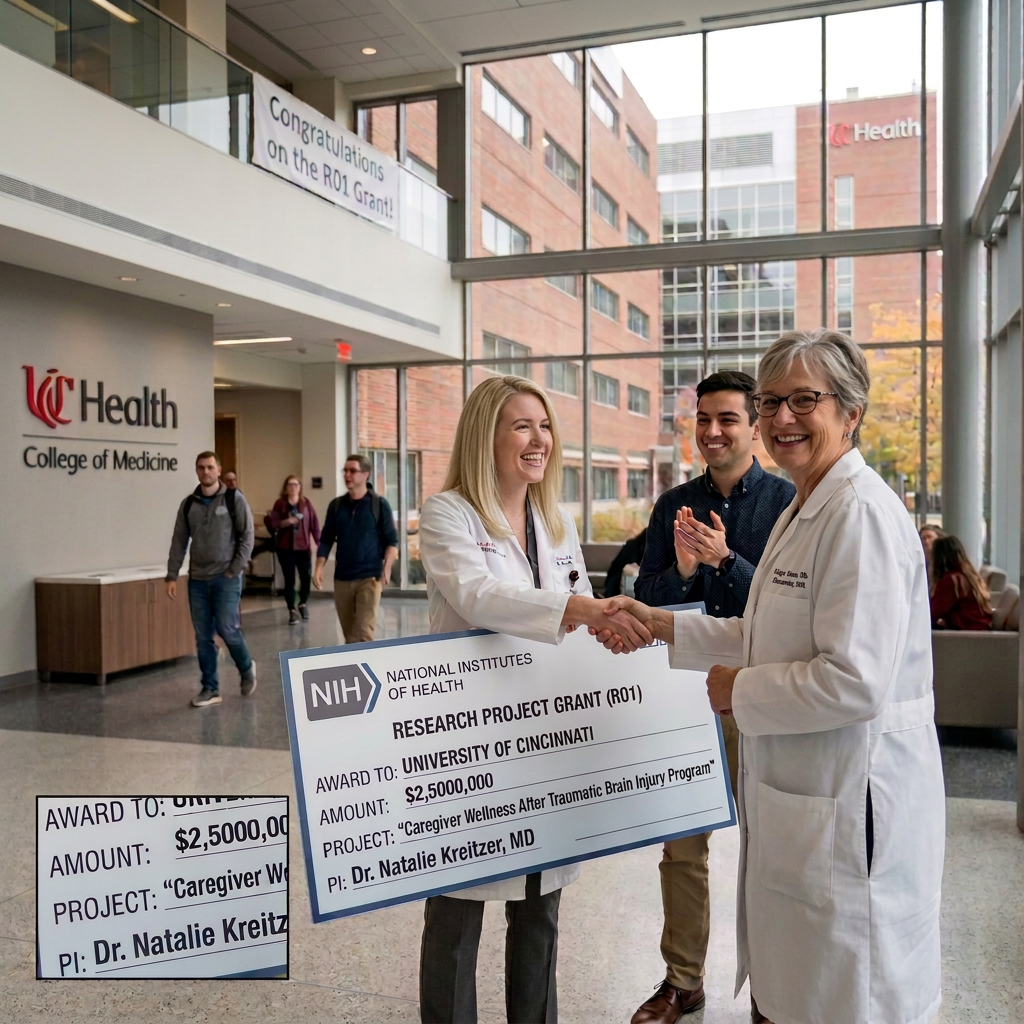
Researchers present a $2,450,000 NIH research grant check at UC Health College of Medicine; banner reads “Congratulations on the R01 Grant!” and check names University of Cincinnati, Caregiver Wellness After Traumatic Brain Injury Program, and Dr. Natalie Kreitzer, MD.

Led by Natalie Kreitzer, MD, UC, the Caregiver Wellness After Traumatic Brain Injury Program tests a web- and phone-based program. Caregivers will be guided through personal stress and distress, coping, patient outcomes and cost following a loved one’s traumatic brain injury, in addition to other related topics, such as medical leave, the move from the ICU to rehab, and preparing the home. Involving input not only from UC, but also The Ohio State University, Washington University in St. Louis and the University of Washington, the goal is for 354 patient-caregiver pairs to enroll, with a set start date in early 2027.
Tiny “Brain” Yields Big Answers About Concussions

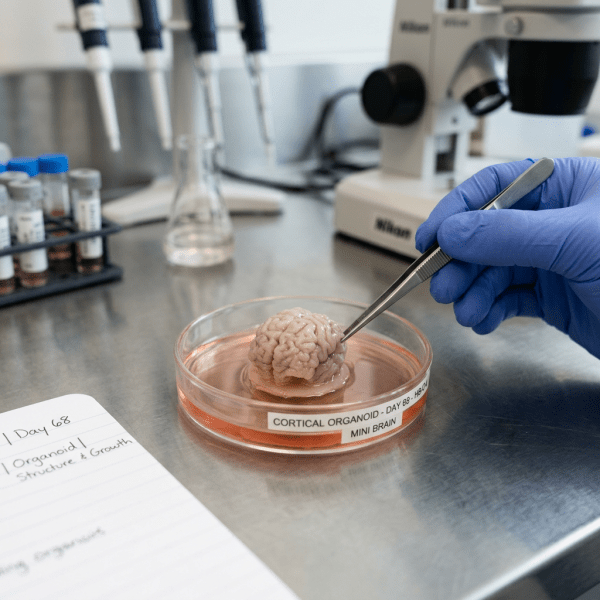
Gloved hand holding tweezers manipulating a miniature brain organoid in a petri dish on a lab bench

What if a pea-sized cluster of lab-grown cells could unlock the mysteries of brain injury? Researchers at the University of Cincinnati’s College of Engineering and Applied Science have been doing just that:

Reported by UC on April 21, 2026, UC Assistant Professor Volha “Olga” Liaudanskaya has engineered a tiny, functioning replica of human brain tissue that researchers can safely study. Termed a “mini-brain”, these lab-grown models combine three types of brain cells with two vascular cell types. This, then, creates a complex five-cell system she can observe in living tissue. Simulating concussions and mild traumatic brain injuries on this model, UC engineers can uncover how blunt-force impacts trigger cellular chain reactions that may ultimately lead to long-term neurodegenerative diseases. (Prior models lacked the vascular components, which researchers now recognize as key, driving brain inflammation and degeneration, perhaps reshaping how America protects its athletes, veterans, and kids.)

According to 2026 estimates by the Centers for Disease Control and Prevention, children alone sustain nearly 4 million concussions every year, so the results of this “mini” innovation may be enormous.