UC Leads National Study of Support for Brain Injury Caregivers

The NIH announced on October 6, 2026, that they have provided a R01 grant of $2.5 million to University of Cincinnati researchers. Building on the positive results of an earlier and smaller study, this five-year study is instead a larger national trial of a wellness program for families caring for loved ones with traumatic brain injuries.
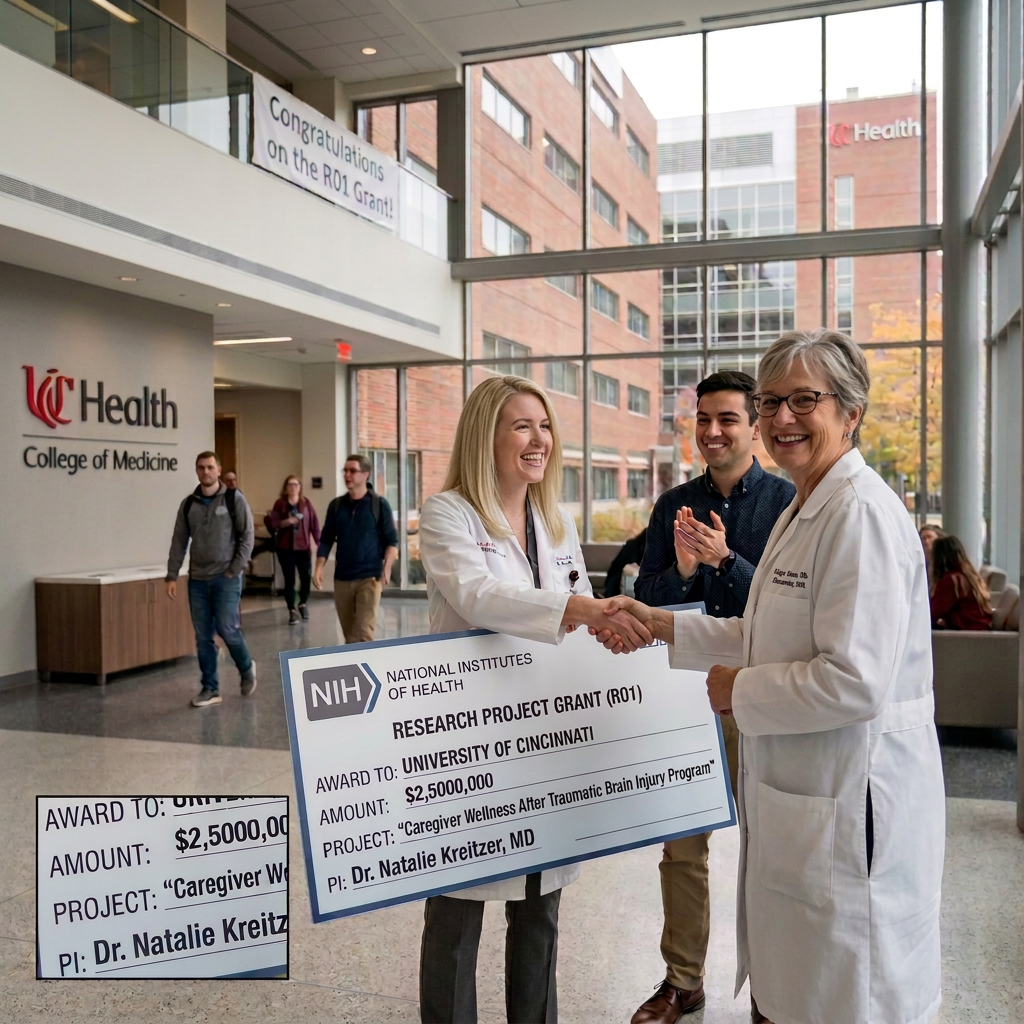
Researchers present a $2,450,000 NIH research grant check at UC Health College of Medicine; banner reads “Congratulations on the R01 Grant!” and check names University of Cincinnati, Caregiver Wellness After Traumatic Brain Injury Program, and Dr. Natalie Kreitzer, MD.

Led by Natalie Kreitzer, MD, UC, the Caregiver Wellness After Traumatic Brain Injury Program tests a web- and phone-based program. Caregivers will be guided through personal stress and distress, coping, patient outcomes and cost following a loved one’s traumatic brain injury, in addition to other related topics, such as medical leave, the move from the ICU to rehab, and preparing the home. Involving input not only from UC, but also The Ohio State University, Washington University in St. Louis and the University of Washington, the goal is for 354 patient-caregiver pairs to enroll, with a set start date in early 2027.


NIH Hypoglycemia-Fall Studies Explain “Marvel” Actor’s Trauma

When Marvel actress Evangeline Lilly fainted and fell face-first onto a Hawaiian boulder in May 2025, she sustained a brain injury. During her beach outing, the actress fainted and fell face-first onto a boulder, resulting in brain damage affecting “almost every area” of cognitive function. Last week, as has been widely reported, the actress revealed on Instagram that recent brain scans confirm lasting damage from this fall.

As to her prior medical history, Lilly has revealed that she suffers from hypoglycemia, or low blood sugar. Since she was a child, she has explained that she would have fainting spells due to this condition. Hypoglycemia-induced falls can lead to traumatic brain injury. (While such falls can happen at any age, older adults with diabetes are particularly at risk.) NIH-published studies have documented this dangerous cascade. Research found in the NIH PubMed database confirms that hypoglycemia can trigger loss of consciousness and substantially increase fall risk. A 2025 study examined how hypoglycemia-induced falls cause distinctive brain damage patterns affecting the hippocampus, cerebral cortex, and basal ganglia. Researchers at Washington University School of Medicine, funded by NIH grants, found that hypoglycemic brain injuries differ from other trauma types, causing widespread neuronal death when glucose levels drop critically low.

The “Lost” star now faces what she calls an “uphill battle” for recovery that is an all too familiar journey experienced by many from this medically recognized connection.