“From Invisible Injury to Precision Medicine” with Metabolism

The mildest brain injuries, the most common, leave no trace on CT or MRI scans. New research says the answer to this conundrum may lie in metabolism, how the injured brain burns fuel.

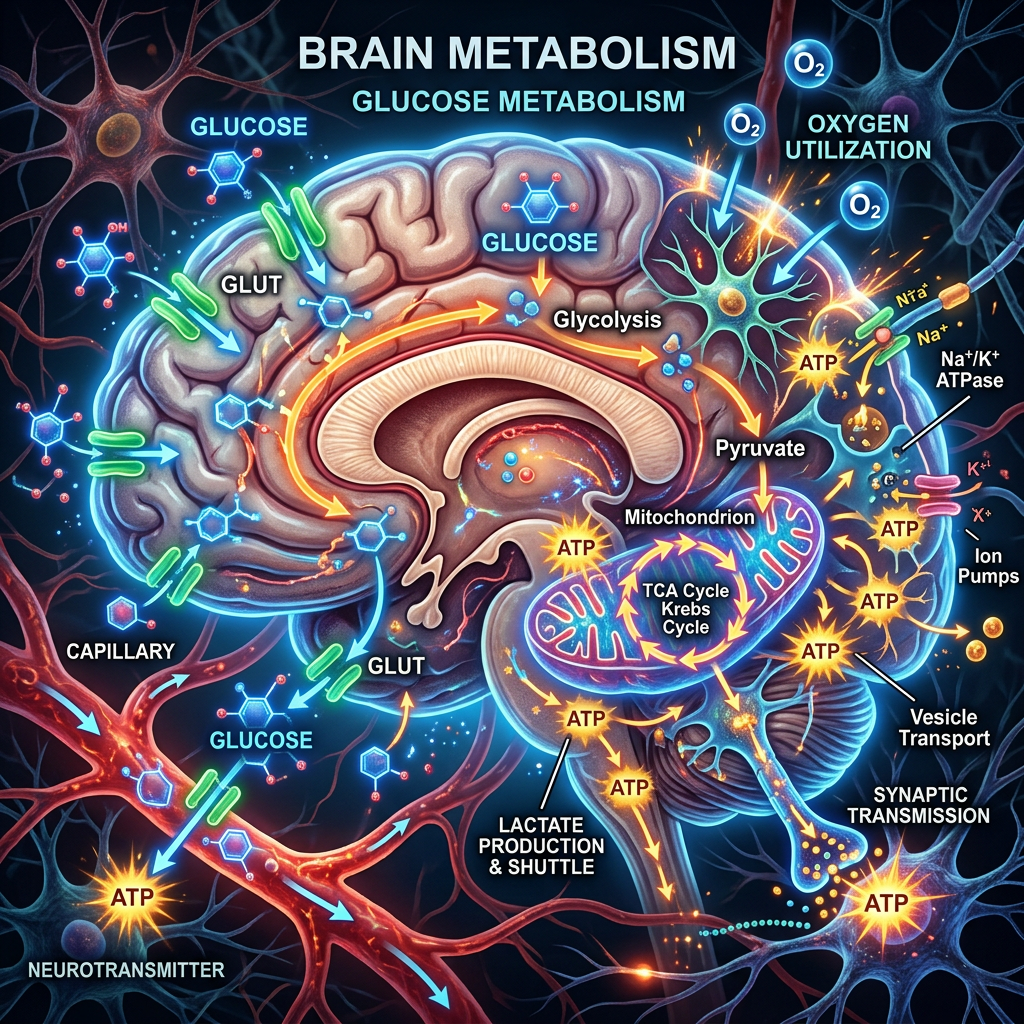
Diagram of brain glucose metabolism, oxygen use, ATP production, and neuronal energy pathways

In a July 2026 Open Access Government article, VA and University of Washington scientist James Meabon argues that FDG-PET (Fluorodeoxyglucose positron emission tomography), which uses a radioactive sugar tracer to show the brain’s glucose use, can expose blast injury where structural scans cannot. Tracking the executive-function problems of 79 blast-injured veterans, this Journal of Neurotrauma study found that a single deep-brain hotspot heightened glucose uptake in the left pallidum.

At the molecular level, a May 2026 npj Metabolic Health and Disease journal review details how blast-related injuries stall the brain’s energy cycle. In particular, metabolites – succinate, lactate, altered pyruvate-dehydrogenase activity – it “spills” into blood and urine.

While the work was funded by the Department of Defense, VA, and NIH, and focused on brain injury in the military, the findings are universally applicable. “By viewing blast injury through metabolism,” Meabon writes, medicine can move “from invisible injury to precision medicine.”

PEGASUS Takes Flight for Kids with Brain Injuries

Winged horse merged with a glowing brain and neural patterns against a cosmic background

When a child arrives at an ICU with severe traumatic brain injury, every minute counts and every decision matters. That’s exactly the problem the Pediatric Guideline Adherence and Outcomes (PEGASUS) program was built to solve.

Developed in 2011 at the Harborview Medical Center, a Level I Trauma Center affiliated with the University of Washington School of Medicine, PEGASUS was created to close the so-called “know-do” gap, translating Brain Trauma Foundation guidelines into bedside practice. The program trains key staff, redesigns workflows, and provides ongoing coaching.

Published in Critical Care Medicine on March 27, 2026, a new study shows the model can reach far beyond Seattle. Across 16 hospitals in Argentina, Chile, and Paraguay, children with isolated severe traumatic brain injury at PEGASUS hospitals showed 8 percentage points higher guideline adherence than those receiving standard care. This determination came from the first randomized trial of an implementation science approach to improving care in adult or pediatric traumatic brain injury.

The reach of PEGASUS is backed by federal investment: the study was supported by a grant from the U.S. National Institute of Neurological Disorders and Stroke. As Dr. Monica Vavilala of UW Medicine clarified, this approach can be adopted by hospitals around the world, whether or not they are Level I Trauma Centers.