Congress Has Been Flying Blind on Veteran Brain Injury Spending for Years

Shiny golden dollar sign with stacks of bills and coins behind

The Special Disabilities Capacity Report is Congress’s primary tool for deciding how much to invest in VA’s TBI treatment infrastructure. If the numbers feeding that decision are wrong, the veterans who depend on that care pay the price.

A February 2026 review by the VA Office of Inspector General revealed that in FY 2023, the VA reported the wrong financial data for traumatic brain injury, using obligations rather than actual expenditures, thereby overstating actual TBI spending. More so, they failed to report TBI spending at both the geographic service area and national levels as required by law. The DVA Office of Inspector General’s Report 25-01863-31 also determined that VA’s capacity data did not capture community care services or the extent to which bed capacity was used at its specialized rehabilitation centers.

Pointedly, these data errors are the same as those that have been flagged in prior years. This raises questions about whether Congress receives an accurate picture of VA’s TBI treatment infrastructure. As Iowa Rep. Mariannette Miller-Meeks, Chairwoman of the House VA Health Subcommittee, stated at a March 2026 oversight hearing: “Wrong data takes resources away from [other] areas of need.”

Study Bolsters Push for Personalized Treatment

Poster with the text 'Every Brain Injury is Different' overlaid on abstract neural network graphics

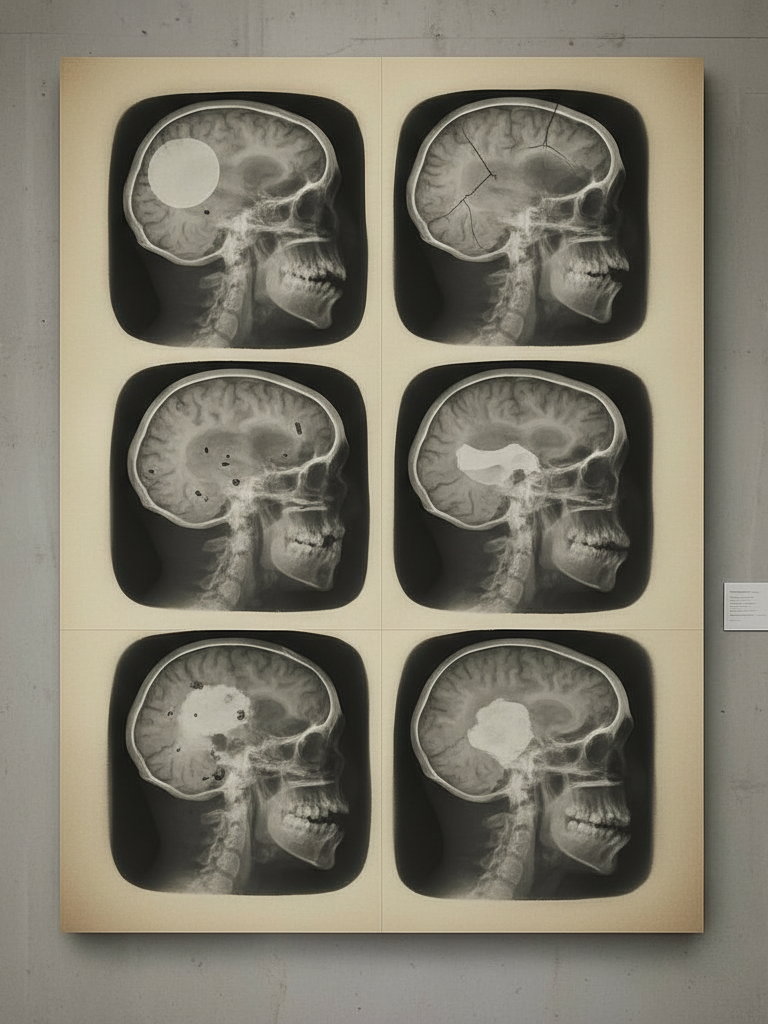
A study published in the journal Neurology (epub April 3, 2026; print April 28, 2026), and currently available through the NLM PubMed database, reveals evidence that traumatic brain injuries affect each person’s brain in remarkably unique ways. While such a scientific revelation may seem evident to survivors, it challenges one-size-fits-all treatment approaches.

Researchers led by Jake Mitchell of Monash University (Australia) analyzed brain scans from 407 TBI patients and 224 healthy controls using normative modeling, a technique that measures individual brains against healthy population norms much like pediatric growth charts.  Co -authored by researchers at the VA Palo Alto Healthcare System, the study found that no more than 23% of patients shared an extreme deviation in the same brain region.

The findings help explain why nearly 30 clinical trials for acute TBI treatments have failed to identify effective therapies. The study results also bolster the case for personalized brain injury medicine. 

House Introduces a BEACON of Hope for Veterans with Brain Injuries

Representative Jack Bergman (MI), along with 5 original co-sponsors [Sarah Elfreth (MD), Kimberlyn King-Hinds (MP), Donald G. Davis (NC), Derrick Van Orden (WI), Morgan Luttrell (TX)] introduced the BEACON Act, H. R. 6993, in January 2026 to transform how the Department of Veterans Affairs treats traumatic brain injuries. The Veterans TBI Breakthrough Exploration of Adaptive Care Opportunities Nationwide Act establishes two grant programs totaling $60 million to fund innovative, non-pharmacological treatments for mild-to-moderate TBI.*

The sponsor of the bill and at least one of its co-sponsors bring personal stakes to this fight. Bergman, a retired Marine Lieutenant General with 40 years of service including Vietnam combat, witnessed how invisible injuries affect service members. Elfreth watched her grandfather – a Korean and Vietnam War veteran – suffer from PTSD, inspiring her earlier success passing Maryland’s David Perez Military Heroes Act.

Veterans often feel “unseen, unheard, and alone” navigating systems that treat symptoms rather than people. The BEACON Act addresses these gaps by funding research into evidence-based alternatives, training clinicians, and partnering academic institutions with VA facilities to bring innovative care directly to veterans.

*Per bill text, the TBI Innovation Grant Program will “award grants to eligible entities… for the development, implementation, and evaluation of approaches and methodologies for prospective randomized control trials for 11 neurorehabilitation treatments for the treatment of chronic mild TBI (mTBI) in veterans.” Additionally, the Act with provide grants for “independent third-party research studies and treatment with respect to supplemental neurorehabilitation treatments of mTBI.”