The Biggest Veterans Bill in Years Buries a Tinnitus Trap

U.S. flag waving with Capitol building and two military personnel silhouette, text about Veterans Act 2026

House Veterans’ Affairs Chairman Mike Bost (IL) and Senate Veterans’ Affairs Chairman Jerry Moran (KS) introduced the Take Care of America’s Veterans Act (H.R. 9237/S. 4744) on June 10, 2026. This new 554-page, 62-page bill includes many sections that affect the brain injured from multiple angles:

Led by Rep. Jack Bergman (MI), a retired Marine general, and Rep. Sarah Elfreth (MD), the BEACON Act provision authorizes roughly $60 million for VA grants targeting non-pharmacological treatments for mild-to-moderate TBI. The Precision Brain Health Research Act, championed by Sen. Jerry Moran and Sen. Angus King (ME), directs a 10-year VA research plan on repetitive low-level blast injuries. The bill’s TBI provision includes A Blast Overpressure Task Force and HBOT reporting requirement, from Rep. Gregory Murphy (NC). A catastrophic-disability supplement of $833/month would benefit many severe TBI cases.

Furthermore, the package includes the Major Richard Star Act, the Love Lives On Act, and the Veterans’ ACCESS Act, among others. Rep. Gus Bilirakis (FL), a Congressional Brain Injury Task Force member, is among 20 House cosponsors; Senate cosponsors are John Boozman (AR) and Kevin Cramer (ND).

While the bill may appear wholly beneficial, it’s controversial because it offsets costs by reclassifying tinnitus – often a TBI symptom – as a derivative condition. (A derivative condition refers to a medical, legal, or mathematical situation that results directly from a pre-existing or primary cause.) This new classification would eliminate its standalone VA rating and data shows that it could potentially cut $57 billion in benefits for 1.5 million veterans.

House Introduces a BEACON of Hope for Veterans with Brain Injuries

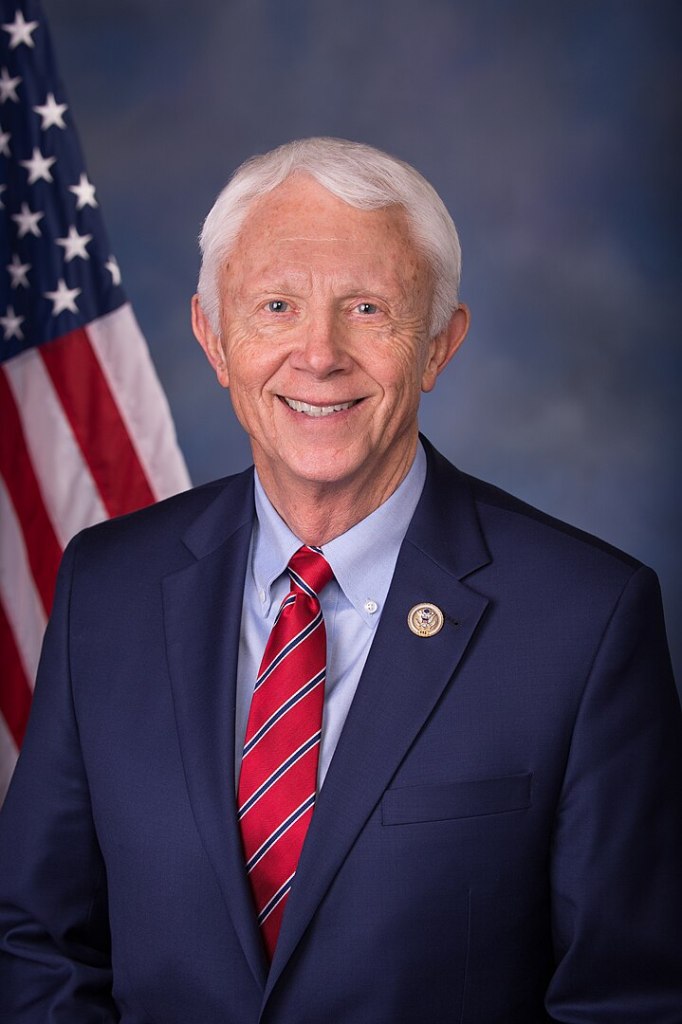
Representative Jack Bergman (MI), along with 5 original co-sponsors [Sarah Elfreth (MD), Kimberlyn King-Hinds (MP), Donald G. Davis (NC), Derrick Van Orden (WI), Morgan Luttrell (TX)] introduced the BEACON Act, H. R. 6993, in January 2026 to transform how the Department of Veterans Affairs treats traumatic brain injuries. The Veterans TBI Breakthrough Exploration of Adaptive Care Opportunities Nationwide Act establishes two grant programs totaling $60 million to fund innovative, non-pharmacological treatments for mild-to-moderate TBI.*

The sponsor of the bill and at least one of its co-sponsors bring personal stakes to this fight. Bergman, a retired Marine Lieutenant General with 40 years of service including Vietnam combat, witnessed how invisible injuries affect service members. Elfreth watched her grandfather – a Korean and Vietnam War veteran – suffer from PTSD, inspiring her earlier success passing Maryland’s David Perez Military Heroes Act.

Veterans often feel “unseen, unheard, and alone” navigating systems that treat symptoms rather than people. The BEACON Act addresses these gaps by funding research into evidence-based alternatives, training clinicians, and partnering academic institutions with VA facilities to bring innovative care directly to veterans.

*Per bill text, the TBI Innovation Grant Program will “award grants to eligible entities… for the development, implementation, and evaluation of approaches and methodologies for prospective randomized control trials for 11 neurorehabilitation treatments for the treatment of chronic mild TBI (mTBI) in veterans.” Additionally, the Act with provide grants for “independent third-party research studies and treatment with respect to supplemental neurorehabilitation treatments of mTBI.”