No Congressional Urge to Move BACK HOME

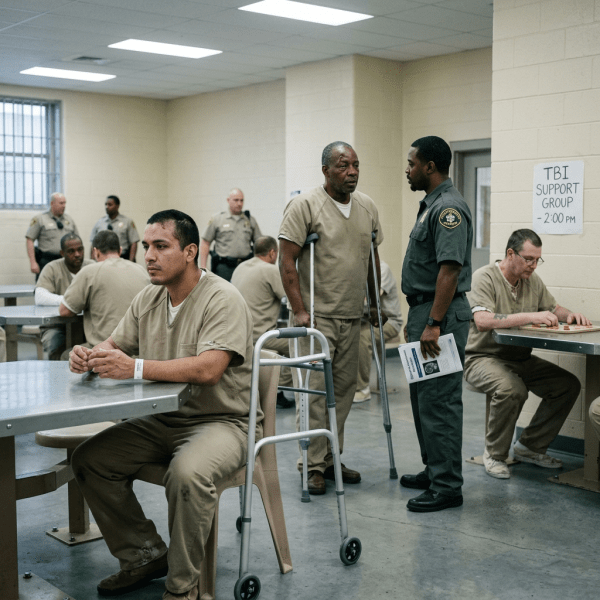
Inmates in prison uniforms in a common room with correctional officers and a sign reading 'TBI Support Group – 2:00 PM'

An estimated 107,400 veterans are serving time in state or federal prison, many of whom may carry wounds that no one can see. Combat exposure-associated mental and physical consequences including traumatic brain injury, PTSD, and mood disorders, are unfortunately directly linked to a greater likelihood of criminal justice involvement among veterans. Currently, by law, the VA cannot provide hospital or outpatient care to incarcerated veterans because penal institutions are legally obligated to furnish inmate healthcare. Bipartisan legislation aims to break that cycle.

The Get Justice-Involved Veterans Behavioral Assistance and Care for Key Health Outcomes to Maintain Empowerment (BACK HOME) Act, was introduced by Senators Angus King (ME) and Pete Ricketts (NE), along with Representatives Herb Conaway (NJ) and Morgan Luttrell (TX). The bill, S. 4162 and H.R. 8044, would create a VA pilot program to furnish mental health services to incarcerated veterans, prioritizing those with service-connected TBI, PTSD, or military sexual trauma. It would also ensure automatic resumption of disability compensation payments upon a veteran’s release from incarceration.

Logos of veteran associations and psychological associations side by side

“The Get Justice-Involved Veterans BACK HOME Act is about closing a dangerous gap in care by ensuring that justice-involved veterans can still access the mental health services they need to heal, rebuild, and successfully reenter their communities,” said Senator King. Congressman Conaway, a physician himself, added: “The Get Justice-Involved Veterans BACK HOME Act is about closing a dangerous gap in care by ensuring that justice-involved veterans can still access the mental health services they need to heal, rebuild, and successfully reenter their communities.”

The legislation is supported by the American Legion, Vietnam Veterans of America, the American Psychological Association, and the American Psychiatric Association.  Unfortunately, there has been no action on either the Senate or House BACK HOME Acts since their respective  introductions on March 23, 2026, and March 24, 2026.

Your Eyes Can Reveal What’s In Your Brain

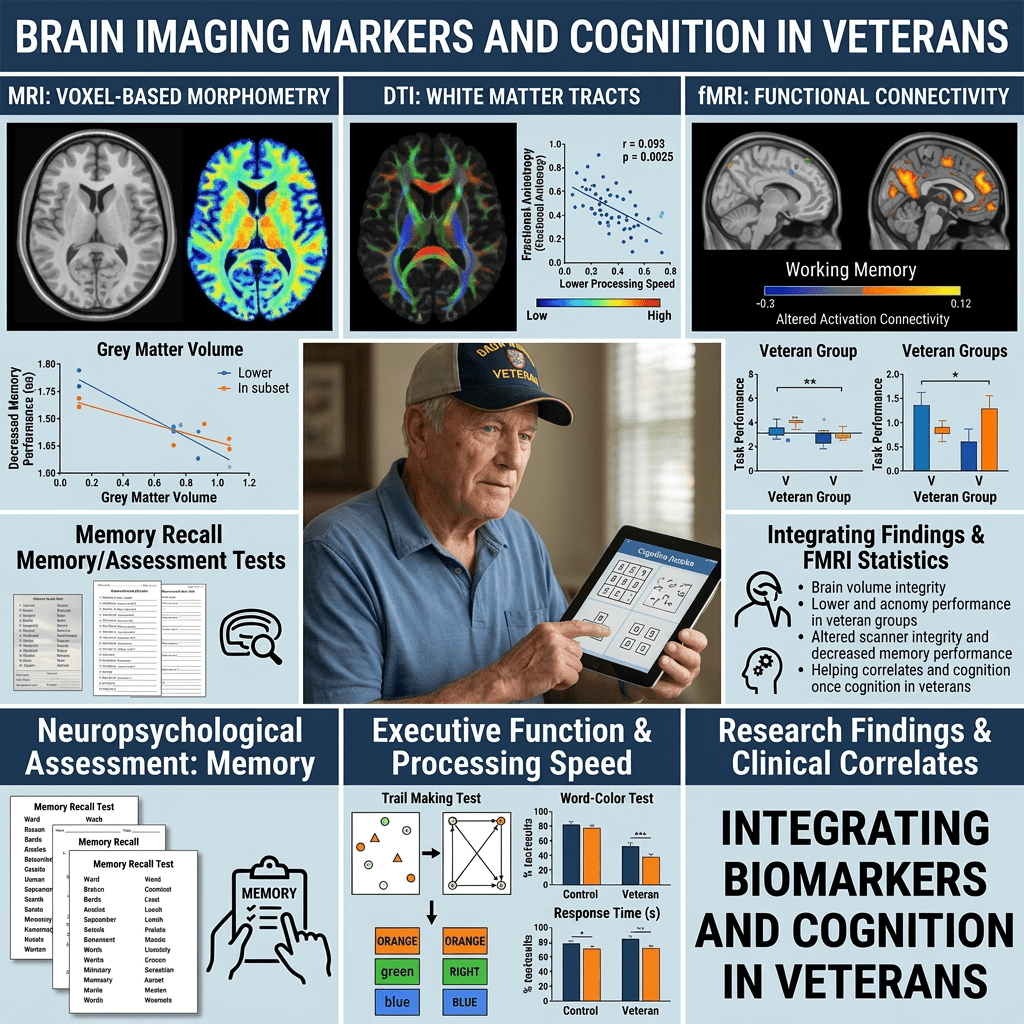
In March 2026, the University of Colorado Anschutz Medical Campus published the results of a study that reveals high-speed eye-tracking technology can detect lasting neurological damage from mild traumatic brain injuries. More so, it showed that the damage that can be detected may be completely invisible to MRI scans, CT imaging, and routine clinical exams. This matters enormously. Current standard concussion assessments are largely subjective and can result in patients being told they’ve recovered when their brains are still struggling.

At the CU’s Marcus Institute for Brain Health, researchers tested 78 military veterans and measured subtle disruptions in eye movement that expose hidden neural damage. The findings were sobering: deficits persisted 10 to 15 years after the original injury. As Dr. Jeffrey Hebert, who led the study, noted, “Even when someone feels recovered, their brain may still be working differently behind the scenes.” Funded by the Department of Defense, this technology offers something conventional medicine currently cannot – objective, documented proof of brain trauma.

VA Recognizes TBI Mistake: Positive, But Possibly Too Late

According to the Defense and Veteran’s Brian Injury Center (DVBIC), a cooperative between the Department of Defense and Veteran’s Affairs, “Traumatic brain injury (TBI) is a significant health issue which affects service members and veterans during times of both peace and war.”  Given that the military recognizes that traumatic brain injury (TBI) is a major problem, it is a shock that, since 2007, 25,000 veterans who are now known to suffer from traumatic brain injury were not initially diagnosed and treated for TBI.  (Tested by doctors who have been found to be unqualified, these veterans were diagnosed with post-traumatic stress disorder (PTSD).  PTSD is terrible, yes, but more treatable than TBI.)

Through this major error, tens of thousands of veterans were not given the appropriate medical and financial help they needed and deserved.  Fortunately, the military now realizes its mistakes and can rectify them and prevent them from happening again.  For many veterans, who have struggled for years to get the military to recognize its difficulties, though, is it too little, too late?

(To learn more about TBI and the military from past service members, visit http://www.disabledveterans.org/.)