
USC Aims to Continuously Track for a TBI

USC engineer Yasser Khan won a 2026 DARPA (Defense Advanced Research Projects Agency) Young Faculty Award on August 28, 2006, to develop a wearable patch for traumatic brain injury, the university reported in October 2026. This new patch would detect biomarkers of inflammation and neural damage, along with stress signals, using miniaturized chemical-sensing transistors. Such technology would give doctors a continuous picture that static CT or MRI scans can miss. Financially, this award will result in approximately $700,000 government backing over two years, though the financial assistance could potentially be up to $1.2 million.

While wearable brain injury detectors do exist, it appears that they measure force, not injury: Prevent Biometrics’ smart mouthguards has been mandatory in World Rugby, the international governing body for the rugby union, since 2024. Soldiers’ Blast Gauge sensors log impacts and blast pressure. Abbott’s i-STAT TBI blood test, BrainScope’s EEG and EyeBOX eye-tracking are one-time clinical checks. The continuous tracking of USC’s still-to-be-developed patch is what makes it unique.

USC frames TBI patients as the beneficiaries, through DARPA backing and planned Defense Department approvals suggest military interest.
Another Study Links TBI & PTSD to Cognitive Decline – But Not Through Brain Plaques

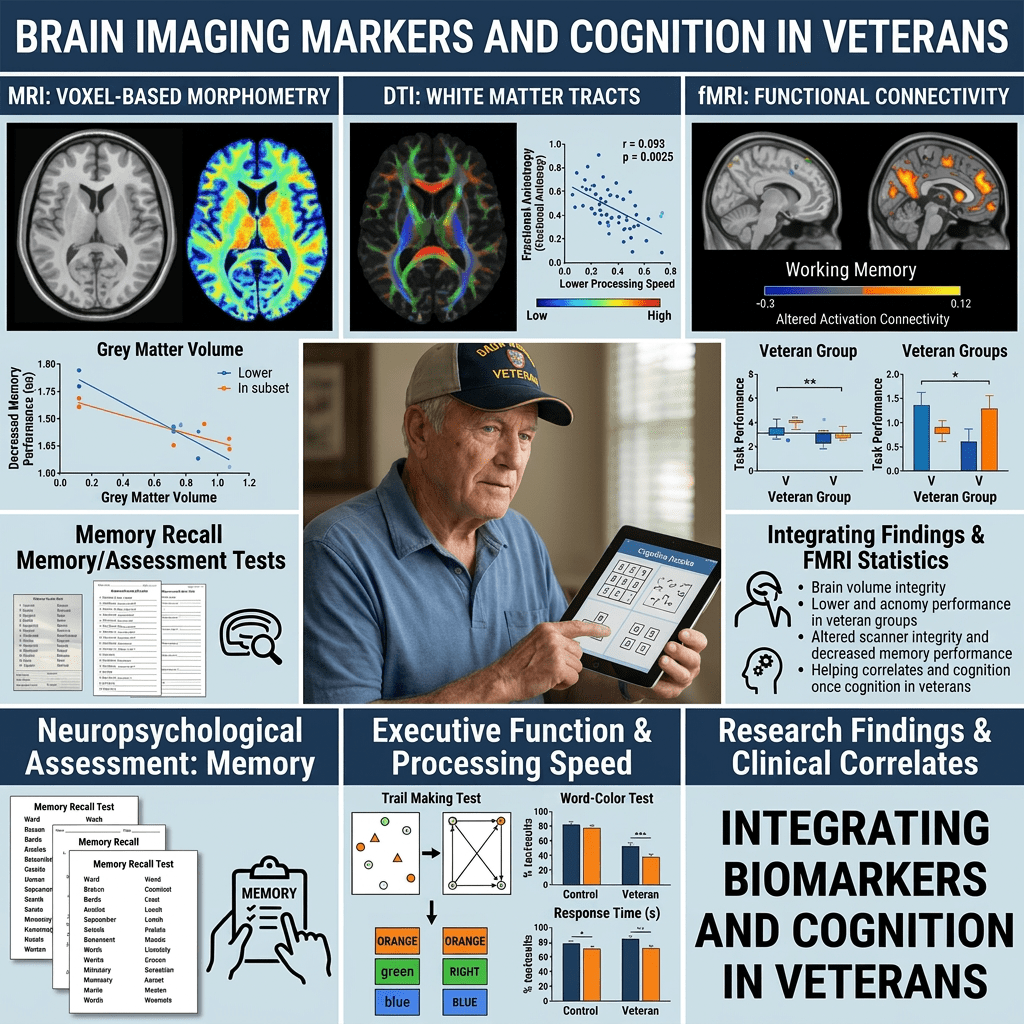
A study published May 30, 2026, in the Journal of Alzheimer’s Disease is reshaping how researchers understand cognitive decline in combat veterans. Using data from the Department of Defense’s Alzheimer’s Disease Neuroimaging Initiative, USC researchers examined how TBI and PTSD affect brain imaging markers and cognition in a U.S. veteran population.

Brain imaging results and cognitive test data assessing memory and executive function in veterans

The study found that greater PTSD symptom severity was linked to poorer performance across all three cognitive tests used, and higher TBI severity correlated with lower scores on the Mini-Mental State Examination. What is striking about these findings is that they did not show that TBI severity nor PTSD symptoms were associated with neuroimaging biomarkers of neurodegeneration or vascular damage.

This discovery suggests that cognitive impairment in veterans may not stem directly from the accumulation of Alzheimer’s pathologies or vascular injuries. This matters enormously for treatment. It suggests veterans’ cognitive struggles may require targeted interventions beyond standard dementia pathways – a finding directly relevant to legislative reauthorizing of funding for federal TBI surveillance and research programs.