Pentagon Started Tracking Blast Injuries Then Ran Out of People

The Department of Defense launched brain-health monitoring for troops exposed to weapons blasts. However, a federal watchdog report released August 18, 2026 found that the DoD lacks the staff, technology, and funding to fully deliver on it.

Government Accountability Office building at 441 G Street NW with American flags

The DoD is highly aware, and the US Government Accountability Office report GAO-26-107829 warns, that firing certain weapons exposes service members to blast overpressure waves, which “may cause problems such as headaches, memory loss, or traumatic brain injury.” As with similar brain injuries, these waves can then travel through the skull and cause micro-injuries in the brain. (In fiscal 2025, 198,161 recruits completed baseline cognitive assessments, and 86% of high-risk personnel were screened, though the Navy lagged at only 59%.) Additionally, the GAO recognizes that a shortage of industrial hygienists remains the “primary barrier” to tracking exposures.

Assistant Secretary of Defense for Health Affairs Keith Bass agreed with both GAO recommendations, noting DoD “estimates it will complete the actions for both recommendations by December 2026.”
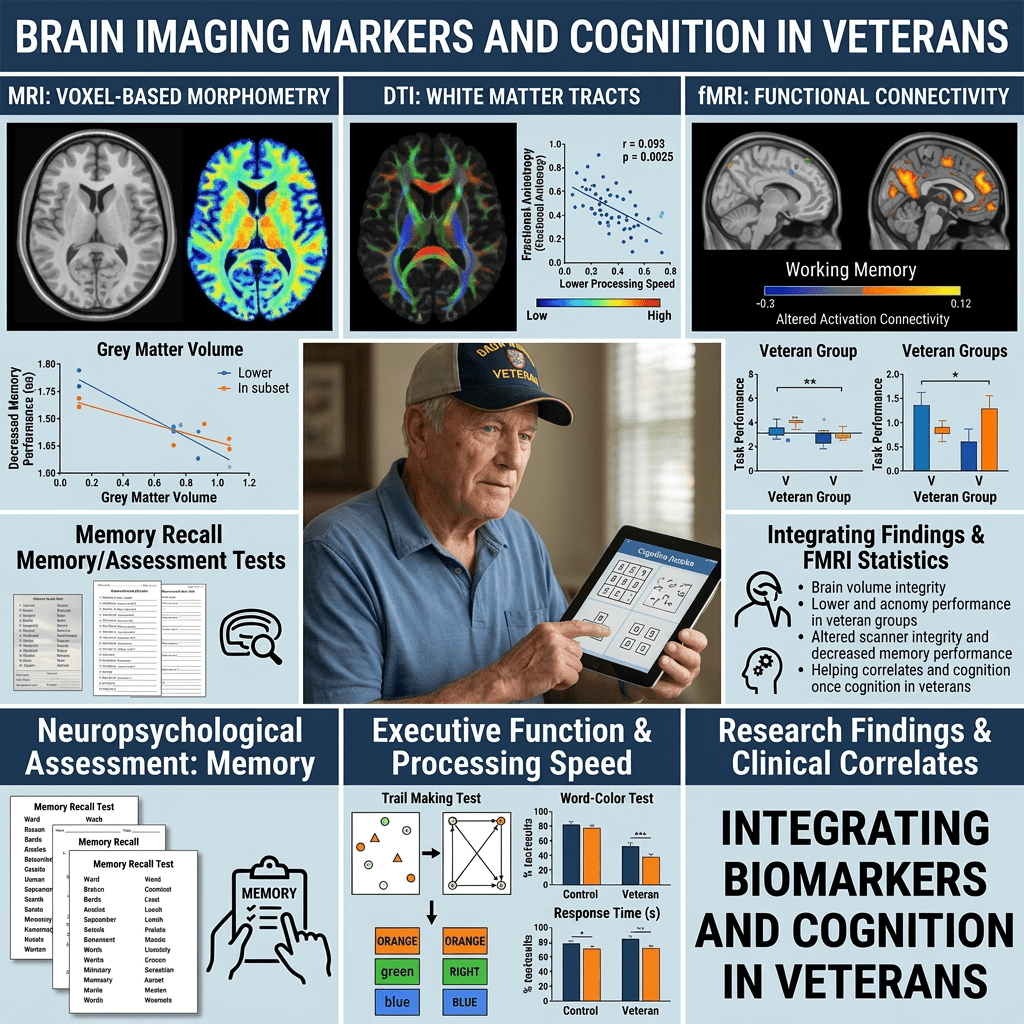
Another Study Links TBI & PTSD to Cognitive Decline – But Not Through Brain Plaques

A study published May 30, 2026, in the Journal of Alzheimer’s Disease is reshaping how researchers understand cognitive decline in combat veterans. Using data from the Department of Defense’s Alzheimer’s Disease Neuroimaging Initiative, USC researchers examined how TBI and PTSD affect brain imaging markers and cognition in a U.S. veteran population.

Brain imaging results and cognitive test data assessing memory and executive function in veterans

The study found that greater PTSD symptom severity was linked to poorer performance across all three cognitive tests used, and higher TBI severity correlated with lower scores on the Mini-Mental State Examination. What is striking about these findings is that they did not show that TBI severity nor PTSD symptoms were associated with neuroimaging biomarkers of neurodegeneration or vascular damage.

This discovery suggests that cognitive impairment in veterans may not stem directly from the accumulation of Alzheimer’s pathologies or vascular injuries. This matters enormously for treatment. It suggests veterans’ cognitive struggles may require targeted interventions beyond standard dementia pathways – a finding directly relevant to legislative reauthorizing of funding for federal TBI surveillance and research programs.