“From Invisible Injury to Precision Medicine” with Metabolism

The mildest brain injuries, the most common, leave no trace on CT or MRI scans. New research says the answer to this conundrum may lie in metabolism, how the injured brain burns fuel.
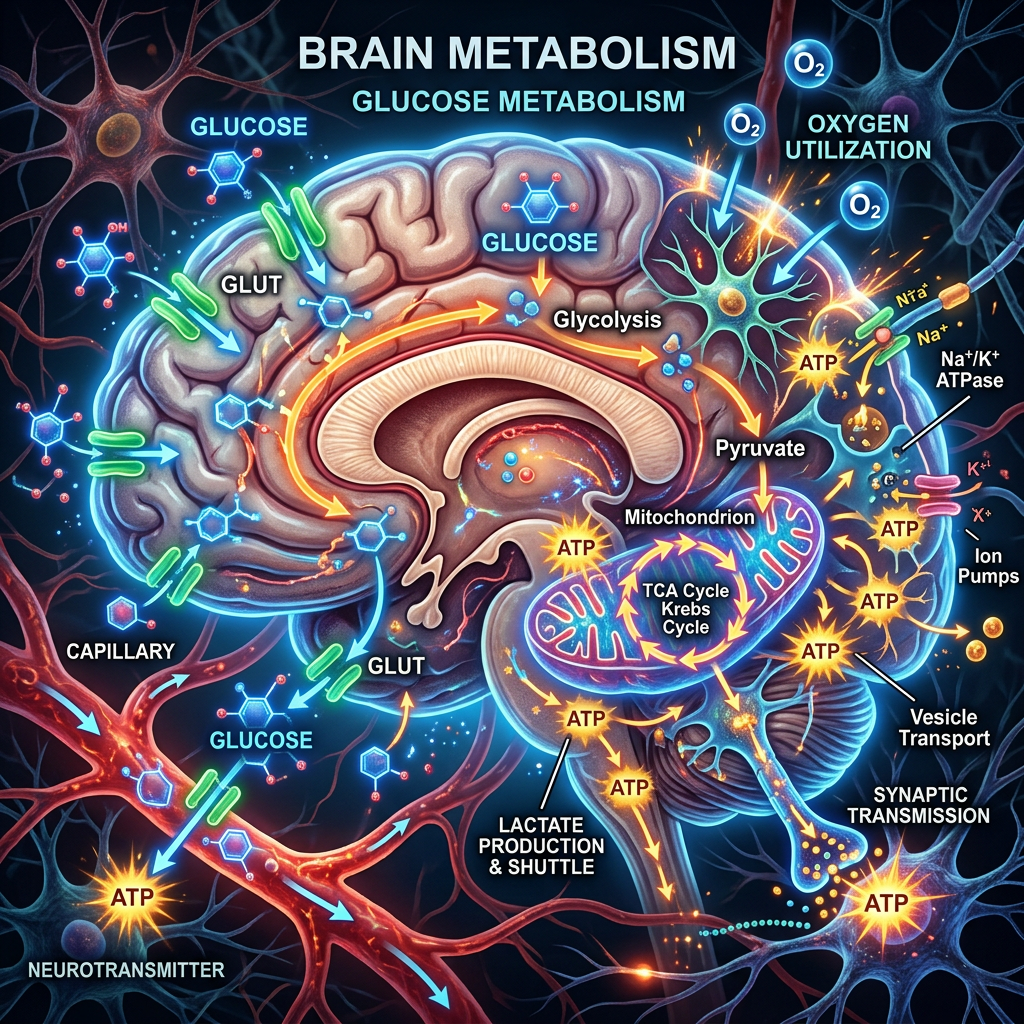
Diagram of brain glucose metabolism, oxygen use, ATP production, and neuronal energy pathways

In a July 2026 Open Access Government article, VA and University of Washington scientist James Meabon argues that FDG-PET (Fluorodeoxyglucose positron emission tomography), which uses a radioactive sugar tracer to show the brain’s glucose use, can expose blast injury where structural scans cannot. Tracking the executive-function problems of 79 blast-injured veterans, this Journal of Neurotrauma study found that a single deep-brain hotspot heightened glucose uptake in the left pallidum.

At the molecular level, a May 2026 npj Metabolic Health and Disease journal review details how blast-related injuries stall the brain’s energy cycle. In particular, metabolites – succinate, lactate, altered pyruvate-dehydrogenase activity – it “spills” into blood and urine.

While the work was funded by the Department of Defense, VA, and NIH, and focused on brain injury in the military, the findings are universally applicable. “By viewing blast injury through metabolism,” Meabon writes, medicine can move “from invisible injury to precision medicine.”

Pentagon Started Tracking Blast Injuries Then Ran Out of People

The Department of Defense launched brain-health monitoring for troops exposed to weapons blasts. However, a federal watchdog report released August 18, 2026 found that the DoD lacks the staff, technology, and funding to fully deliver on it.

Government Accountability Office building at 441 G Street NW with American flags

The DoD is highly aware, and the US Government Accountability Office report GAO-26-107829 warns, that firing certain weapons exposes service members to blast overpressure waves, which “may cause problems such as headaches, memory loss, or traumatic brain injury.” As with similar brain injuries, these waves can then travel through the skull and cause micro-injuries in the brain. (In fiscal 2025, 198,161 recruits completed baseline cognitive assessments, and 86% of high-risk personnel were screened, though the Navy lagged at only 59%.) Additionally, the GAO recognizes that a shortage of industrial hygienists remains the “primary barrier” to tracking exposures.

Assistant Secretary of Defense for Health Affairs Keith Bass agreed with both GAO recommendations, noting DoD “estimates it will complete the actions for both recommendations by December 2026.”