CT Senator Murphy Recovering After Stroke

Senator Chris Murphy (CT) is recovering at Johns Hopkins Hospital in Baltimore after a stroke Oct. 31. “He is awake and alert, and we are optimistic he will make a full recovery,” said Allison Herwitt, his chief of staff.

Speaker addressing an audience at a United States Senate public forum

Reportedly, Murphy felt arm numbness while at his son’s hockey game and was taken to a local hospital. At 53, Murphy is relatively young for a stroke, as statistics have determined that the median age to have a stroke is 71. Survivors can face fatigue, depression and repeat-stroke risk. Whether and when he returns is a medical call; Yale neurologist Adam Jasne said some patients leave the hospital “back to 100 percent normal” while others have lasting deficits.

Murphy’s term runs through January 2031, and he has been mentioned as a 2028 presidential prospect. Other politicians are continuing their terms in office following this same medical emergency: current Senators John Fetterman, Ben Ray Luján and Chris Van Hollen had strokes in 2022. Whether or not Murphy’s personal trauma will affect his support for the stroke community remains uncertain. Previously, Murphy backed Pediatric Stroke Awareness Month resolutions.

As of now, the stroke type and return date are undisclosed.
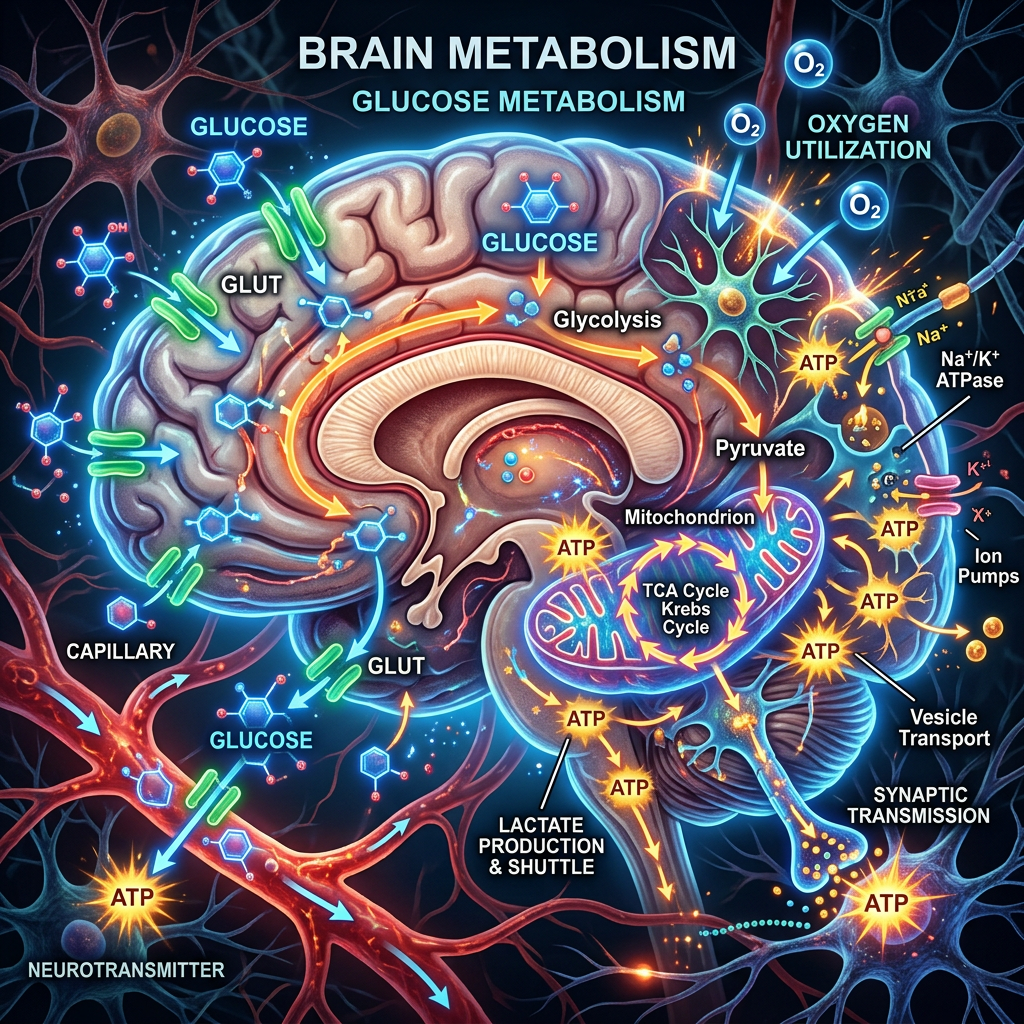
“From Invisible Injury to Precision Medicine” with Metabolism

The mildest brain injuries, the most common, leave no trace on CT or MRI scans. New research says the answer to this conundrum may lie in metabolism, how the injured brain burns fuel.

Diagram of brain glucose metabolism, oxygen use, ATP production, and neuronal energy pathways

In a July 2026 Open Access Government article, VA and University of Washington scientist James Meabon argues that FDG-PET (Fluorodeoxyglucose positron emission tomography), which uses a radioactive sugar tracer to show the brain’s glucose use, can expose blast injury where structural scans cannot. Tracking the executive-function problems of 79 blast-injured veterans, this Journal of Neurotrauma study found that a single deep-brain hotspot heightened glucose uptake in the left pallidum.

At the molecular level, a May 2026 npj Metabolic Health and Disease journal review details how blast-related injuries stall the brain’s energy cycle. In particular, metabolites – succinate, lactate, altered pyruvate-dehydrogenase activity – it “spills” into blood and urine.

While the work was funded by the Department of Defense, VA, and NIH, and focused on brain injury in the military, the findings are universally applicable. “By viewing blast injury through metabolism,” Meabon writes, medicine can move “from invisible injury to precision medicine.”