“From Invisible Injury to Precision Medicine” with Metabolism

The mildest brain injuries, the most common, leave no trace on CT or MRI scans. New research says the answer to this conundrum may lie in metabolism, how the injured brain burns fuel.
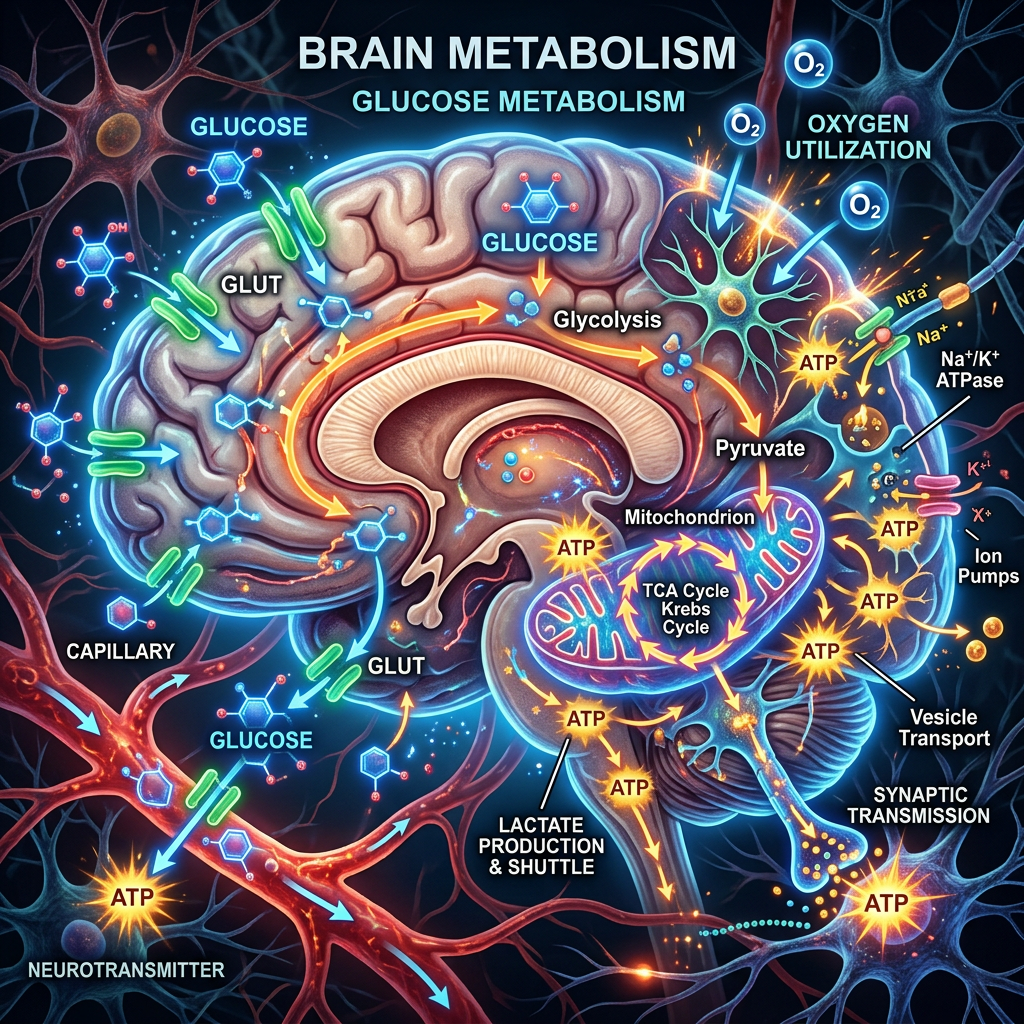
Diagram of brain glucose metabolism, oxygen use, ATP production, and neuronal energy pathways

In a July 2026 Open Access Government article, VA and University of Washington scientist James Meabon argues that FDG-PET (Fluorodeoxyglucose positron emission tomography), which uses a radioactive sugar tracer to show the brain’s glucose use, can expose blast injury where structural scans cannot. Tracking the executive-function problems of 79 blast-injured veterans, this Journal of Neurotrauma study found that a single deep-brain hotspot heightened glucose uptake in the left pallidum.

At the molecular level, a May 2026 npj Metabolic Health and Disease journal review details how blast-related injuries stall the brain’s energy cycle. In particular, metabolites – succinate, lactate, altered pyruvate-dehydrogenase activity – it “spills” into blood and urine.

While the work was funded by the Department of Defense, VA, and NIH, and focused on brain injury in the military, the findings are universally applicable. “By viewing blast injury through metabolism,” Meabon writes, medicine can move “from invisible injury to precision medicine.”
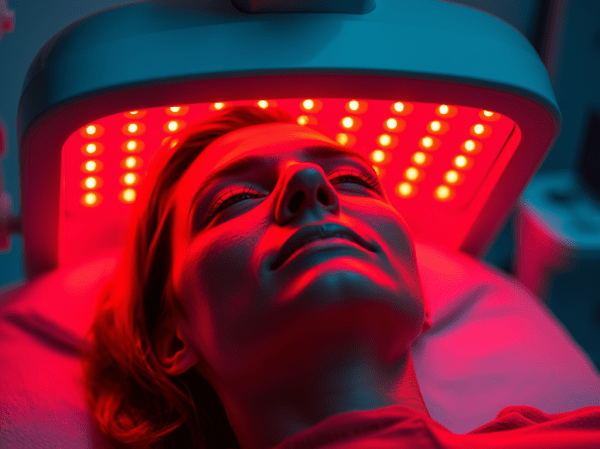
Not Your Average Light Bulb Moment: Red Light Therapy Promising for Brain Injury Treatment

On January 23, 2026, the Journal of Neurotrauma reported on a form of preventative treatment for CTE, and other forms of brain injury: near-infrared light therapy. According to the article, this form of therapy, also known as photobiomodulation, “shines powerful near-infrared light at the brain through the skull, may be able to prevent or reduce subtle damage to the brain before symptoms start, by reducing brain inflammation caused by repetitive impacts.”  

While infrared light therapy may be lesser-known, reports show that the red light therapy and its benefits have, in fact, been known and ongoing for over a decade. Studies indicate this non-invasive, home-based therapy improves cognition, reduces PTSD symptoms, and increases cerebral blood flow by stimulating mitochondrial functio. 

Athletes who received this infrared light show significant reductions in markers of neuroinflammation and axonal stress compared to their pre-season baseline, suggesting the therapy preserves neural integrity. Dr. Carrie Esopenko, associate professor of neurology at University of Utah that, along with NYU, is running a four-year government-funded study on the treatment, hopes “the results will help keep athletes healthy across all sports” while ensuring families “can participate in sports safely for the long term.” Boston University Medical Campus is also investigating transcranial photobiomodulation (tPBM) using red and near-infrared LED devices to treat chronic traumatic brain injury (TBI) and PTSD.

Genetic “Light Switch” Could Turn Off Pediatric Brain Injury

“Epigenetics refers to how your behaviors and environment can cause changes that affect the way your genes work,” reports the CDC. As defined by the NIH National Cancer Institute, a methyl group is, “a small molecule made of one carbon and three hydrogen atoms.” Epigenetic changes can include DNA methylation: this addition of the methyl group to cytosine. (Cytosine is, “chemical compound that is used to make one of the building blocks of DNA and RNA,” notes the NCI.) These modifications, that turn genes “on” or “off” without altering DNA itself, act as a cranial “light switch”, as they, “encode a member of the nerve growth factor family of proteins… promoting binding of this protein to its cognate receptor promotes neuronal survival in the adult brain.”

It may be difficult to fully understand how the aforementioned scientific information relates directly to brain injury, but recent study results further lay out the benefits of DNA methylation in recovery. In December 2025, University of Pittsburgh researchers published findings in the Journal of Neurotrauma related to epigenetics and brain injury. Led by Dr. Lacey Heinsberg and Dr. Amery Treble-Barna, the study examined nearly 300 children at UPMC Children’s Hospital, discovering that children with traumatic brain injuries showed significantly lower DNA methylation of the BDNF gene (Brain-Derived Neurotrophic Factor) compared to children with orthopedic injuries. 

Encouragingly, these negative changes appear reversible. “DNA methylation is dynamic and modifiable, which means it could respond to interventions like diet, exercise and therapy,” Dr. Heinsberg noted. These findings open doors for personalized rehabilitation strategies that could actively improve recovery for children with brain injuries.