CT Senator Murphy Recovering After Stroke

Senator Chris Murphy (CT) is recovering at Johns Hopkins Hospital in Baltimore after a stroke Oct. 31. “He is awake and alert, and we are optimistic he will make a full recovery,” said Allison Herwitt, his chief of staff.

Speaker addressing an audience at a United States Senate public forum

Reportedly, Murphy felt arm numbness while at his son’s hockey game and was taken to a local hospital. At 53, Murphy is relatively young for a stroke, as statistics have determined that the median age to have a stroke is 71. Survivors can face fatigue, depression and repeat-stroke risk. Whether and when he returns is a medical call; Yale neurologist Adam Jasne said some patients leave the hospital “back to 100 percent normal” while others have lasting deficits.

Murphy’s term runs through January 2031, and he has been mentioned as a 2028 presidential prospect. Other politicians are continuing their terms in office following this same medical emergency: current Senators John Fetterman, Ben Ray Luján and Chris Van Hollen had strokes in 2022. Whether or not Murphy’s personal trauma will affect his support for the stroke community remains uncertain. Previously, Murphy backed Pediatric Stroke Awareness Month resolutions.

As of now, the stroke type and return date are undisclosed.
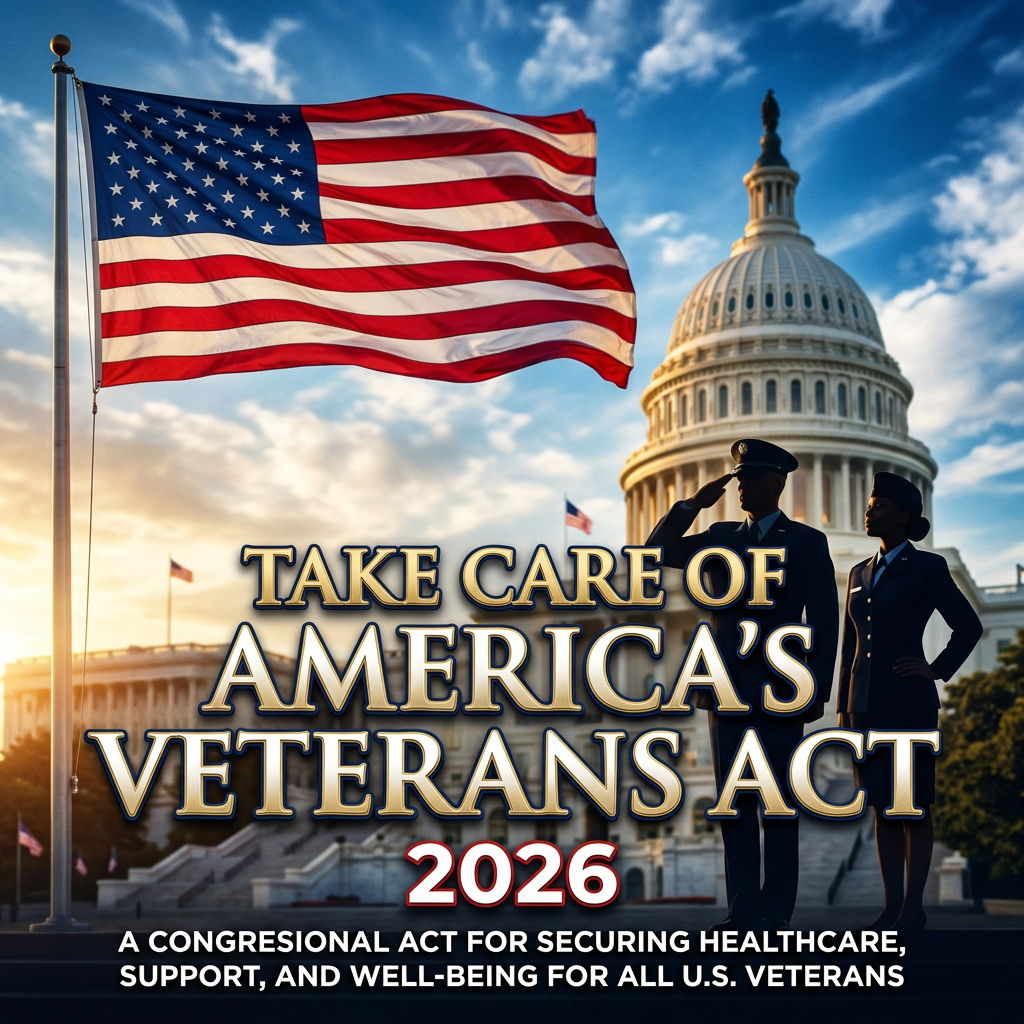
The Biggest Veterans Bill in Years Buries a Tinnitus Trap

U.S. flag waving with Capitol building and two military personnel silhouette, text about Veterans Act 2026

House Veterans’ Affairs Chairman Mike Bost (IL) and Senate Veterans’ Affairs Chairman Jerry Moran (KS) introduced the Take Care of America’s Veterans Act (H.R. 9237/S. 4744) on June 10, 2026. This new 554-page, 62-page bill includes many sections that affect the brain injured from multiple angles:

Led by Rep. Jack Bergman (MI), a retired Marine general, and Rep. Sarah Elfreth (MD), the BEACON Act provision authorizes roughly $60 million for VA grants targeting non-pharmacological treatments for mild-to-moderate TBI. The Precision Brain Health Research Act, championed by Sen. Jerry Moran and Sen. Angus King (ME), directs a 10-year VA research plan on repetitive low-level blast injuries. The bill’s TBI provision includes A Blast Overpressure Task Force and HBOT reporting requirement, from Rep. Gregory Murphy (NC). A catastrophic-disability supplement of $833/month would benefit many severe TBI cases.

Furthermore, the package includes the Major Richard Star Act, the Love Lives On Act, and the Veterans’ ACCESS Act, among others. Rep. Gus Bilirakis (FL), a Congressional Brain Injury Task Force member, is among 20 House cosponsors; Senate cosponsors are John Boozman (AR) and Kevin Cramer (ND).

While the bill may appear wholly beneficial, it’s controversial because it offsets costs by reclassifying tinnitus – often a TBI symptom – as a derivative condition. (A derivative condition refers to a medical, legal, or mathematical situation that results directly from a pre-existing or primary cause.) This new classification would eliminate its standalone VA rating and data shows that it could potentially cut $57 billion in benefits for 1.5 million veterans.