CT Senator Murphy Recovering After Stroke

Senator Chris Murphy (CT) is recovering at Johns Hopkins Hospital in Baltimore after a stroke Oct. 31. “He is awake and alert, and we are optimistic he will make a full recovery,” said Allison Herwitt, his chief of staff.

Speaker addressing an audience at a United States Senate public forum

Reportedly, Murphy felt arm numbness while at his son’s hockey game and was taken to a local hospital. At 53, Murphy is relatively young for a stroke, as statistics have determined that the median age to have a stroke is 71. Survivors can face fatigue, depression and repeat-stroke risk. Whether and when he returns is a medical call; Yale neurologist Adam Jasne said some patients leave the hospital “back to 100 percent normal” while others have lasting deficits.

Murphy’s term runs through January 2031, and he has been mentioned as a 2028 presidential prospect. Other politicians are continuing their terms in office following this same medical emergency: current Senators John Fetterman, Ben Ray Luján and Chris Van Hollen had strokes in 2022. Whether or not Murphy’s personal trauma will affect his support for the stroke community remains uncertain. Previously, Murphy backed Pediatric Stroke Awareness Month resolutions.

As of now, the stroke type and return date are undisclosed.
America’s Silent Emergency, Stroke Act Waits While Senate in Recess

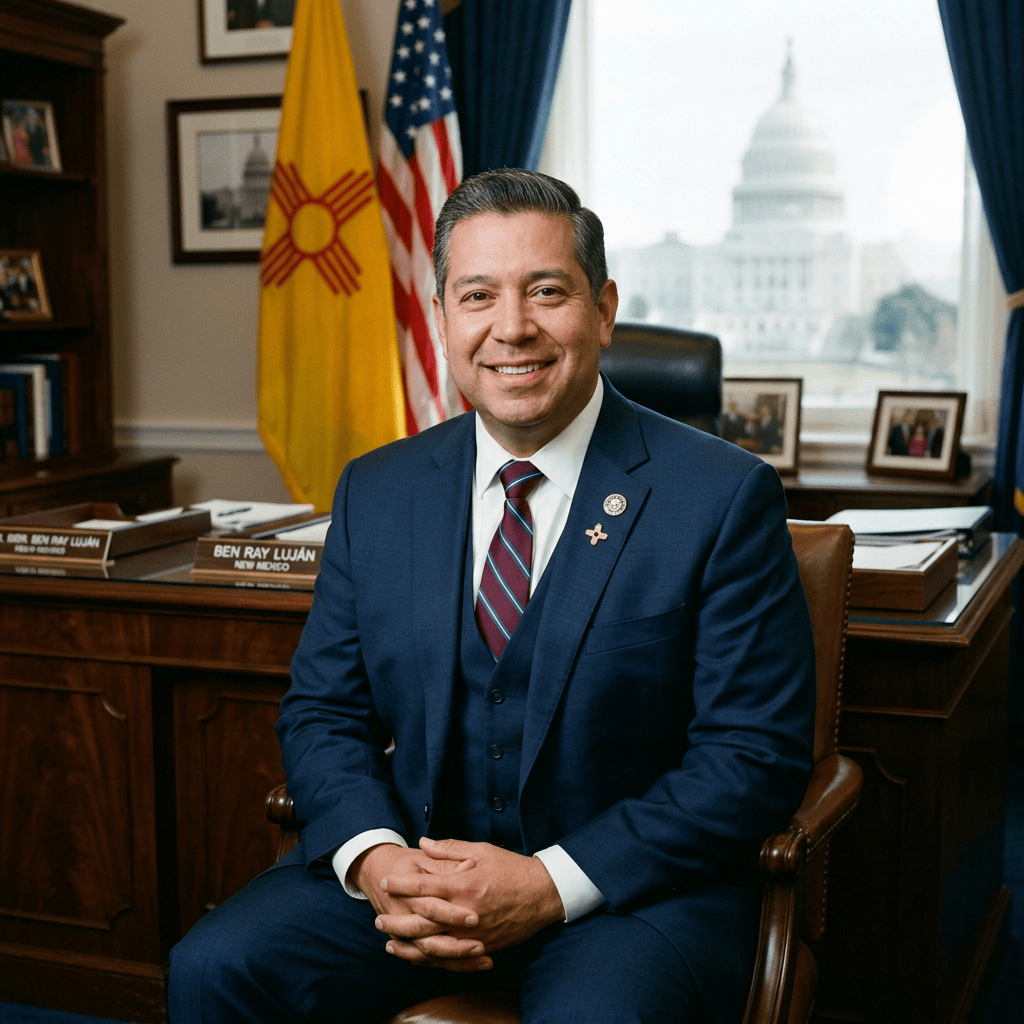
Ben Ray Luján seated in an office beside New Mexico and American flags

“Someone dies of a stroke every 3 minutes and 14 seconds in the United States,” states the CEO of the American Heart Association.” Every second matters when someone experiences a stroke,” Senator Ben Ray Luján (NM) confirms. Luján is himself a stroke survivor, as in 2022 he survived a cerebellar stroke that required emergency brain surgery. On August 5, 2026, he introduced S.5260, the Stroke Act. “I know firsthand how critical it is to receive the right care at the right time.”

The Stroke Act aims to improve stroke care, research, data collection, and prevention nationwide. The bill would authorize $25 million per year through 2032 for NIH research, a CDC national stroke registry, systems-of-care grants, and a public education campaign. Significantly, it is not the first such effort; it follows decades of stroke legislation, including the STOP Stroke Act and the FAST Act.

The current bill has been endorsed by the American Heart Association, in addition to 10 co-sponsors. Though the co-sponsors, including Senator Fetterman, himself a stroke survivor, follow party lines, no opposition to S.5260 has been documented. Upon being introduced, the bill was referred to the Committee on Health, Education, Labor, and Pensions; no further action on the bill has been taken because of Senate’s August recess.