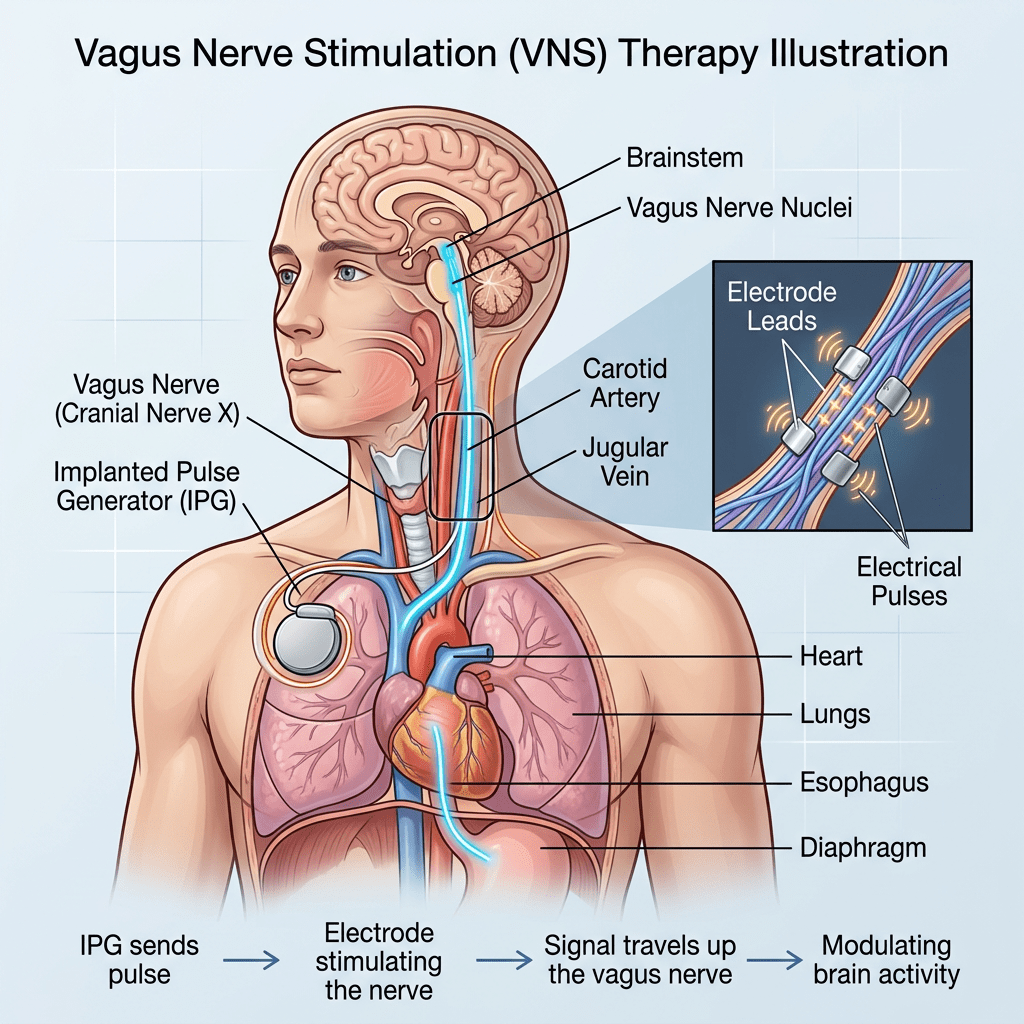
In 2025, the New York Times reported on a neuroscientist who has likened the vagus nerve to “a brake system in your car.” A May 18, 2026 New York Times piece, though, explored whether vagus nerve stimulation (VNS) can genuinely improve health or is simply a “scam”. This has brought renewed attention to a therapy that researchers have been quietly refining for decades; as the vagus nerve, a sprawling cranial nerve connecting the brain to major organs, has become one of neuroscience’s most compelling therapeutic targets, particularly in brain injury recovery.
Researchers in various institutions have demonstrated a direct connection between the VNS and the brain’s learning centers. Almost 4 years ago, University of Colorado Anschutz Medical Campus findings discovered that this connection may lead to treatments improving cognitive retention in both healthy and injured nervous systems. Senior author Cristin Welle, Ph.D., stated: “We concluded that there is a direct connection between the vagus nerve, the cholinergic system that regulates certain aspects of brain function, and motor cortex neurons that are essential in learning new skills.” A 2025 observational study available in the NIH database, and published in Frontiers in Neurology, found that non-invasive VNS was associated with reduced neuroinflammation and recovery in patients with mild traumatic brain injury experiencing persistent post-concussion symptoms.
VNS is also established as a treatment for drug-resistant epilepsy, a condition that can follow traumatic brain injury. However, a 2026 review drawing on PubMed data found that airway-related side effects such as hoarseness, cough, and shortness of breath were the most common reactions, with most resolving after adjustments to stimulation settings. A 2025 meta-analysis confirmed that complications from implanted VNS are generally mild and transient, with adverse events decreasing over time. Researchers continue urging caution, noting that larger randomized trials are still needed before VNS becomes a standard of care for brain injury rehabilitation.