No Congressional Urge to Move BACK HOME

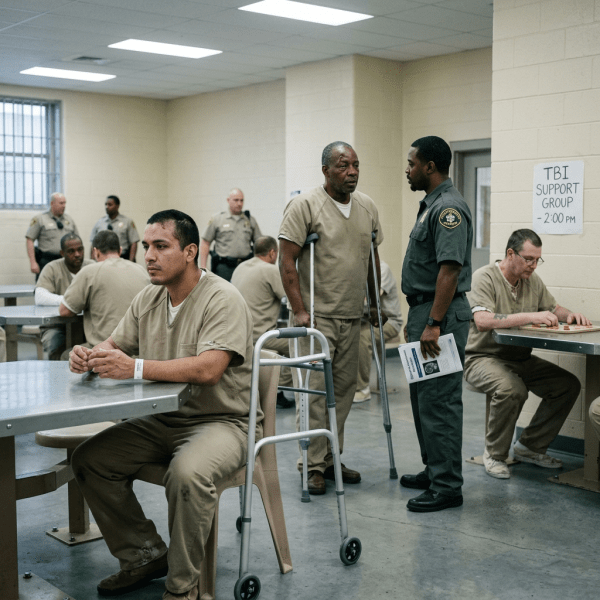
Inmates in prison uniforms in a common room with correctional officers and a sign reading 'TBI Support Group – 2:00 PM'

An estimated 107,400 veterans are serving time in state or federal prison, many of whom may carry wounds that no one can see. Combat exposure-associated mental and physical consequences including traumatic brain injury, PTSD, and mood disorders, are unfortunately directly linked to a greater likelihood of criminal justice involvement among veterans. Currently, by law, the VA cannot provide hospital or outpatient care to incarcerated veterans because penal institutions are legally obligated to furnish inmate healthcare. Bipartisan legislation aims to break that cycle.

The Get Justice-Involved Veterans Behavioral Assistance and Care for Key Health Outcomes to Maintain Empowerment (BACK HOME) Act, was introduced by Senators Angus King (ME) and Pete Ricketts (NE), along with Representatives Herb Conaway (NJ) and Morgan Luttrell (TX). The bill, S. 4162 and H.R. 8044, would create a VA pilot program to furnish mental health services to incarcerated veterans, prioritizing those with service-connected TBI, PTSD, or military sexual trauma. It would also ensure automatic resumption of disability compensation payments upon a veteran’s release from incarceration.

Logos of veteran associations and psychological associations side by side

“The Get Justice-Involved Veterans BACK HOME Act is about closing a dangerous gap in care by ensuring that justice-involved veterans can still access the mental health services they need to heal, rebuild, and successfully reenter their communities,” said Senator King. Congressman Conaway, a physician himself, added: “The Get Justice-Involved Veterans BACK HOME Act is about closing a dangerous gap in care by ensuring that justice-involved veterans can still access the mental health services they need to heal, rebuild, and successfully reenter their communities.”

The legislation is supported by the American Legion, Vietnam Veterans of America, the American Psychological Association, and the American Psychiatric Association.  Unfortunately, there has been no action on either the Senate or House BACK HOME Acts since their respective  introductions on March 23, 2026, and March 24, 2026.
Man’s Best Friend Aids Brain Injury Recovery

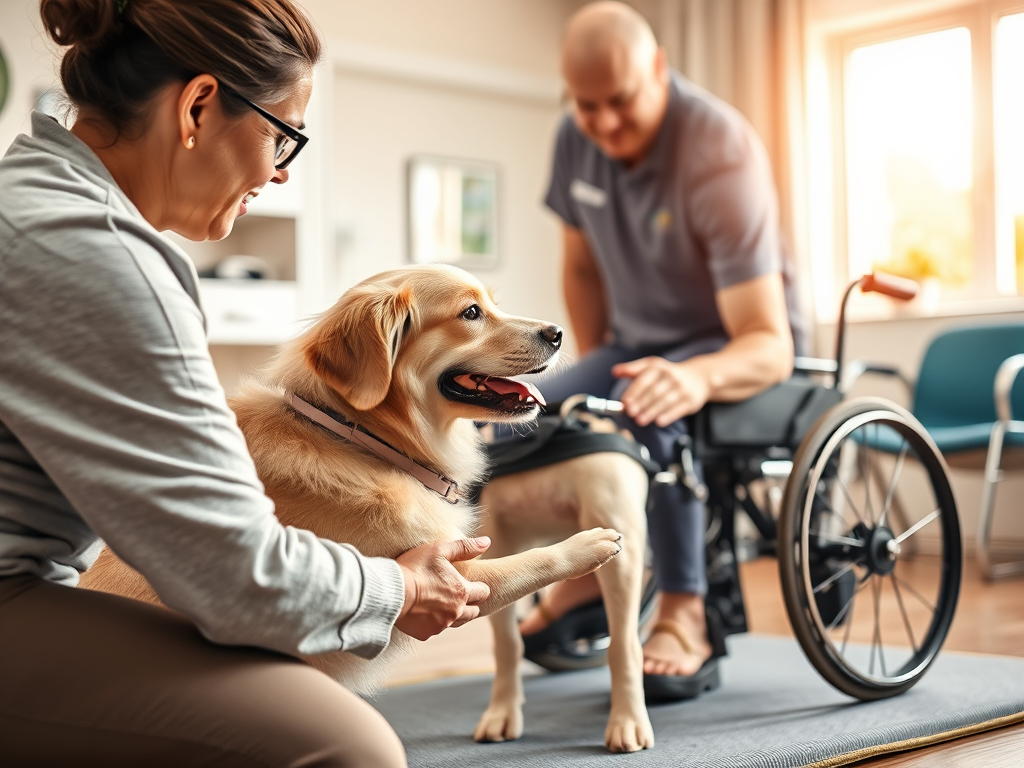
Dogs are proving to be powerful partners in brain injury rehabilitation, offering benefits across physical, emotional, and speech therapy alike.

A March 2026 story from the University of Colorado Health (UCHealth) system documented Alan Tay, a 71-year-old stroke survivor who credits his border collie Olay with driving his recovery. Working with a neurological physical therapist, Alan used dog agility training to rebuild endurance, coordination, and memory – ultimately winning a national canine competition just three months after his stroke. Emotionally, dogs combat the depression and isolation that frequently accompany brain injury. The above-mentioned UCHealth story also notes that Olay gave Alan the will to push through. An NIH-funded clinical trial confirmed that service dogs may meaningfully reduce PTSD symptoms in military members and veterans.

Dogs can assist with speech recovery, as well. Research shows that aphasia patients produce more verbal and nonverbal communication around therapy dogs, which respond to tone and gesture rather than specific words. Speech therapy in such a uniquely low-pressure and therapeutic environment is highly beneficial for language practice.

The bipartisan SAVES Act, which reached the Senate calendar in February 2026, would fund service dogs for veterans with TBI and PTSD. Introduced by Rep. Morgan Luttrell (TX) on April 2, 2025, H.R.2605 explicitly lists “Traumatic brain injury” as a covered condition, recognizing that a trained service dog can be “optimal for the veteran to manage the disability, condition, or diagnosis and live independently.” In March 2026, America’s VetDogs launched a national campaign during this Brain Injury Awareness Month that highlights service dogs’ life-changing impact for TBI survivors, particularly as it relates to counter-balance support and deep pressure therapy.