Domino Effect: How a Concussion Can Buckle a Body

A mild traumatic brain injury doesn’t just rattle the head; it may set the stage for a torn ligament or a stress fracture. In June 2026, the JAMA Network published the findings of a study that found U.S. servicemembers who suffered a mTBI, such as a concussion. The researchers tracked 26,784 troops who enlisted between 2016 and 2020. Musculoskeletal injuries are the leading cause of lost duty days in the military, and it was found that those who had a mTBI were 2.24 times more likely to later suffer this secondary injury.
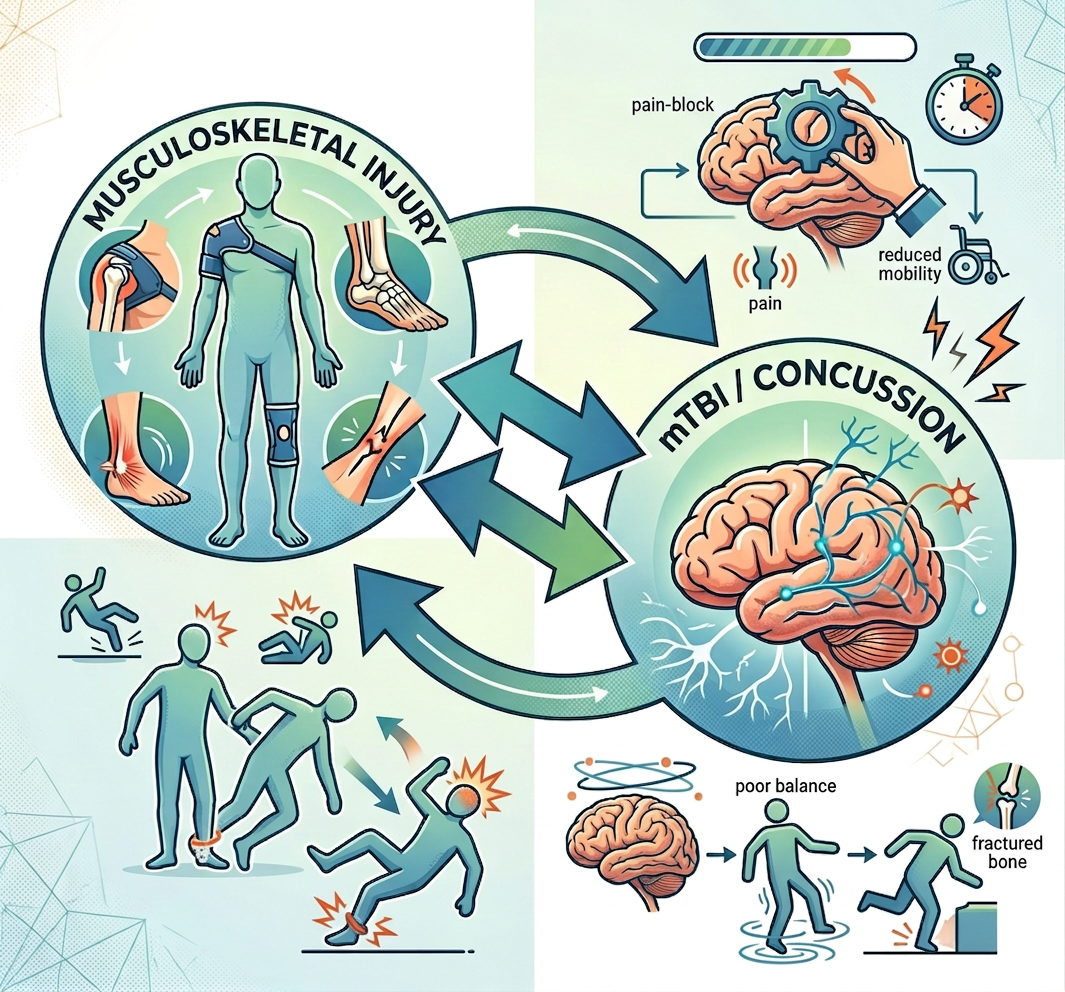
“There appears to be a bi-directional relationship between musculoskeletal injury and mild traumatic brain injury,” said Amy Silder, PhD, a biomedical engineer at the Naval Health Research Center. Referred to as post-concussion syndrome, PCS can include a disruption of balance, coordination, and reaction time long after the headaches fade. As is, it costs the military billions of dollars a year and leaves tens of thousands of troops unable to deploy.

The study’s authors urge clinicians to screen troops’ bodies after any brain injury. Screening concussion patients for lingering physical deficits, the researchers say, could keep more service members healthy and ready. (Though this recent study focused on the military, the clinical suggestions seem that they would be true for all those who have suffered a mTBI.)

Your Eyes Can Reveal What’s In Your Brain

In March 2026, the University of Colorado Anschutz Medical Campus published the results of a study that reveals high-speed eye-tracking technology can detect lasting neurological damage from mild traumatic brain injuries. More so, it showed that the damage that can be detected may be completely invisible to MRI scans, CT imaging, and routine clinical exams. This matters enormously. Current standard concussion assessments are largely subjective and can result in patients being told they’ve recovered when their brains are still struggling.

At the CU’s Marcus Institute for Brain Health, researchers tested 78 military veterans and measured subtle disruptions in eye movement that expose hidden neural damage. The findings were sobering: deficits persisted 10 to 15 years after the original injury. As Dr. Jeffrey Hebert, who led the study, noted, “Even when someone feels recovered, their brain may still be working differently behind the scenes.” Funded by the Department of Defense, this technology offers something conventional medicine currently cannot – objective, documented proof of brain trauma.

Pentagon’s New Coding Rules Aim to Protect Warfighters

On January 23, 2026, the Department of Defense’s Traumatic Brain Injury Center of Excellence published updated ICD-10-CM coding guidance specifically for warfighter brain injuries. ICD-10-CM (International Classification of Diseases, 10th Revision, Clinical Modification) is the standardized system doctors use to classify and record diagnoses. Without precise codes, injuries go miscounted and undertreated.

The new guidance is particularly critical now, as modern warfare inflicts unique brain hazards. Low-level blast overpressure from repeated weapons firing, extreme G-forces on pilots, and unexplained neurological incidents now have dedicated diagnostic codes, enabling better surveillance and resource allocation.

Just days earlier, on January 20, the Center released a research review revealing that mild TBI raises PTSD risk two- to threefold, findings that will shape military treatment protocols. Meanwhile, the Army’s baseline cognitive screening program, launched in August 2024, aims to assess every troop’s brain health proactively.