
“We will be suspending your Social Security number because we found some suspicious activities on your Social Security. If you want more information about this case, press 1. Thank you.”
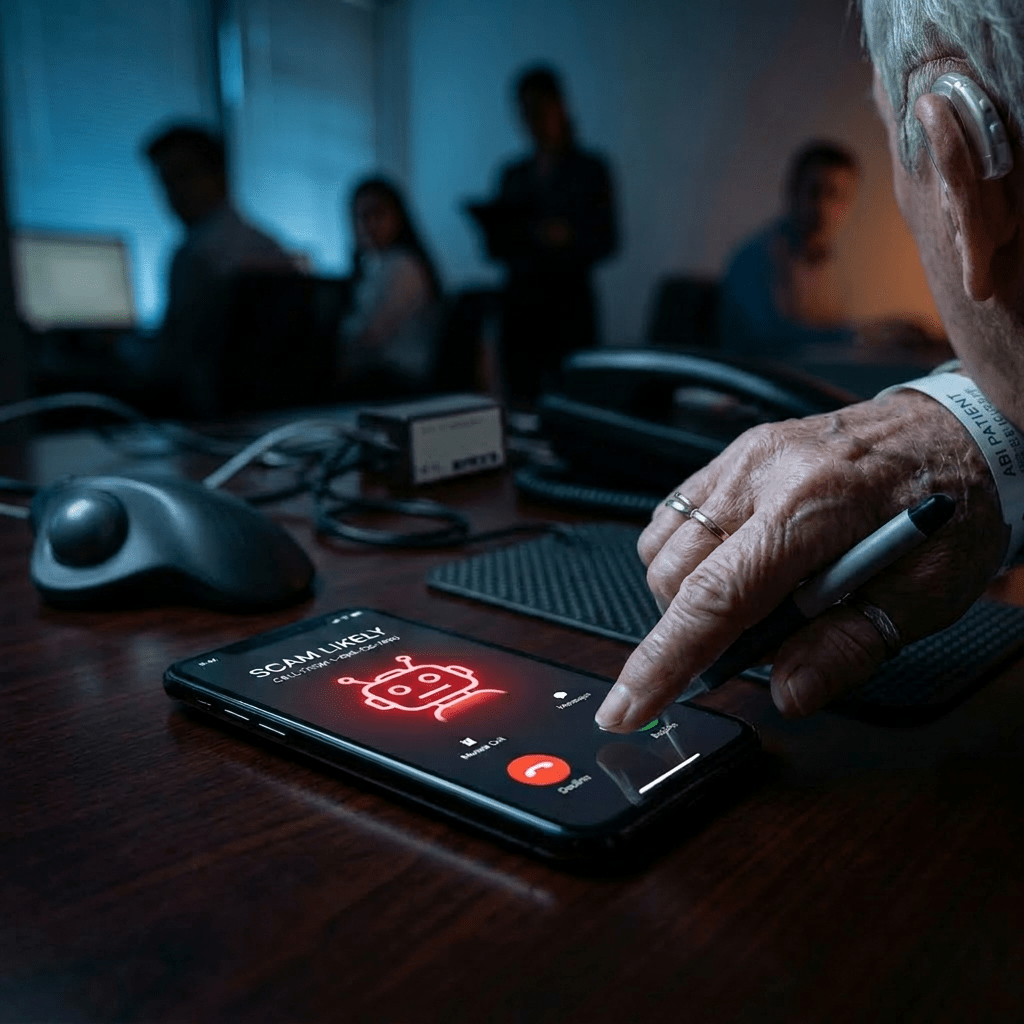
While the above “Robocall Scam Example”, listed on the Federal Trade Commission’s Consumer Advice webpage, may seem to be an obvious scam when viewed in print, the same may not be said when abruptly faced with the concern – particularly if you already have cognitive disabilities. In response to this reality, a new bipartisan bill targets predatory for-profit companies that use robocall software to harvest veterans’ disability data from federal phone lines Advocates state this practice poses a particular threat to veterans living with traumatic brain injury.
Introduced on March 26, 2026, by Rep. Chris Pappas (NH), the Veterans Benefits Information Protection Act, H.R. 8120, was prompted by a 2025 NPR investigation: Florida-based Trajector Medical “CallBot” auto-dialer program placed tens of thousands of monthly calls to a VA hotline, inputting veterans’ Social Security numbers and birthdays to detect disability rating increases and trigger automated billing both with and without veterans’ knowledge.
In addition to Pappas, H.R.8120 counts a bipartisan list of co-sponsors, including Rep. Don Bacon (NE), a retired Air Force brigadier general and co-chair of the Congressional Brain Injury Task Force. “Our veterans should never be targeted by bad actors trying to profit off their hard-earned benefits,” says Bacon, adding that the bill, which was referred to the House Committee on Energy and Commerce on March 26,2026, “takes a commonsense approach to crack down on predatory practices and protect veterans from exploitation.”
* Scamming, of course, does not solely refer to robocalls. In recent years, the government has given more attention to cyber scams, and particularly as it relates to the disabled. In 2024, the Journal of International Medical Research addressed cyber scams and acquired brain injury, available to PubMed, noting that, “People with acquired brain injury may be more susceptible to scams owing to postinjury cognitive and psychosocial consequences.”)

