NJ Reopens Facility But Long-term TBI Care Residences Remain Limited Nationally

Healthcare worker helping man in wheelchair use keyboard for therapy

Congressman Tom Kean Jr. (NJ) recently helped reopen Complete Care at Willow Creek, the only long-term care facility for seniors with traumatic brain injuries in New Jersey. The Somerset County facility had closed after flood damage during Hurricane Ida nearly 5 years ago, followed by a fire. A terminated Medicare Provider Number threatened years of further delay. Kean’s office intervened, and the facility welcomed its first returning patient in August 2026. As Kean put it, “New Jersey’s seniors deserve access to the care they need.”.

Long-term facilities matter because severe TBI often requires round-the-clock skilled nursing, rehabilitation, and cognitive support that other house members can’t provide. While every state has general long-term care and nursing homes, specialized brain-injury facilities are comparatively rare: Willow Creek is New Jersey’s sole option and, in total, only around 17 states provide specialized TBI-specific Medicaid waiver programs to fund long-term residential and group-home placements.
Illinois Expands Coverage for Common Consequence of Brain Injury

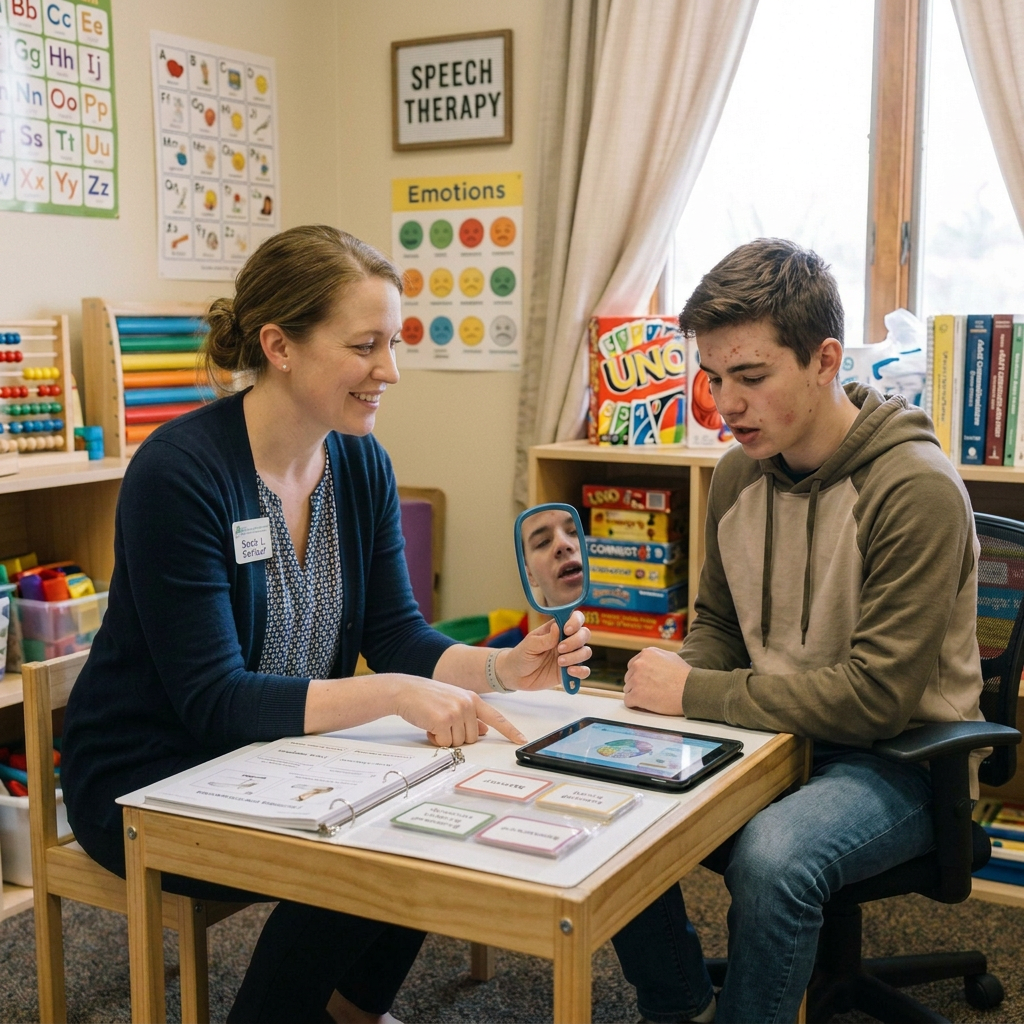
Speech therapist pointing at speech sound cards while boy looks and practices using a mirror

Illinois has strengthened access to speech therapy for people recovering from brain injuries. On June 26, 2026, Gov. JB Pritzker signed SB 2899 into law as Public Act 104-0528. The measure amends the Illinois Insurance Code and Public Aid Code to require coverage of rehabilitative services for individuals under 19 with an early acquired speech-language disorder. It also directs Medicaid to cover rehabilitative stuttering therapies for those 21 and under. The insurance provisions take effect January 1, 2028.

The change matters for brain injury survivors, as rehabilitative speech therapy is often central to recovery. By mandating coverage of rehabilitative care, the law helps ensure that survivors have access to therapies designed to help them regain their ability to communicate.

As Senator Willie Preston (IL-16), the bill’s sponsor, said “young people [now] have access to the tools, support and treatment they need to find their voice and be heard.”

North Carolina’s New Four-Year Brain Injury Plan and Statewide Screening Tool

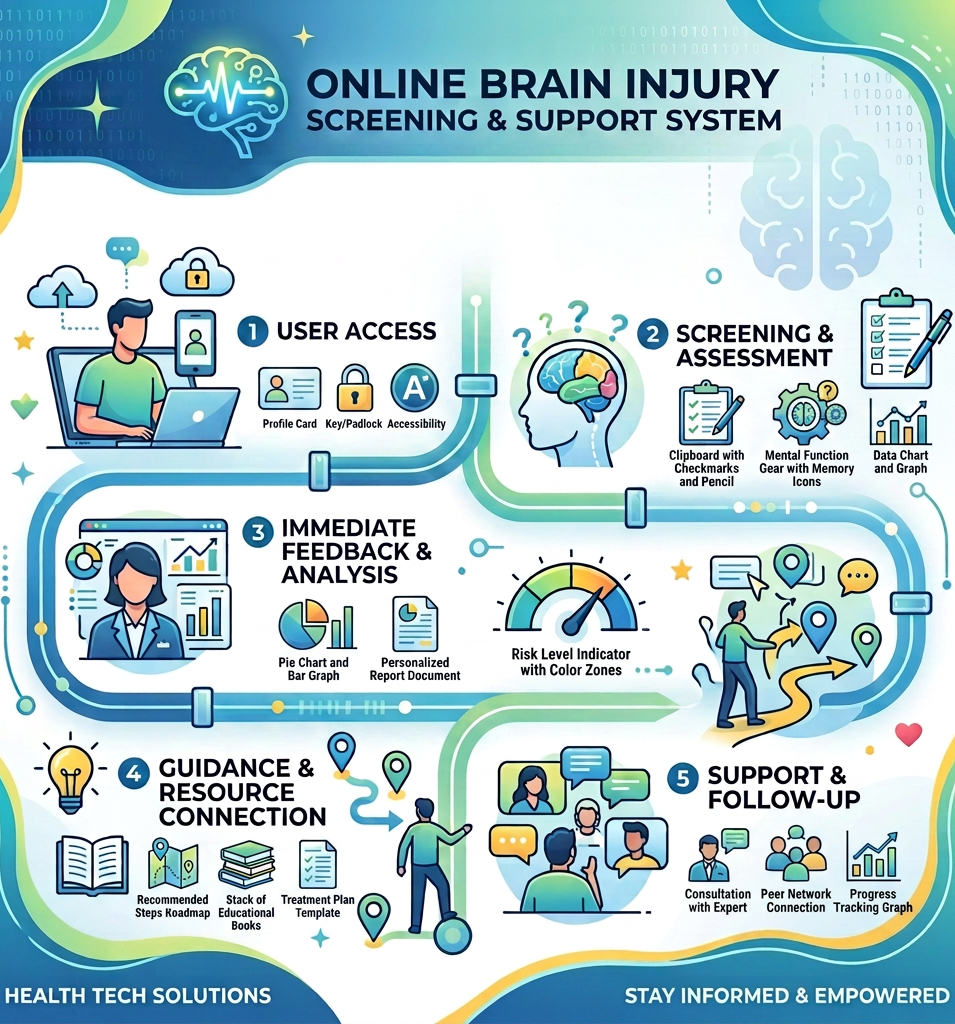
Diagram of OBISSS online brain injury screening and support system with five steps

North Carolina has launched a new statewide strategy to help residents living with traumatic brain injury. The North Carolina Department of Health and Human Services announced its 2026–2029 Traumatic Brain Injury State Action Plan on July 22, 2026; the plan officially took effect July 1. Developed by the Division of Mental Health, Developmental Disabilities and Substance Use Services alongside NC Medicaid, the Division of Public Health, and the Brain Injury Advisory Council, it centers on four priorities: expanding access to services, strengthening provider support, bolstering resources for people with TBI and their caregivers, and equipping communities to prevent injuries.

“Really listening to those most impacted by TBI was essential to developing strategies that will improve their quality of life,” said Kelly Crosbie, assistant secretary for mental health, developmental disabilities and substance use services.

The need is significant. In 2024, roughly 8,260 North Carolinians were hospitalized for TBI, more than 32,000 visited emergency departments, and 2,668 died from TBI-related causes, with falls the leading cause.

One of the plan’s first initiatives, the Online Brain Injury Screening & Support System (OBISSS), goes live August 1. Created by the National Association of State Head Injury Administrators, this free and confidential tool identifies an individual’s exposure to brain injury.