NJ Lawmakers Push Bill to Catch Brain Injuries Before They Become Criminal Records

Nearly one in five incarcerated adolescents have a clinically significant brain injury. Most, however, are never diagnosed. New Jersey lawmakers want to change that.

Assembly bill A5104 (introduced May 18, 2026) and its Senate companion S4112 (introduced May 4, 2026) would establish a Brain Injury Screening and Education Program within the Department of Children and Families, targeting children and specific young adults ages 5 to 21, who are in or at risk of entering the mental-health or juvenile-justice systems. The program would deploy validated screening tools, train judges, educators, law enforcement, and facility staff, and fund public outreach on the link between undiagnosed brain injury and delinquency. As stated in the bill’s text, the goal is to “prevent admissions to psychiatric hospitals and reduce the recidivism rates of juveniles adjudicated delinquent.”

Committee hearing on Juvenile Brain Injury Bill in State House chamber with legislators reviewing documents

Prime sponsor Assemblyman Sterley Stanley is joined in the Senate by Patrick Diegnan, whose history of support for the brain injury committee includes championing New Jersey’s 2010 student-athlete concussion law and earning the Brain Injury Alliance’s Brady Award for Public Service in 2019. Bipartisan Senate co-sponsors are Angela McKnight and Owen Henry.

As of June 2026, no other state has enacted a comparable statutory youth program, making New Jersey a potential national first.

Helmet Lab Results Expose Need for New Youth Standards

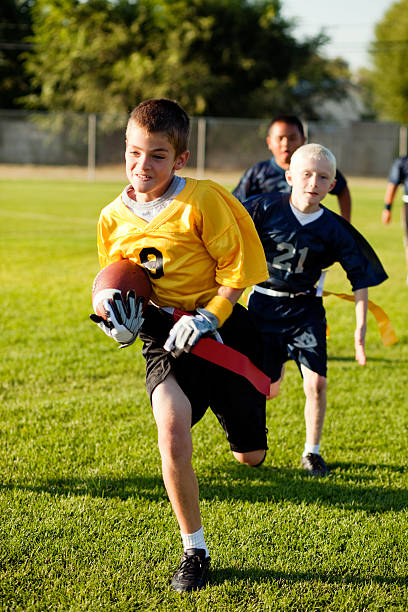
Brain damage, particularly CTE, has widely been discussed in the past decades as a negative consequence of football. Beyond action on the field, a growing body of research reveals that this damage may be exasperated by the equipment worn by players to prevent harm. Research links heavier football helmets to increased brain injury risk in young players.

Virginia Tech’s Helmet Lab found that children, whose neck muscles are weaker and heads proportionally larger than adults’, are especially vulnerable – sustaining concussions at approximately 60g of head acceleration, compared to roughly 100g for college athletes. This knowledge has resulted in a drive of both equipment reforms and legislative action for youth football across the United States. Led by the National Operating Committee on Standards for Athletic Equipment, new StandardND005 regulations were finalized in July 2025. Youth football helmets must be a maximum of no more than 3.5 pounds, effective September 1, 2027.

States are also not waiting. In West Virginia, Senate Bill 657, the Cohen Craddock Student Athlete Safety Act, named for a 13-year-old who died August 24, 2024, from a football-related brain injury, advanced through the Senate Education Committee on February 12, 2026. The bill would allow schools to adopt protective soft-shell helmet covers during practices. At the federal level, Senator Durbin (IL) introduced S.2889 on September 18, 2025, conditioning federal education funding on state-level concussion safety protocols. (Beyond this initial reading, no further action appears to have been taken.)