Group-home Debate in NH Focuses on Those With Brain Disorders

Elderly man with walker, young woman wearing helmet, and caregiver talking outside a blue assisted living home

New Hampshire’s group homes for people with brain injuries and developmental disabilities are getting new legislative scrutiny: Gov. Kelly Ayotte signed House Bill 1763 into law on June 19, 2026, creating a committee to study how these residences are sited, built and maintained statewide, and whether siting disputes push vulnerable residents from needed care.

The panel, which was formed after neighbors in towns like Bow objected to state-backed homes appearing without notice, must report findings by Nov. 1, 2026. Sponsor Rep. Mike Drago said “residents feel blindsided” when facilities open unannounced. Disability advocate Lisa Beaudoin countered that “it is perfectly safe to have people with developmental disabilities in one’s neighborhood.” More so, advocates state that it is needed, as New Hampshire’s estimated 2,000 residents with acquired brain disorders rely on such housing to stay near family and services.

New Hampshire isn’t first to grapple with this tension. California has guaranteed small group homes equal footing with single-family houses since 1978. Connecticut adopted similar zoning-parity protections around 1980, later adding density limits after litigation. New York took a study-first approach in 2025, forming a working group on group-home families – a path New Hampshire now follows, as well.

Helmet Lab Results Expose Need for New Youth Standards

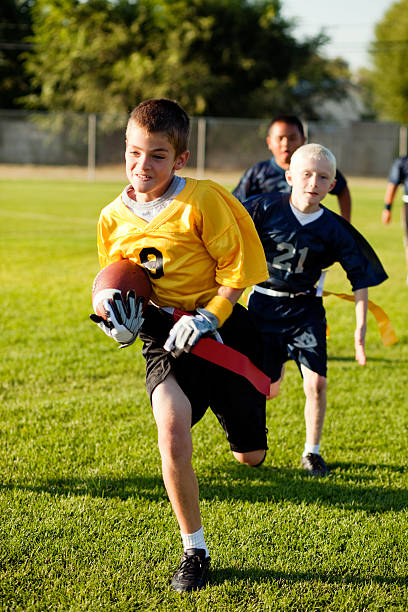
Brain damage, particularly CTE, has widely been discussed in the past decades as a negative consequence of football. Beyond action on the field, a growing body of research reveals that this damage may be exasperated by the equipment worn by players to prevent harm. Research links heavier football helmets to increased brain injury risk in young players.

Virginia Tech’s Helmet Lab found that children, whose neck muscles are weaker and heads proportionally larger than adults’, are especially vulnerable – sustaining concussions at approximately 60g of head acceleration, compared to roughly 100g for college athletes. This knowledge has resulted in a drive of both equipment reforms and legislative action for youth football across the United States. Led by the National Operating Committee on Standards for Athletic Equipment, new StandardND005 regulations were finalized in July 2025. Youth football helmets must be a maximum of no more than 3.5 pounds, effective September 1, 2027.

States are also not waiting. In West Virginia, Senate Bill 657, the Cohen Craddock Student Athlete Safety Act, named for a 13-year-old who died August 24, 2024, from a football-related brain injury, advanced through the Senate Education Committee on February 12, 2026. The bill would allow schools to adopt protective soft-shell helmet covers during practices. At the federal level, Senator Durbin (IL) introduced S.2889 on September 18, 2025, conditioning federal education funding on state-level concussion safety protocols. (Beyond this initial reading, no further action appears to have been taken.)