VT Acknowledges Your Brain Has Rights

Vermont state flag flying on a pole with mountainous landscape in background

When Vermont Governor Phil Scott signed H.814 into law on May 18, 2026, it marked a quiet but historic moment: every Vermonter gained a legal right to the privacy of their own mind. For the brain injury community, which is a population that increasingly relies on brain-computer interfaces, AI-powered rehabilitation tools, and wearable neurotechnology, the law provides a crucial layer of protection for some of the most intimate data imaginable.

Formally titled “An act relating to neurological rights and the use of artificial intelligence technology in health and human services,” H.814 takes effect July 1, 2026. The bill legally recognizes what should already be commonsense: every Vermonter has a right to “mental and neural data privacy,” “the freedom of thought,” and protection from “unauthorized access to or manipulation of an individual’s brain activity.” For those with brain injuries who depend on neurotechnology for communication, mobility, or cognitive support, that last phrase is a safeguard for the data generated at the most vulnerable intersection of their lives.

With this bill, Vermont joins Colorado, California, Montana, and Connecticut, though each of which has taken a distinct approach to neurological privacy. Colorado and California moved first in 2024, amending existing consumer privacy statutes to classify neural data as sensitive personal information. Montana went further with a standalone law amending its Genetic Information Privacy Act, requiring robust consent and uniquely prohibiting the storage of neural data in U.S.-sanctioned countries. Connecticut’s 2025 amendment was narrower, covering only the central nervous system. Vermont’s law aligns most closely with Connecticut’s, in that it establishes specific rights, while directing the state’s AI Advisory Council to develop further ethical guidelines, which extends through 2030.

Sponsored by State Representative Brian Cina, a clinical social worker, Vermont’s new legislation, and beyond the aforementioned five states that have similar laws, Massachusetts, Minnesota, Illinois, and New York are currently advancing similar bills. For the brain injury community, the question is no longer whether neurotechnology will be part of care and recovery, as it already is. The question is whether the law will keep pace.

The Chemical Time Bomb in Orange County

Workers in high-visibility vests wearing masks walking in a dusty warehouse near caution-taped barrels

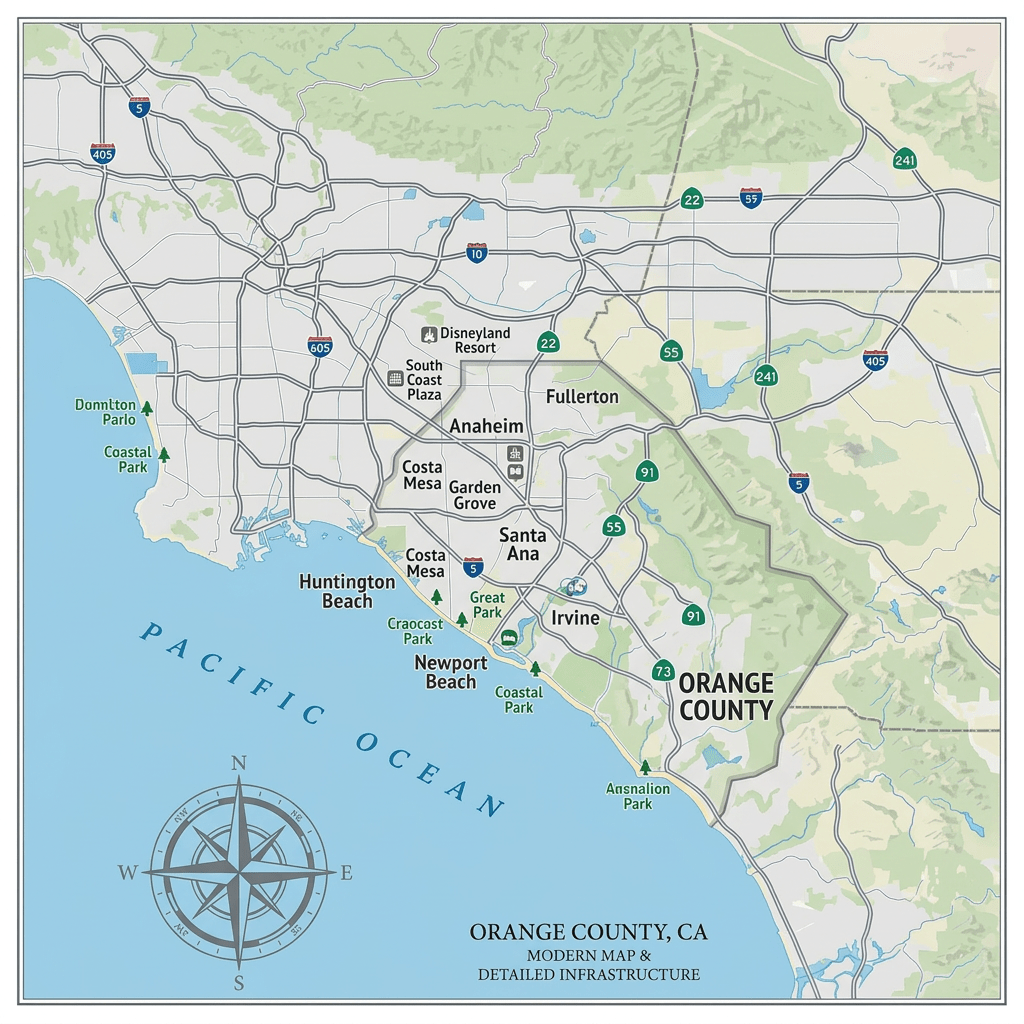
A catastrophic chemical emergency has engulfed Orange County, California, forcing more than 50,000 residents to flee after a massive tank of methyl methacrylate ruptured at the GKN Aerospace facility in Garden Grove. Governor Gavin Newsom declared a state of emergency. President Trump also approved of Newsom’s request for federal aid, unlocking critical FEMA resources to help stabilize the crisis.

What many people don’t realize is that many chemicals, including methyl methacrylate, don’t just threaten the lungs. They also target the brain. Research published on NIH’s PubMed has found that methyl methacrylate causes measurable neurological deficits in exposed industrial workers, impairing memory, learning, and movement. One study documented that vapor exposure depressed electrical activity in the hippocampus, the brain’s memory center. The neurological symptoms of exposure, like headaches, lethargy, and a heavy, numb sensation in the limbs, can take days or weeks to appear.

As research further reveals, chronic exposure can cause degenerative changes in the brain and permanent nerve damage. Children, the elderly, and those with respiratory conditions face the greatest risk. As Garden Grove begins to recover, the invisible injury to thousands of brains is only beginning to unfold.

Workers in high-visibility vests wearing masks walking in a dusty warehouse near caution-taped barrels

This concern over industrial chemical dust is not new. California already has the strictest regulations on chemical plants and manufacturers of any state. Proposition 65 states that these companies must provide public warnings if they emit or use hundreds of chemicals linked to cancer or reproductive harm. Beyond just being one of the first states to mandate regulations, New Jersey also imposes some of the most rigorous chemical safety and security standards. Additionally, with the Matt Haller Act, Illinois enforces some of the strictest emission regulations. As Illinois Senator Dick Durbin captured in a 2017 letter addressed to the CDC Director: “It is clear that public exposure to [industrial chemical] dust can lead to serious health, safety, and environmental issues.”

E-Bikes and Brain Injury: The Risks, the Recovery, and the Law

E-bikes continue to grow in popularity, allowing one to avoid automobile traffic. But because e-bikes can reach speeds of 20 to 28 mph or more, crashes carry serious consequences, including severe traumatic brain injuries. More so, studies have found that young e-bikers suffer traumatic brain injuries at nearly twice the rate of traditional cyclists (37.8% vs. 19.4%). Notably, only 44% of hospitalized e-bike riders were wearing helmets, and helmetless riders were almost twice as likely to sustain a head injury.

The case of Bella Prince, a Utah teenager who crashed her e-bike into a retaining wall at 40 mph and tumbled 25 feet down a cliff, brought special attention to the e-bike issue in the State. The teen survived because of emergency neurosurgery, but she was left with a severe traumatic brain injury. Horrific stories like Bella’s are driving legislative action. Utah’s HB 381, Electric Mobility Device Amendments, passed both the House and Senate with broad support on February 13, 2026. The bill requires helmets for e-bike riders under 21 and empowers police to impound e-bikes from unsafe riders. (As of March 16, 2026, HB 381 has not been signed into law by the governor.)

Currently, only Alabama, Connecticut, and Massachusetts require helmets for all e-bike riders of every age and class. California, Georgia, Louisiana, Ohio, Tennessee, and Virginia, mandate helmets for all Class 3 e-bike riders, with Class 3 defined as bikes that are pedal-assist up to 28 mph. California also enacted a package including AB 1778 in 2024, which created a Marin County pilot program requiring all Class 2 riders to wear helmets and banning riders under 16 from Class 2 e-bikes. In New York, pending bill S2526 would require helmets for all e-bike and bicycle riders in larger cities, though the same bill has failed in prior years. New Jersey S4834/A6235 abolished the three-class system entirely and reclassified all e-bikes as “motorized bicycles” requiring licensing, registration, insurance, and mandatory helmets beginning in January 2026. However, as of now, no federal e-bike helmet law exists.

Yet e-bikes can also be part of traumatic brain injury recovery. The pedal-assist feature allows TBI survivors with limited stamina, balance issues, or motor challenges to engage in outdoor physical activity, which research links to improved cognitive function and mental health during rehabilitation.

Ultimately, the message is clear: e-bikes offer real benefits, but only when ridden safely.

Cursive Writing Benefits to Students & the Brain Injured

Cursive writing functions as a complex motor skill that can remarkably persist even when brain injury patients lose explicit memory of how to perform it. This surprising phenomenon occurs because cursive engages procedural memory systems stored in the basal ganglia and cerebellum, which often remain intact when other cognitive functions are impaired. Recent NIH-funded research demonstrates that “attempting to write each letter produces a unique pattern of activity in the brain,” as Stanford’s Dr. Frank Willett explained in a 2025 study. A comprehensive 2025 analysis published by the NIH found that cursive writing creates enhanced connectivity across motor, visual, and memory regions.

For brain injury survivors, studies suggest cursive practice offers superior rehabilitation benefits. Unlike typing, which “relies on repetitive finger movements,” cursive engages “fine motor coordination and smooth transitions between letters,” activating broader neural networks crucial for recovery, according to recent university research. The continuous motor control required for cursive helps rebuild damaged neural pathways and enhances fine motor skills essential for rehabilitation.

Currently, many states have been dropping cursive instruction as a curriculum requirement, but recent neurological evidence has prompted policy reversals. New Jersey State Senator Angela McKnight recently advanced legislation requiring cursive proficiency by fifth grade, stating: “We’re doing our children a disservice by not teaching them a vital skill they will need for the rest of their lives.” California, Kentucky, and New Hampshire have reinstated requirements after recognizing cursive’s cognitive benefits. This resurgence reflects growing understanding that cursive writing enhances memory retention, motor control, and neural integration—benefits particularly valuable for cognitive development and including for those with a brain injury.

Caring for Man’s Best Friend

The benefits of dog ownership are well-known.  “Owning a dog can lift your mood or help you feel less stressed.”  For veterans and others with disabilities, the benefits of have a dog, specifically service dogs, go beyond this: dogs can serve by helping or even doing certain tasks that the handlers cannot do themselves.

However, what happens when the dog is the one with a brain injury?  Yes, dog’s skulls are harder than those of humans and surrounded by protective fluid, both of which make brain injuries less common in them.  (This is fortunate for animals who play/fight for fun, may bump into coffee tables as they chase after toys, etc.)  Canines though, can get brain injuries in the same ways that humans can: a car accident, a fall, etc.  The possible symptoms are also similar to those of humans:  bleeding from the nose or ears, coma, confusion, death, disorientation, facial weakness, lethargy, loss of consciousness, paralysis, pupil dilation, seizures, and stumbling.

Once these symptoms begin to occur what do you do?  For these members of the family, seeking medical help should be the next step.  Going to the local veterinarian is definitely the appropriate action, but there are also neuro-veterinarian specialists.  While this is a very limited profession, it’s not impossible to find.  It is fortuitous to an injured canine if their owner lives in Arizona, as they have access to this professional expertise.  (For example, Lucky, a dog found shot in the Arizona desert by border control officers earlier this year, was relatively fortunate that such help was available to him.)

One thing not to do is to abandon the dog.  This is what happened earlier this month to one dog in Sacramento, CA .  A woman, assuredly not the owner, found an injured dog on the streets and brought him to the Sacramento County Bradshaw Animal Shelter.  The dog, now named Thomas, has gone through multiple tests, yet the doctors still do not know what happened to him, just that it resulted in a severe brain injury.  “He is such a fighter… Baby Thomas wants everyone to know he is determined to heal, grow up and live a long, mischievous life!”  This and so many other examples show the need for Sacramento Counties non-profit T.E.A.M. – Teaching Everyone Animals Matter.  (As of March 16, the owner of Thomas has still not been found.  T.E.A.M. is now offering a $1,000 reward for information that leads to an arrest.)

(Most states have laws prohibiting animal cruelty.  For example, 3 weeks ago, a 27-year-old man was sentenced to 12 years in prison in Texas for abusing his boxer puppy.  Most of these states also have a law prohibiting animal abandonment.)

In America, Helmets ‘R Us

“Make sure you wear your helmet!”  Many remember their mother reciting this rule before a bicycle ride during their childhood.  In 1987, California became the first state to require children to wear helmets, though at the time it was only required for children under the age of 5.  In the past 30 years, many states and counties have taken California’s cue.  “At present, 21 states, and the District of Columbia, have state-wide laws, and more than 201 localities have local ordinances [requiring helmet use].”

While Ohio does not have a state law mandating helmet use, 24 Ohio cities have passed bicycle helmet laws.  At a meeting 7:00pm meeting tonight, Grandview Heights City Council’s safety committee is discussing whether the city should become the 25th city.  Specifically, Council members will be discussing legislation introduced by Council President Greta Kearns on June 5.  The proposed law states that, “children and teens caught riding without a helmet would be warned [on their first offense], but only if their parents can show proof of helmet ownership.”  Further offenses would include fines and charges.

In the United States each year, 218,000 children are treated in the Emergency Room for bicycle-related injuries.  In Ohio alone, that number is 6,200 children, while 1 in 6 of those children are treated for a traumatic brain injury.  The thought of this law and bicycle laws in general, is that, in time, helmets will become a childhood norm.  If so, doctors say it can reduce the risk of a traumatic brain injury by as much as 88 percent.