Celebrating World Elephant Day

Elephant standing in grassland with a semi-transparent brain illustration on its head

“Elephants are the largest land mammals on earth and have distinctly massive bodies, large ears, and long trunks,” states the WWF (World Wildlife Fund). Today, August 12, is globally celebrated at World Elephant Day, which, in 2026, emphasizes amplifying community-led conservation, treating people who live alongside elephants as essential partners. While not codified as a federal holiday, elephants, and the day, are honored by certain states and government agencies. (For example, the U.S. Fish & Wildlife Service funds the Asian Elephant Conservation Fund across Asian range states. The State Department has previously honored the day by launching its “Zoohackathon” to combat wildlife trafficking through technology.) In relation to this site, one topic to consider is the consequences of a brain injury in these majestic creatures:
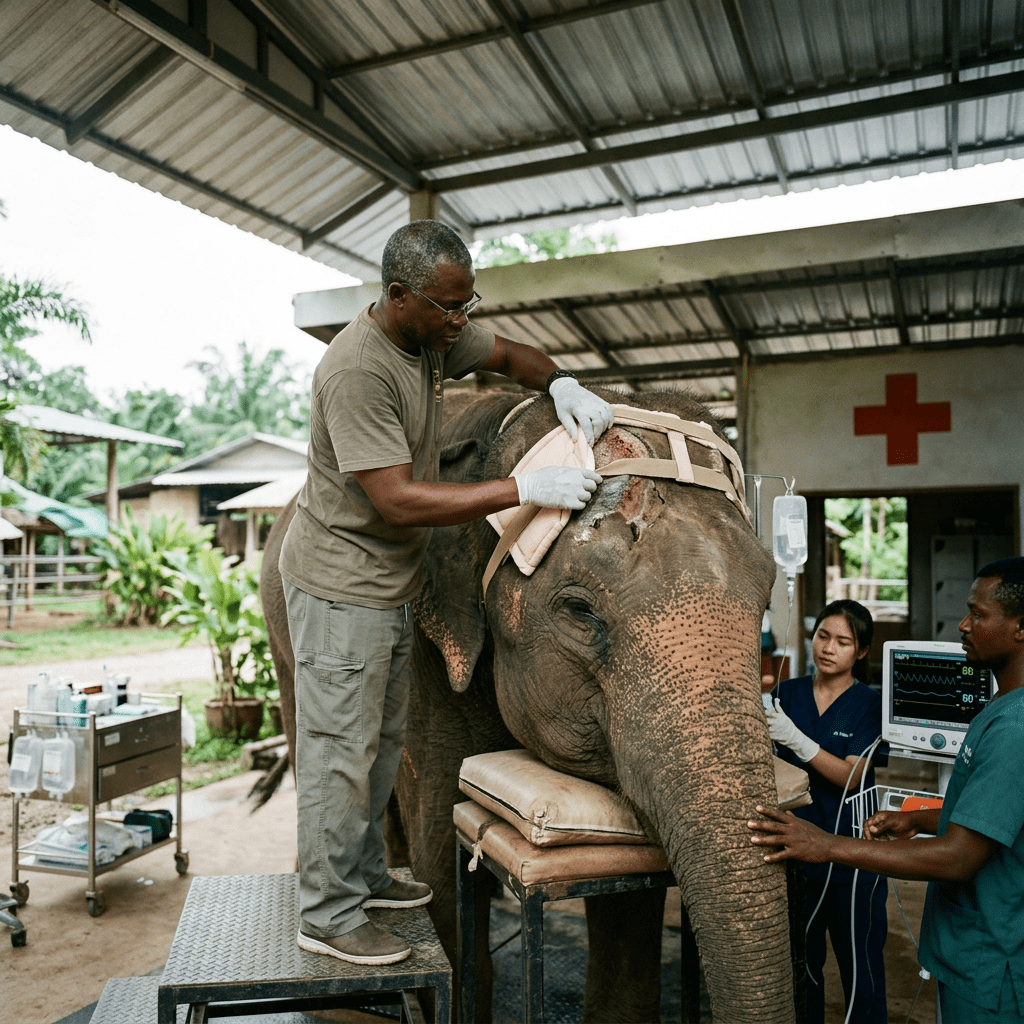
Veterinarians caring for an elephant with head injury under shelter

An elephant can sustain brain injury from blunt blows, falls, fighting, or human abuse. As with other animals, including humans, primary injury can result in contusions, hemorrhage, and skull fractures. This is followed by secondary swelling and the risk of seizures, impaired movement, or death. Though direct NLM-indexed clinical reports in elephants and brain injury are limited, caring for them has followed typical veterinary TBI principles: nursing care, fluid therapy, hyperosmolar agents, analgesia, anticonvulsants, oxygen, and, sometimes, surgery – scaled to an enormous patient.

Though they may be a thrill to see at the zoo, human contact with elephants can be of great peril. NLM’s database’s case reports describe elephants producing head injuries in humans through trampling, stomping, squeezing, tossing, or crushing, commonly targeting the head and chest.  A five-year retrospective PubMed-available 2021 Chinese Journal of Traumatology-published study of 45 emergency-department elephant-attack victims documented injury patterns and outcomes. Nonetheless, elephants are an important part of our ecosystem and risk is unlikely if proper precaution is taken.

Caring for Man’s Best Friend

The benefits of dog ownership are well-known.  “Owning a dog can lift your mood or help you feel less stressed.”  For veterans and others with disabilities, the benefits of have a dog, specifically service dogs, go beyond this: dogs can serve by helping or even doing certain tasks that the handlers cannot do themselves.

However, what happens when the dog is the one with a brain injury?  Yes, dog’s skulls are harder than those of humans and surrounded by protective fluid, both of which make brain injuries less common in them.  (This is fortunate for animals who play/fight for fun, may bump into coffee tables as they chase after toys, etc.)  Canines though, can get brain injuries in the same ways that humans can: a car accident, a fall, etc.  The possible symptoms are also similar to those of humans:  bleeding from the nose or ears, coma, confusion, death, disorientation, facial weakness, lethargy, loss of consciousness, paralysis, pupil dilation, seizures, and stumbling.

Once these symptoms begin to occur what do you do?  For these members of the family, seeking medical help should be the next step.  Going to the local veterinarian is definitely the appropriate action, but there are also neuro-veterinarian specialists.  While this is a very limited profession, it’s not impossible to find.  It is fortuitous to an injured canine if their owner lives in Arizona, as they have access to this professional expertise.  (For example, Lucky, a dog found shot in the Arizona desert by border control officers earlier this year, was relatively fortunate that such help was available to him.)

One thing not to do is to abandon the dog.  This is what happened earlier this month to one dog in Sacramento, CA .  A woman, assuredly not the owner, found an injured dog on the streets and brought him to the Sacramento County Bradshaw Animal Shelter.  The dog, now named Thomas, has gone through multiple tests, yet the doctors still do not know what happened to him, just that it resulted in a severe brain injury.  “He is such a fighter… Baby Thomas wants everyone to know he is determined to heal, grow up and live a long, mischievous life!”  This and so many other examples show the need for Sacramento Counties non-profit T.E.A.M. – Teaching Everyone Animals Matter.  (As of March 16, the owner of Thomas has still not been found.  T.E.A.M. is now offering a $1,000 reward for information that leads to an arrest.)

(Most states have laws prohibiting animal cruelty.  For example, 3 weeks ago, a 27-year-old man was sentenced to 12 years in prison in Texas for abusing his boxer puppy.  Most of these states also have a law prohibiting animal abandonment.)