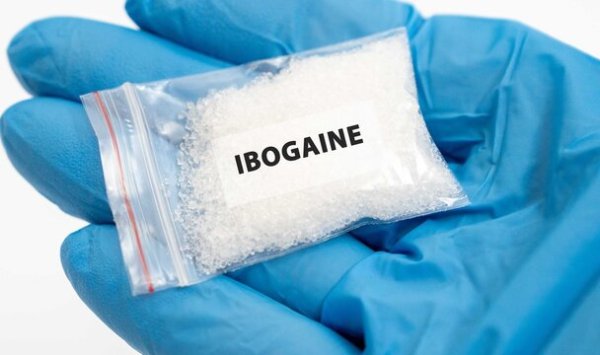
This morning, April 18, 2026, the federal government joined many states by committing to exploration of a brain injury treatment – “President Trump on Saturday signed an executive order to expedite research into the psychedelic ibogaine – a drug championed by podcaster Joe Rogan – so it can be used to treat PTSD in veterans and traumatic brain injuries,” reported the New York Post.
Heavily championed by the Secretary of Health and Human Services Robert F. Kennedy, ibogaine has recently been gaining a reputation for its treatment possibilities. Last month, March 1, 2026, the New York Times reported on one man’s treatment story. Due to federal limitations, he had to visit Mexico to be treated with ibogaine. (In the United States, clinical studies began at Stanford University in 2022. Results have strongly suggested that ibogaine is effective in treating traumatic brain injury.)
Mississippi is now following Texas and a handful of other states, by positioning itself on the frontier of a potential neurological revolution. On March 19, 2026, Mississippi Governor Tate Reeves made history by signing HB 314 into law, authorizing the Mississippi State Department of Health to use $5 million of Mississippi’s opioid settlement money to fund clinical trials for the drug ibogaine. The bill takes effect July 1 and allows Mississippi to coordinate trials with other states, including Texas, which has already committed to its own program.
A psychoactive substance derived from the root of a plant native to Africa, ibogaine has been used for centuries in spiritual and healing ceremonies. More recently, it has gained scientific interest for its potential to treat opioid and cocaine addiction. Research suggests it increases signaling of important brain molecules linked to drug addiction and depression. Currently a Schedule I controlled substance, Americans seeking treatment must travel abroad at costs that reportedly reach up to $50,000 per session.
As stated by Dr. Nolan Williams, who was involved in the landmark 2024 Stanford University study that brought attention to the use of ibogaine for brain injury, “no other drug has ever been able to alleviate the functional and neuropsychiatric symptoms of traumatic brain injury.”
As reported in the NIH database in November 2025, “In recent years, there has been increasing interest in identifying and validating biomarkers capable of predicting the onset and progression of IVH, as well as other forms of neonatal brain injury.“ Two studies published this month offer fresh hope for preventing and treating neonatal brain injuries, conditions that affect thousands of American infants each year and can lead to lifelong disabilities.
Detailed in Pediatric Research on January 3, a comprehensive care model demonstrates how integrated treatment from prenatal care through early childhood can improve outcomes for at-risk newborns. Of the approximately 3.6 million babies born annually in the United States, about 10 – 15% require Neonatal Intensive Care Unit admission. The collaborative program addresses what researchers call a critical window, as “injuries during these stages can lead to lifelong disabilities.”
Meanwhile, Stanford University researchers reported January 5 in the Journal of Perinatology that advanced monitoring techniques can better predict dangerous brain bleeds in premature infants. Their study of 482 preterm babies found that low cerebral oxygenation increases mortality risk more than fourfold.
Both studies build upon past NIH-supported research through the Neonatal Research Network.
Cursive writing functions as a complex motor skill that can remarkably persist even when brain injury patients lose explicit memory of how to perform it. This surprising phenomenon occurs because cursive engages procedural memory systems stored in the basal ganglia and cerebellum, which often remain intact when other cognitive functions are impaired. Recent NIH-funded research demonstrates that “attempting to write each letter produces a unique pattern of activity in the brain,” as Stanford’s Dr. Frank Willett explained in a 2025 study. A comprehensive 2025 analysis published by the NIH found that cursive writing creates enhanced connectivity across motor, visual, and memory regions.
For brain injury survivors, studies suggest cursive practice offers superior rehabilitation benefits. Unlike typing, which “relies on repetitive finger movements,” cursive engages “fine motor coordination and smooth transitions between letters,” activating broader neural networks crucial for recovery, according to recent university research. The continuous motor control required for cursive helps rebuild damaged neural pathways and enhances fine motor skills essential for rehabilitation.
Currently, many states have been dropping cursive instruction as a curriculum requirement, but recent neurological evidence has prompted policy reversals. New Jersey State Senator Angela McKnight recently advanced legislation requiring cursive proficiency by fifth grade, stating: “We’re doing our children a disservice by not teaching them a vital skill they will need for the rest of their lives.” California, Kentucky, and New Hampshire have reinstated requirements after recognizing cursive’s cognitive benefits. This resurgence reflects growing understanding that cursive writing enhances memory retention, motor control, and neural integration—benefits particularly valuable for cognitive development and including for those with a brain injury.
Texas has made history by becoming the first state to allocate significant public funding for psychedelic medicine research. Governor Greg Abbott signed Senate Bill 2308 into law in June 2025, committing $50 million to FDA-approved clinical trials of ibogaine, a psychedelic compound derived from an African shrub.
The groundbreaking legislation represents the largest government investment in psychedelic research to date, positioning Texas as a global leader in this emerging field. The initiative aims to develop FDA-approved treatments for opioid addiction, traumatic brain injury (TBI), and PTSD—conditions that have devastated countless lives across America.
Rick Perry’s Pivotal Role
Former Texas Governor Rick Perry has emerged as an unlikely but passionate advocate for ibogaine research. His involvement began through his relationship with Navy SEAL veterans Marcus and Morgan Luttrell, who found relief from combat-related trauma through ibogaine treatment in Mexico. After witnessing their remarkable recoveries, Perry dedicated himself to advancing this cause, even launching the nonprofit Americans for Ibogaine.
“I’ve spent most of my adult life in public service, and few things have moved me like what I’ve witnessed with this psychedelic drug,” Perry wrote in a recent op-ed, describing how ibogaine helped veterans overcome years of opioid dependence and psychological trauma.
Promising Results for Brain Injury
Recent Stanford Medicine research found that ibogaine, when combined with magnesium for heart protection, safely reduced PTSD symptoms by 88%, depression by 87%, and anxiety by 81% in combat veterans with traumatic brain injuries. The treatment appears to promote neuroplasticity, potentially helping the brain repair itself after injury.
While primarily focused on veterans, the research could benefit anyone suffering from brain trauma, including athletes with concussion-related injuries and accident victims. Texas’s historic investment may lead the way to finally bringing this promising treatment to American patients who have long traveled abroad seeking relief.