Senate Marks National Concussion Awareness Day

The U.S. Senate unanimously consented to a resolution supporting the designation of September 18, 2026, as National Concussion Awareness Day, on September 23.
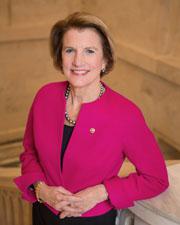
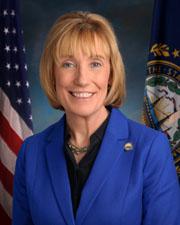
Cosponsored by Sen. Maggie Hassan (NH) and Sen. Shelley Moore Capito (WV), S.Res. 892 encourages federal, state, and local policymakers to raise awareness and improve understanding of diagnosis and management of this most common form of mild traumatic brain injury and calls for further research and prevention efforts. To support this, the resolution cites a number of statistics, including CDC data noting “between 2001 and 2018, an estimated 3,800,000 children under age 17 visited an emergency department because of a traumatic brain injury sustained during sports- or recreation-related activities.”

“Recognizing the signs of a concussion early helps people get the treatment they need to prevent lasting neurological damage from these injuries,” Hassan said. Capito concurred: “Improving concussion prevention, raising awareness, and strengthening diagnosis and treatment are critical to keeping athletes, coaches, parents, and others safe and informed on the field and in the workplace.

CA Chooses Prevention vs Punishment for E-bikers

Electric bicycle with helmet and reflective vest on a bike path

The average e-bikes can travel up to 28 mph. However, drivers may have little or none of the training required to drive vehicles that can obtain that speed.  Young e-bike riders suffer traumatic brain injuries at nearly twice the rate of traditional cyclists, and fewer than half of hospitalized riders wore helmets. To address this, California has passed a law that chooses prevention over punishment, seemingly similar to the law requiring that teenagers take Driver’s Education classes.

On August 27, 2026, Governor Gavin Newsom signed Assembly Bill 1569, directing the California Department of Education, with the California Highway Patrol, to build a standardized e-bike safety and training program for students in grades 7 through 12 by March 2028. Sponsored by Assemblymembers Laurie Davies and Phillip Chen, the Pupil safety: electric bicycle: safety and training program bill unanimously passed the Assembly 77–0.

California’s attempt to address the risks of e-bikes, brain injury and otherwise, through the classroom, contrasts the approach of eleven other states that currently require licenses for their operation: Alabama, Alaska, Connecticut, Hawaii, Louisiana, Massachusetts, Missouri, West Virginia, New Mexico, North Dakota, and New Jersey, the strictest. It will be interesting to compare the efficacy of these approaches and to see if some sort of a combination of law and education is needed.

Helmet Lab Results Expose Need for New Youth Standards

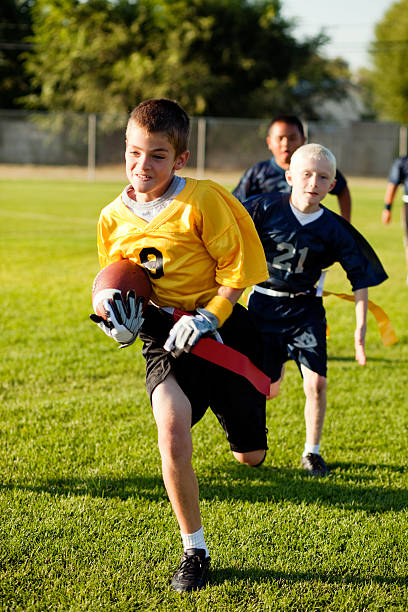
Brain damage, particularly CTE, has widely been discussed in the past decades as a negative consequence of football. Beyond action on the field, a growing body of research reveals that this damage may be exasperated by the equipment worn by players to prevent harm. Research links heavier football helmets to increased brain injury risk in young players.

Virginia Tech’s Helmet Lab found that children, whose neck muscles are weaker and heads proportionally larger than adults’, are especially vulnerable – sustaining concussions at approximately 60g of head acceleration, compared to roughly 100g for college athletes. This knowledge has resulted in a drive of both equipment reforms and legislative action for youth football across the United States. Led by the National Operating Committee on Standards for Athletic Equipment, new StandardND005 regulations were finalized in July 2025. Youth football helmets must be a maximum of no more than 3.5 pounds, effective September 1, 2027.

States are also not waiting. In West Virginia, Senate Bill 657, the Cohen Craddock Student Athlete Safety Act, named for a 13-year-old who died August 24, 2024, from a football-related brain injury, advanced through the Senate Education Committee on February 12, 2026. The bill would allow schools to adopt protective soft-shell helmet covers during practices. At the federal level, Senator Durbin (IL) introduced S.2889 on September 18, 2025, conditioning federal education funding on state-level concussion safety protocols. (Beyond this initial reading, no further action appears to have been taken.)