Senate Marks National Concussion Awareness Day

The U.S. Senate unanimously consented to a resolution supporting the designation of September 18, 2026, as National Concussion Awareness Day, on September 23.

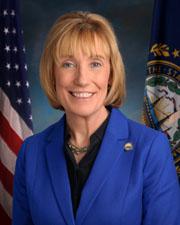
Cosponsored by Sen. Maggie Hassan (NH) and Sen. Shelley Moore Capito (WV), S.Res. 892 encourages federal, state, and local policymakers to raise awareness and improve understanding of diagnosis and management of this most common form of mild traumatic brain injury and calls for further research and prevention efforts. To support this, the resolution cites a number of statistics, including CDC data noting “between 2001 and 2018, an estimated 3,800,000 children under age 17 visited an emergency department because of a traumatic brain injury sustained during sports- or recreation-related activities.”

“Recognizing the signs of a concussion early helps people get the treatment they need to prevent lasting neurological damage from these injuries,” Hassan said. Capito concurred: “Improving concussion prevention, raising awareness, and strengthening diagnosis and treatment are critical to keeping athletes, coaches, parents, and others safe and informed on the field and in the workplace.
Bounce, Track, Heal: The Surprising Science Behind Roofball and Brain Injury Recovery

Roofball is exactly what it sounds like: players throw or hit a ball onto a sloped roof, and opponents return it before it stops. Originating in America as early as the 1960s*, the sport exploded in popularity after a 2023 Reddit post showcased the Roofball World Championships, racking up 500,000+ views. In 2024, the Roofball World Championship even aired on ESPN.

The game uses simple equipment: a ball, a roof, and competitive spirit. Players score points based on ball placement, with gutters and roof angles adding unpredictable bounces that demand quick reflexes. It can be played one-on-one or with a team, usually during the warmer months of spring and summer. Now governed by the Roofball Federation of America (RFA), which has a presence in multiple states, from New Jersey to Oklahoma, it features regional tournaments. Recreationally, the sport can be played one-on-one or with teams.

Beyond fun, roofball’s rapid tracking and catching may benefit brain injury recovery. A 2025 randomized controlled trial published in Archives of Physical Medicine and Rehabilitation, and available on the PubMed database, found that ball-sport-based exercise therapy significantly improves motor function, balance, and quality of life in acquired brain injury patients. As hand-eye coordination disruption is among the most common deficits after brain injury, the repetitive coordination of handling a bouncing ball drives the neuroplasticity essential for recovery.

Roofball shows that healing can start on your own roof.

*Other reports state that it originated is Oregon in 1998.