2026 Update: Mitigation for Morality and Murder

Brain injury may not excuse a crime, but increasingly it has been used in courtrooms to shape punishment. This month, October 2026, Alberto Sierra’s lawyers showed penalty-phase jurors a 3D-printed model of frontal-lobe damage from childhood car crash, in Miani-Dade. (Their expert, though, did not say the injury caused the triple murder.) In Raleigh, Austin Thompson’s brain injury didn’t prevent five life-without-parole terms in February. However, in Indiana, Jeffrey Weisheit is seeking brain scans to support clemency before his November execution date.
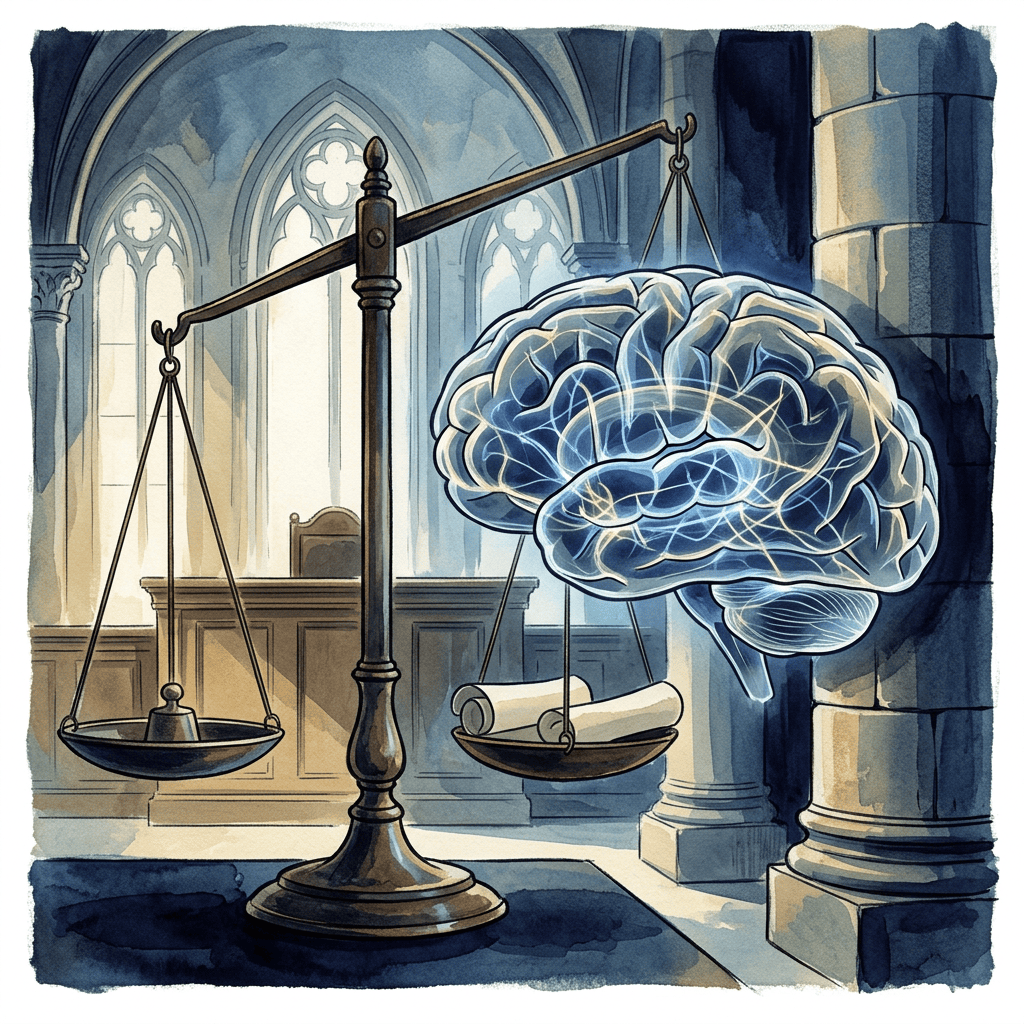
Glowing brain and scrolls balanced on scales inside a Gothic courtroom

The CDC has reported that almost half (46%) of incarcerated adults and about 1 in 3 detained juveniles have a TBI history his. While NIH-indexed studies find only a “modest causal link” between TBI and later convictions, it’s notable that less than 2 percent of the general public has a TBI history. It is uncertain, though, to what side and to what level the cause-and-effect aligns. A small 2023 PubMed-available study of 31 TBI patients found moral decision-making “not uniformly impaired”; lesion location and age at injury matter more.

The conclusion seems to be that brain injury buys mercy, not acquittal.
NJ Lawmakers Push Bill to Catch Brain Injuries Before They Become Criminal Records

Nearly one in five incarcerated adolescents have a clinically significant brain injury. Most, however, are never diagnosed. New Jersey lawmakers want to change that.

Assembly bill A5104 (introduced May 18, 2026) and its Senate companion S4112 (introduced May 4, 2026) would establish a Brain Injury Screening and Education Program within the Department of Children and Families, targeting children and specific young adults ages 5 to 21, who are in or at risk of entering the mental-health or juvenile-justice systems. The program would deploy validated screening tools, train judges, educators, law enforcement, and facility staff, and fund public outreach on the link between undiagnosed brain injury and delinquency. As stated in the bill’s text, the goal is to “prevent admissions to psychiatric hospitals and reduce the recidivism rates of juveniles adjudicated delinquent.”

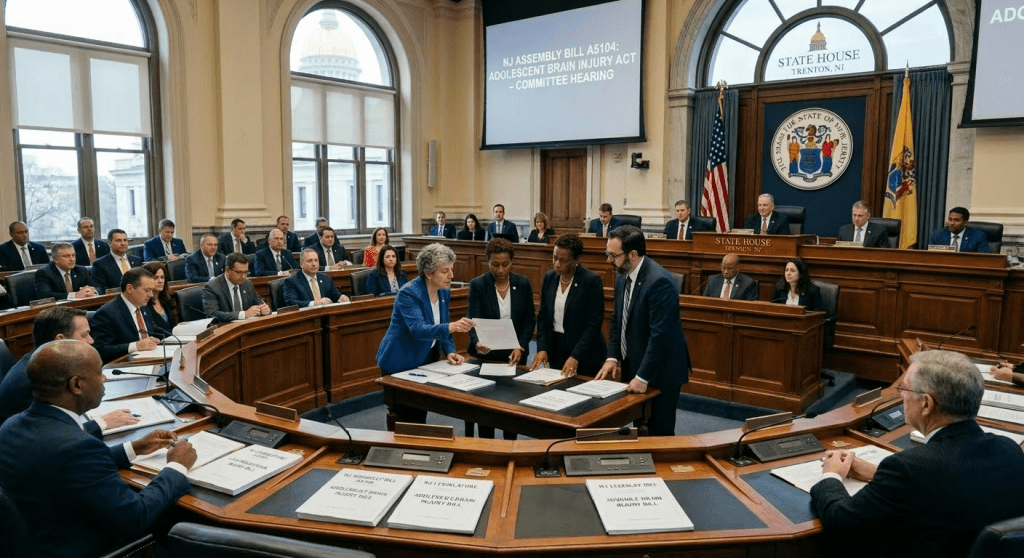
Committee hearing on Juvenile Brain Injury Bill in State House chamber with legislators reviewing documents

Prime sponsor Assemblyman Sterley Stanley is joined in the Senate by Patrick Diegnan, whose history of support for the brain injury committee includes championing New Jersey’s 2010 student-athlete concussion law and earning the Brain Injury Alliance’s Brady Award for Public Service in 2019. Bipartisan Senate co-sponsors are Angela McKnight and Owen Henry.

As of June 2026, no other state has enacted a comparable statutory youth program, making New Jersey a potential national first.