Widely Used Birth Control Comes With Brain-shaped Asterisk

Vial of Depo-Provera and syringe on medical tray

Per the CDC, roughly 1 in 4 sexually active American women have used the form of birth control Depo-Provera. Studies, though, found that the effects of this injectable go beyond contraception. The government paper trail also keeps growing, regarding the risks it may cause.  A JAMA Neurology study found a 2.43-fold higher risk for developing a brain tumor among users. Just this month, on July 2, 2026, another JAMA study flagged the injection as having the strongest risk of brain tumor development of any contraceptive. (This study also reported reassuring news: risk fades within roughly five years of stopping. Additionally, absolute risk stays low, as less than 5 in 10,000 women have this extremely negative effect.)

According to the Mayo Clinic, “Depo-Provera is a birth control shot that has the hormone progestin.” In actuality, it injects medroxyprogesterone acetate, a synthetic version of the natural hormone progesterone.  Long-term use of this injection can result in meningiomas, which are usually benign brain tumors. Meningiomas, though, can crowd the brain, triggering headaches, vision loss, and seizures. In December 2025, the U.S. Food and Drug Administration ordered a warning on the Depo-Provera label.

Meanwhile, Pfizer reached a June 2026 settlement covering over 5,500 federal lawsuits alleging it downplayed the danger. Though this number may seem large, the percent of Depo-Provera users it represents is small. So, users shouldn’t panic but should talk to their doctor about duration of use.
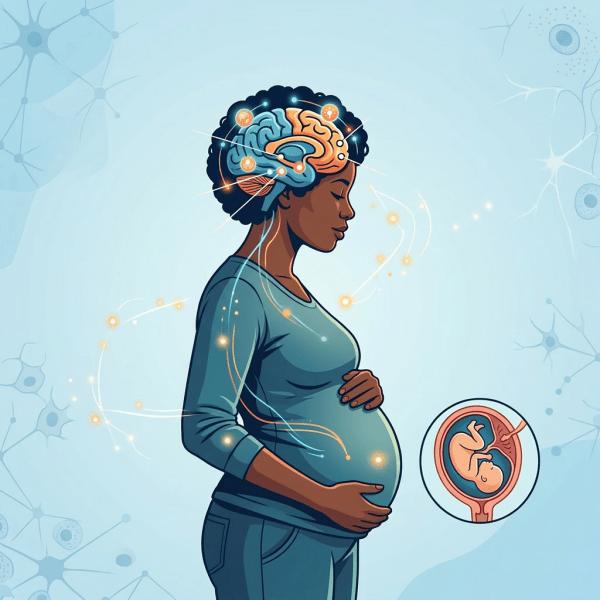
Pregnant Brain’s Resilience Comes With Risk

Diagram showing pregnant woman with brain regions labeled for hormone regulation, emotional processing, memory, planning, and neural plasticity, plus uterus and fetus.

As any person who has given birth will confirm, pregnancy transforms nearly every system in the body. The brain is no exception to this change. Much of this neurological alteration is remarkably positive, but, as with other major body occurrences, some of it is genuinely alarming.

Estrogen and progesterone, which surges throughout pregnancy, are now being studied as neuroprotective and neuroregenerative agents in strokes and other brain injuries. Research shows these hormones can reduce the injury cascade by enhancing antioxidant mechanisms, reduce excitotoxicity, and stimulate remyelination. As researchers put it: “Estrogen seems more effective as a prophylactic treatment in females at risk for ischemic brain injury, whereas progesterone appears more helpful in post-injury treatment of both male and female subjects with acute traumatic brain damage.” Additionally, the 2022 Rotterdam Study, available on PubMed, examined 2,835 women over decades, finding that pregnancy and childbirth are associated with a robustly larger global gray matter volume that persists for decades.

The story, though, isn’t all rosy. More recently, contradictory study results have been found. 2025 MRI research published in the International Journal of Molecular Sciences, found on PubMed, showed that pregnancy reduces total cortical gray matter volume by an average of 3%, with losses concentrated in regions linked to social cognition and self-awareness. More acutely, an estimated 7.7 – 15% of all maternal deaths worldwide are caused by stroke, and 30 – 50% of surviving women are left with persistent neurological deficits. “Female stroke survivors were more than twice as likely as their stroke-free counterparts to have another stroke while pregnant and in the six weeks after childbirth,” reported the 2026 American Stroke Association International Stroke Conference.

Ultimately, the pregnant brain endures, often emerging stronger. But, as with every activity that has a significant effect on the body’s function, proper monitoring is required, with even more caution needed for those with a history of brain injury.