When the Vault Goes Wrong: Pole Vaulting and the Risk of Brain Injury

A student athlete from Eastlake North High School in Ohio is recovering after sustaining a brain injury during a pole vault event at a track meet at Mayfield High School. According to reports and community updates, the student athlete’s pole broke while he was vaulting at maximum height. He fell straight down and struck his head on the vault box, a metal plant box that holds the pole.

Female athlete in a blue and yellow uniform vaulting over a high bar with pole during a track and field event

Outdoor track and field is the most popular sport for girls at the high school level, with 513,808 participants in 2024–25, and participation on the boys’ side surged to 644,235 athletes during that time period. Recently, social media and sports streaming platforms have also enhanced pole vaulting’s visibility, which has attracted new entrants and expanding its base.

Despite its appeal, pole vaulting carries serious risks. A 2001 NIH-indexed study in the American Journal of Sports Medicine reviewed 32 catastrophic pole vault injuries reported between 1982 and 1998, finding that all occurred at an average age of 17.5 years, with 31 being catastrophic head injuries. Three means of injury dominated: athletes landing with their body on the pad but their head striking surrounding hard ground, missing the pad entirely, and prematurely releasing the pole. A 2012 follow-up study, also indexed on PubMed, found that from 2003 to 2011, 19 catastrophic injuries occurred. Averaging 2.1 per year, it was reported that 74% of these injuries involved athletes landing in or around the vault box, with 58% resulting in major head injuries.

Rule changes in 2003 by the NCAA, NFHS [National Federation of State High School Associations], and USA Track and Field – including enlarged landing pad dimensions – led to an 88% reduction in catastrophic injuries, with no fatalities reported since. Still, risks remain. Athletes can reduce injury risk by using properly rated poles, training under certified coaches, and considering ASTM [American Society for Testing and Materials]-certified helmets. Recent 2026 NFHS rule changes also clarified that padding requirements now apply to raised concrete or platform extensions above ground level that pose injury risks during falls.

The Eastlake North case is a reminder that even with two decades of safety improvements, more must be done to protect young athletes who soar.
Shocking Vagus Nerve Stimulation Could Rewire the Injured Brain

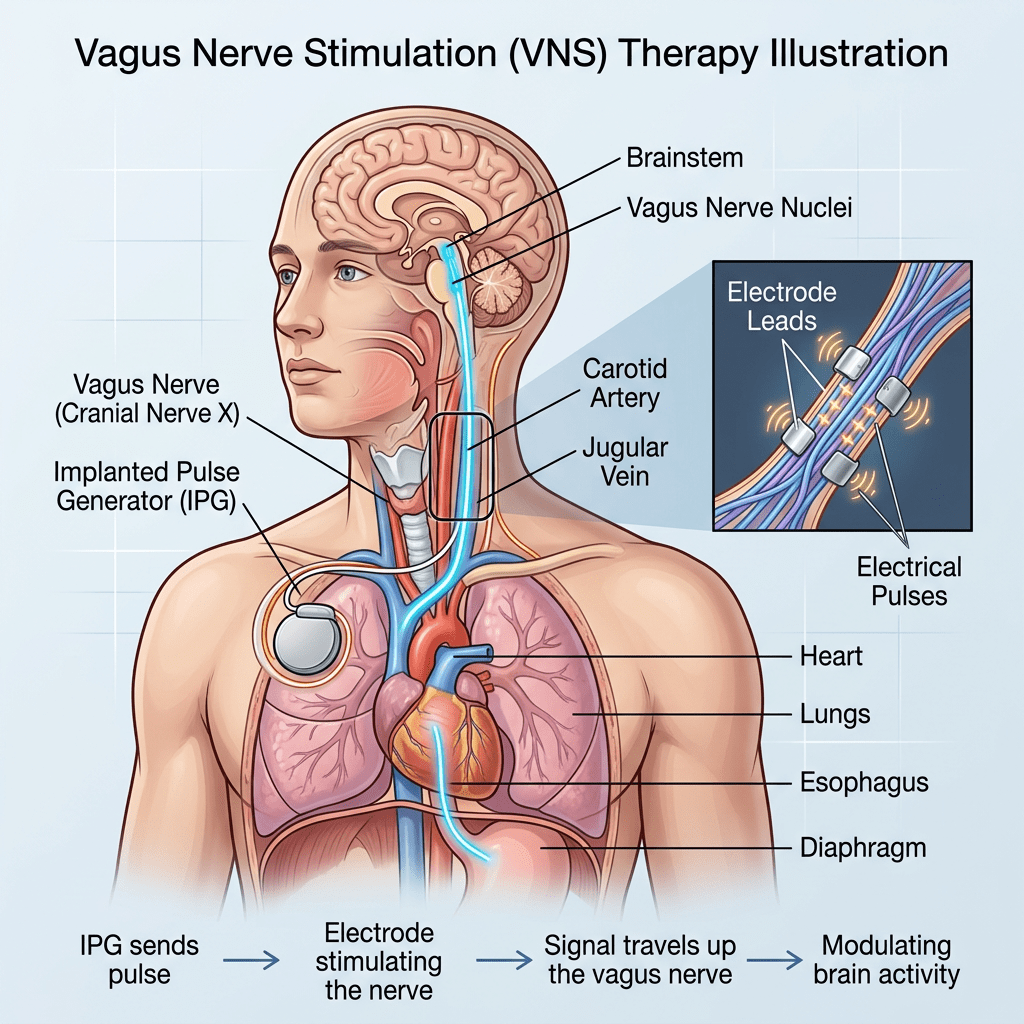
Diagram of vagus nerve stimulation therapy including brainstem, vagus nerve, implanted pulse generator, heart, lungs, esophagus, and diaphragm

In 2025, the New York Times reported on a neuroscientist who has likened the vagus nerve to “a brake system in your car.” A May 18, 2026 New York Times piece, though, explored whether vagus nerve stimulation (VNS) can genuinely improve health or is simply a “scam”. This has brought renewed attention to a therapy that researchers have been quietly refining for decades; as the vagus nerve, a sprawling cranial nerve connecting the brain to major organs, has become one of neuroscience’s most compelling therapeutic targets, particularly in brain injury recovery.

Researchers in various institutions have demonstrated a direct connection between the VNS and the brain’s learning centers. Almost 4 years ago, University of Colorado Anschutz Medical Campus findings discovered that this connection may lead to treatments improving cognitive retention in both healthy and injured nervous systems. Senior author Cristin Welle, Ph.D., stated: “We concluded that there is a direct connection between the vagus nerve, the cholinergic system that regulates certain aspects of brain function, and motor cortex neurons that are essential in learning new skills.” A 2025 observational study available in the NIH database, and published in Frontiers in Neurology, found that non-invasive VNS was associated with reduced neuroinflammation and recovery in patients with mild traumatic brain injury experiencing persistent post-concussion symptoms.

VNS is also established as a treatment for drug-resistant epilepsy, a condition that can follow traumatic brain injury. However, a 2026 review drawing on PubMed data found that airway-related side effects such as hoarseness, cough, and shortness of breath were the most common reactions, with most resolving after adjustments to stimulation settings. A 2025 meta-analysis confirmed that complications from implanted VNS are generally mild and transient, with adverse events decreasing over time. Researchers continue urging caution, noting that larger randomized trials are still needed before VNS becomes a standard of care for brain injury rehabilitation.

NE Joins States to Promote Veteran Brain Injury Bill – Congress Has Run Out of Excuses

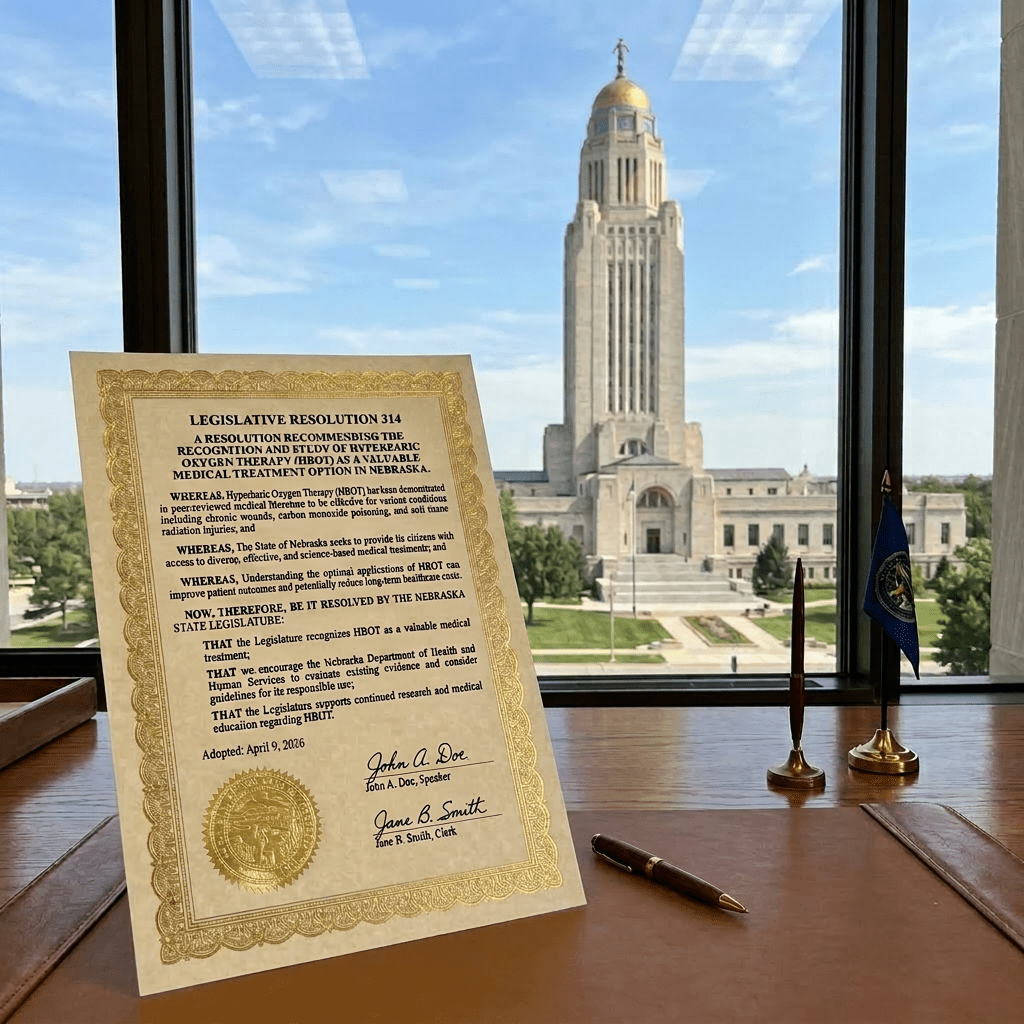
Legislative Resolution 314 on hyperbaric oxygen therapy with Nebraska Capitol building in background

On April 9, 2026, Nebraska’s Legislature passed Legislative Resolution 293 in a 43-0 vote, making it the 14th state – alongside Oklahoma, Texas, Indiana, Kentucky, Arizona, Florida, North Carolina, Wyoming, Maryland, Virginia, North Dakota, Tennessee and Missouri – to formally urge Congress to expand treatment access for veterans suffering from traumatic brain injury and post-traumatic stress disorder, one of the most pressing issues facing American veterans.

Introduced by Nebraska State Senator Kathleen Kauth, the resolution, “[urges] the United States Congress to swiftly enact legislation to provide for veterans’ access to treatments for traumatic brain injury (TBI) and post-traumatic stress disorder (PTSD).”

In particular, states’ resolutions seek to encourage Congress to move forward on hyperbaric oxygen therapy. “A 4-week course of HBOT may alleviate depressive symptoms in PTSD patients, an effect associated with increased serum BDNF and β-NGF levels,” according to a 2026 study, available to view on the NLM database. The United States loses more than 17 veterans per day to suicide, with TBI and PTSD among the leading contributing factors.

Now that 14 states are aligned behind this legislation, the pressure on Congress to act is mounting.

Hidden Price of a Cruise: Hantavirus’ Effect on the Brain

A cruise though the South Atlantic sounds like a dream vacation, but for eighteen Americans, the trip ended as a nightmare. After MV Hondius returned to the United States on May 11, two passengers were placed in biocontainment units because they had developed Andes virus, a strain of the hantavirus. The World Health Organization confirmed this, with eight cases and three deaths reported as of May 8.

In relation to the neurological effects of the virus, hantavirus pulmonary syndrome invades the brain indirectly. Drawing on cases traceable to the 1993 American Southwest outbreak and documented in NLM PubMed literature as far back as 1998, the Journal of the International Neuropsychological Society found that hantavirus pulmonary syndrome survivors exhibited cognitive impairments immediately after acute hospitalization and again at a one-year follow-up, with memory deficits resembling those seen in patients who have suffered brain anoxia, starving the brain of oxygen in a way that mirrors traumatic anoxic injury. Some research also suggests the virus may damage the blood-brain barrier, producing CNS symptoms including headache, insomnia, and vertigo, though this remains incompletely understood. Lasting effects include fatigue, memory loss, and attentional deficits.

Treatment mirrors the approach taken with other forms of acquired brain injury: supportive intensive care, cognitive rehabilitation, and neuropsychological monitoring. A 2024 multicenter cohort study of Andes virus survivors in Chile found that 61.9% reported incomplete recovery at three to six months post-onset, with clustering of both physical and neuropsychological symptoms across patient groups regardless of whether they required extracorporeal membrane oxygenation.

Responding to the 2026 cruise ship outbreak, Admiral Brian Christine, the Department of Health and Human Services’ assistant secretary for health, told reporters, “Let me be crystal clear: the risk of hantavirus to the general public remains very, very low. The Andes variant of this virus does not spread easily.” While the virus can be spread from person-to-person, Andes virus spreads primarily through contact with the urine, saliva, or droppings of infected rodents. Unfortunately, there is currently no approved vaccine for hantavirus pulmonary syndrome in the United States.

Pregnant Brain’s Resilience Comes With Risk

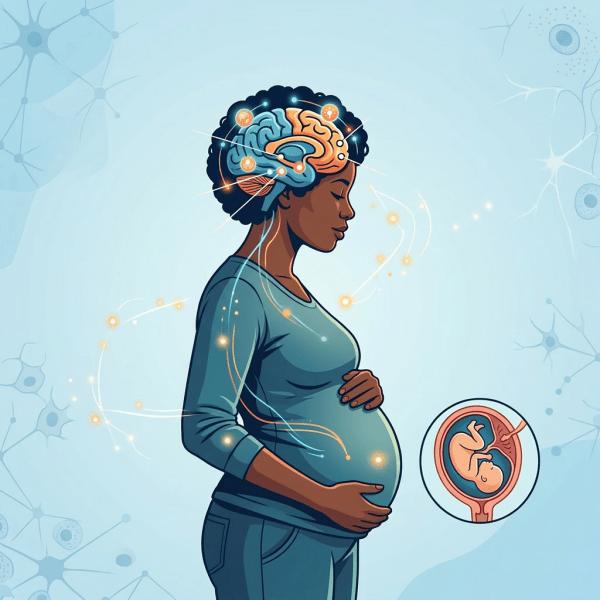
Diagram showing pregnant woman with brain regions labeled for hormone regulation, emotional processing, memory, planning, and neural plasticity, plus uterus and fetus.

As any person who has given birth will confirm, pregnancy transforms nearly every system in the body. The brain is no exception to this change. Much of this neurological alteration is remarkably positive, but, as with other major body occurrences, some of it is genuinely alarming.

Estrogen and progesterone, which surges throughout pregnancy, are now being studied as neuroprotective and neuroregenerative agents in strokes and other brain injuries. Research shows these hormones can reduce the injury cascade by enhancing antioxidant mechanisms, reduce excitotoxicity, and stimulate remyelination. As researchers put it: “Estrogen seems more effective as a prophylactic treatment in females at risk for ischemic brain injury, whereas progesterone appears more helpful in post-injury treatment of both male and female subjects with acute traumatic brain damage.” Additionally, the 2022 Rotterdam Study, available on PubMed, examined 2,835 women over decades, finding that pregnancy and childbirth are associated with a robustly larger global gray matter volume that persists for decades.

The story, though, isn’t all rosy. More recently, contradictory study results have been found. 2025 MRI research published in the International Journal of Molecular Sciences, found on PubMed, showed that pregnancy reduces total cortical gray matter volume by an average of 3%, with losses concentrated in regions linked to social cognition and self-awareness. More acutely, an estimated 7.7 – 15% of all maternal deaths worldwide are caused by stroke, and 30 – 50% of surviving women are left with persistent neurological deficits. “Female stroke survivors were more than twice as likely as their stroke-free counterparts to have another stroke while pregnant and in the six weeks after childbirth,” reported the 2026 American Stroke Association International Stroke Conference.

Ultimately, the pregnant brain endures, often emerging stronger. But, as with every activity that has a significant effect on the body’s function, proper monitoring is required, with even more caution needed for those with a history of brain injury.

Tiny “Brain” Yields Big Answers About Concussions

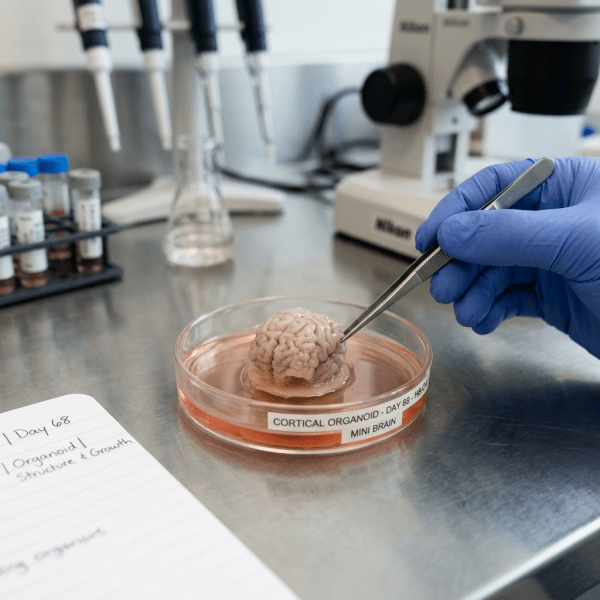
Gloved hand holding tweezers manipulating a miniature brain organoid in a petri dish on a lab bench

What if a pea-sized cluster of lab-grown cells could unlock the mysteries of brain injury? Researchers at the University of Cincinnati’s College of Engineering and Applied Science have been doing just that:

Reported by UC on April 21, 2026, UC Assistant Professor Volha “Olga” Liaudanskaya has engineered a tiny, functioning replica of human brain tissue that researchers can safely study. Termed a “mini-brain”, these lab-grown models combine three types of brain cells with two vascular cell types. This, then, creates a complex five-cell system she can observe in living tissue. Simulating concussions and mild traumatic brain injuries on this model, UC engineers can uncover how blunt-force impacts trigger cellular chain reactions that may ultimately lead to long-term neurodegenerative diseases. (Prior models lacked the vascular components, which researchers now recognize as key, driving brain inflammation and degeneration, perhaps reshaping how America protects its athletes, veterans, and kids.)

According to 2026 estimates by the Centers for Disease Control and Prevention, children alone sustain nearly 4 million concussions every year, so the results of this “mini” innovation may be enormous.

Morning Joe’s Benefits Come with Caution for TBI Survivors

brain made of coffee swirling

The day doesn’t truly begin until that first cup of coffee is in hand for a countless number of people. It’s ritual, comfort, and fuel! However, what does caffeine do to an injured brain?

According to a June 2025 article from Nutrients, a peer-reviewed journal that is also available on PubMed, research revealed that caffeine can function both as a neuroprotectant and a neurotoxin for those with a traumatic brain injury. Whether it can be a boon or a burden hinges on dosage, timing, and context. At low-to-moderate amounts, such as a morning brew, caffeine may reduce TBI-associated inflammation, oxidative stress, and intracranial pressure, enhance alertness and reduce mental fatigue, critical for cognitive rehabilitation. On the other hand, in young people experiencing repetitive moderate TBI, it was found that caffeine consumption disrupts normal brain pruning processes. This can potentially lead to further neurological and behavioral impairments.

Adding to this complex connection, Neuropharmacology, a journal that focuses on research about neuroscience that can also be found on PubMed, published the findings of a 2026 University College London study about caffeine citrate, a medication used to treat a lack of breathing in premature babies: while intended to stimulate breathing centers, higher doses of caffeine citrate can result in toxicity. (However, it appears that the “babies” that were studied were piglets.)

The takeaway is similar to that of other treatment possibilities: your coffee habit may be doing your brain favors – or not – so caution is warranted.

What the Reclassification of Marijuana Means for the Brain Injured

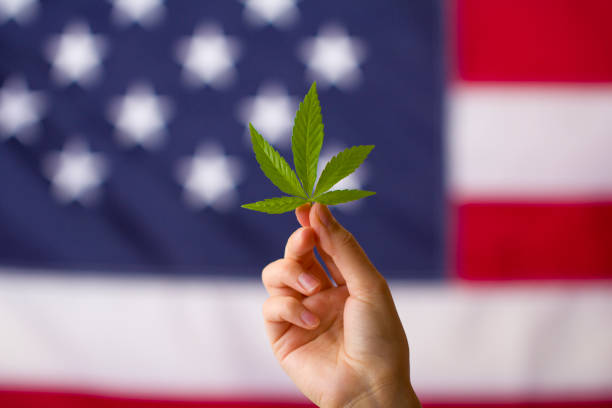
“Justice Department Places FDA-Approved Marijuana Products and Products Containing Marijuana Subject to a Qualifying State-issued License in Schedule III, Strengthening Medical Research While Maintaining Strict Federal Controls.” This headline, which appeared on the Department of Justice’s official website on April 23, 2026, refers to the Executive Order signed by President Trump.

Advocates and politicians have pushed for this change for years, arguing cannabis carries undeniable medical value. As of April 2026, medical marijuana use is legal in 40 states. Following many years of federal research that confirmed the potential benefits of marijuana use for medical conditions, this Executive Order reclassifies state-licensed medical marijuana from Schedule I, the most restrictive federal drug category, to the less regulated Schedule III. Acting Attorney General Todd Blanche stated the decision, “allows for research on the safety and efficacy of this substance, ultimately providing patients with better care and doctors with more reliable information.”

For brain injury survivors, the implications may be significant. One study, available on PubMed, found that patients with acquired brain injury have reported improvements in mood, anxiety, headache, sleep, and quality of life through medical cannabis use. Government-funded research also indicates that the non-psychoactive cannabis compound CBD, and THC, the primary psychoactive compound in cannabis that is responsible for the “high”, may be effective for pain management, anxiety, and insomnia, all of which are common symptoms following brain injury. (These benefits are debatable. Another major analysis found that medicinal cannabis does not effectively treat anxiety, depression, or PTSD, and may even worsen mental health in some cases.)

As always, caution is warranted. The CDC has proven that cannabis use affects brain development. Beyond brain development, a 2024 CDC report states, “cannabis use directly affects brain function — specifically the parts of the brain responsible for memory, learning, attention, decision-making, coordination, emotions, and reaction time.” Chronic marijuana consumption may reduce dopamine responsivity, increase negative emotionality, and induce anhedonia, meaning a reduced ability to experience pleasure or a loss of interest in previously enjoyed activities. These possible negative consequences are a significant concern for survivors, who already have cognitive issues and may struggle with low motivation.

While this rescheduling opens the door to better science, always consult a physician before using cannabis.

PEGASUS Takes Flight for Kids with Brain Injuries

Winged horse merged with a glowing brain and neural patterns against a cosmic background

When a child arrives at an ICU with severe traumatic brain injury, every minute counts and every decision matters. That’s exactly the problem the Pediatric Guideline Adherence and Outcomes (PEGASUS) program was built to solve.

Developed in 2011 at the Harborview Medical Center, a Level I Trauma Center affiliated with the University of Washington School of Medicine, PEGASUS was created to close the so-called “know-do” gap, translating Brain Trauma Foundation guidelines into bedside practice. The program trains key staff, redesigns workflows, and provides ongoing coaching.

Published in Critical Care Medicine on March 27, 2026, a new study shows the model can reach far beyond Seattle. Across 16 hospitals in Argentina, Chile, and Paraguay, children with isolated severe traumatic brain injury at PEGASUS hospitals showed 8 percentage points higher guideline adherence than those receiving standard care. This determination came from the first randomized trial of an implementation science approach to improving care in adult or pediatric traumatic brain injury.

The reach of PEGASUS is backed by federal investment: the study was supported by a grant from the U.S. National Institute of Neurological Disorders and Stroke. As Dr. Monica Vavilala of UW Medicine clarified, this approach can be adopted by hospitals around the world, whether or not they are Level I Trauma Centers.

Federal Government Joins States in Psychedelic Exploration

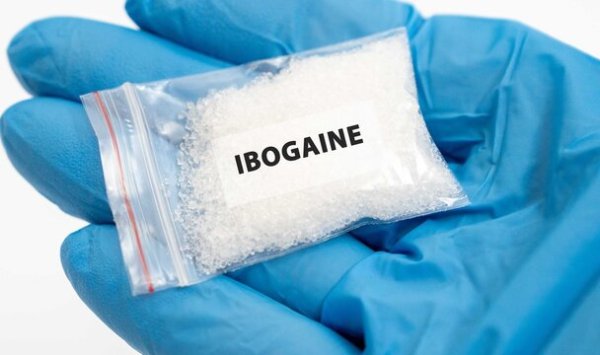
This morning, April 18, 2026, the federal government joined many states by committing to exploration of a brain injury treatment – “President Trump on Saturday signed an executive order to expedite research into the psychedelic ibogaine – a drug championed by podcaster Joe Rogan – so it can be used to treat PTSD in veterans and traumatic brain injuries,” reported the New York Post.

Heavily championed by the Secretary of Health and Human Services Robert F. Kennedy, ibogaine has recently been gaining a reputation for its treatment possibilities. Last month, March 1, 2026, the New York Times reported on one man’s treatment story. Due to federal limitations, he had to visit Mexico to be treated with  ibogaine. (In the United States, clinical studies began at Stanford University in 2022. Results have strongly suggested that ibogaine is effective in treating traumatic brain injury.)