
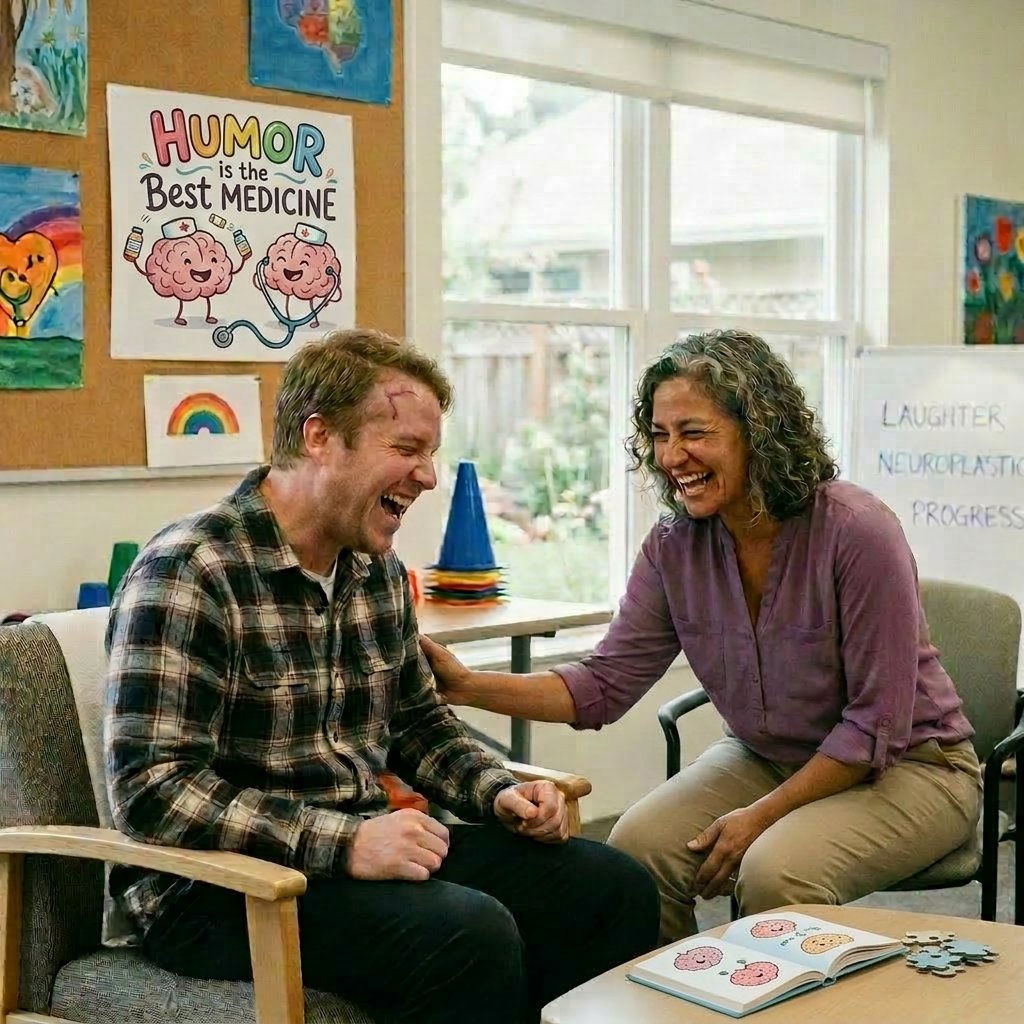
After a car accident in 2023, the therapists of a brain injured 19-year-old Kansas teen had an unconventional tool ready: dad jokes. The groan-worthy punchlines weren’t just comic relief, they were medicine. And a growing body of science backs that up.
Research indexed in the National Library of Medicine confirms that laughter triggers real, measurable changes in the injured brain. A 2023 PLOS ONE meta-analysis found that a single bout of spontaneous laughter slashes cortisol, the body’s chief stress hormone, by up to 36.7%. Since high cortisol after TBI is linked to poorer survival outcomes, anything that lessens it matters enormously. A 2017 PET-imaging study in the Journal of Neuroscience showed that laughing with others floods the brain’s reward centers with natural opioids, promoting calm and connection.
New 2026 research adds another dimension. A comprehensive neurodevelopmental analysis published in May 2026 found that processing humor is genuinely cognitively demanding – activating working memory and the frontal lobes in ways that stimulate neuroplasticity, essentially giving the recovering brain a workout. Separately, a University of Vienna brain-scanning study published in January 2026 in Frontiers in Neuroscience, and available in the National Library of Medicine database, found that laughter behavior directly predicted bonding, pro-sociality, and social liking between people – outcomes that matter deeply to TBI survivors rebuilding their lives.
As vis turns out, the best medicine may truly be free.

