Brain Injury Community in Crosshairs of Bipartisan “Claim Sharks” Bill

“We will be suspending your Social Security number because we found some suspicious activities on your Social Security. If you want more information about this case, press 1. Thank you.”
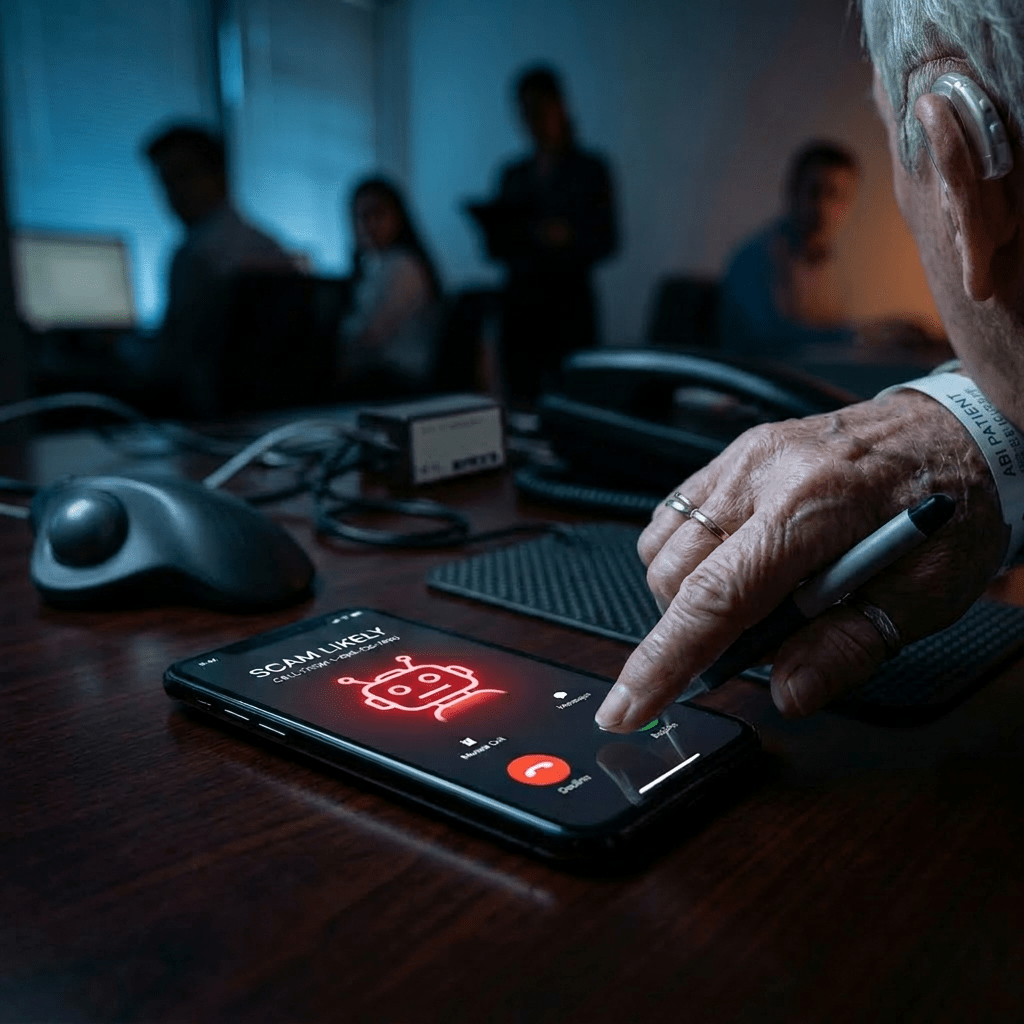
Smartphone screen displaying a scam likely call with decline button being pressed

While the above “Robocall Scam Example”, listed on the Federal Trade Commission’s Consumer Advice webpage, may seem to be an obvious scam when viewed in print, the same may not be said when abruptly faced with the concern – particularly if you already have cognitive disabilities. In response to this reality, a new bipartisan bill targets predatory for-profit companies that use robocall software to harvest veterans’ disability data from federal phone lines Advocates state this practice poses a particular threat to veterans living with traumatic brain injury.

Introduced on March 26, 2026, by Rep. Chris Pappas (NH), the Veterans Benefits Information Protection Act, H.R. 8120, was prompted by a 2025 NPR investigation: Florida-based Trajector Medical “CallBot” auto-dialer program placed tens of thousands of monthly calls to a VA hotline, inputting veterans’ Social Security numbers and birthdays to detect disability rating increases and trigger automated billing both with and without veterans’ knowledge.

In addition to Pappas, H.R.8120 counts a bipartisan list of co-sponsors, including Rep. Don Bacon (NE), a retired Air Force brigadier general and co-chair of the Congressional Brain Injury Task Force.  “Our veterans should never be targeted by bad actors trying to profit off their hard-earned benefits,” says Bacon, adding that the bill, which was referred to the House Committee on Energy and Commerce on March 26,2026, “takes a commonsense approach to crack down on predatory practices and protect veterans from exploitation.”

* Scamming, of course, does not solely refer to robocalls. In recent years, the government has given more attention to cyber scams, and particularly as it relates to the disabled. In 2024, the Journal of International Medical Research addressed cyber scams and acquired brain injury, available to PubMed, noting that, “People with acquired brain injury may be more susceptible to scams owing to postinjury cognitive and psychosocial consequences.”)
Pregnant Brain’s Resilience Comes With Risk

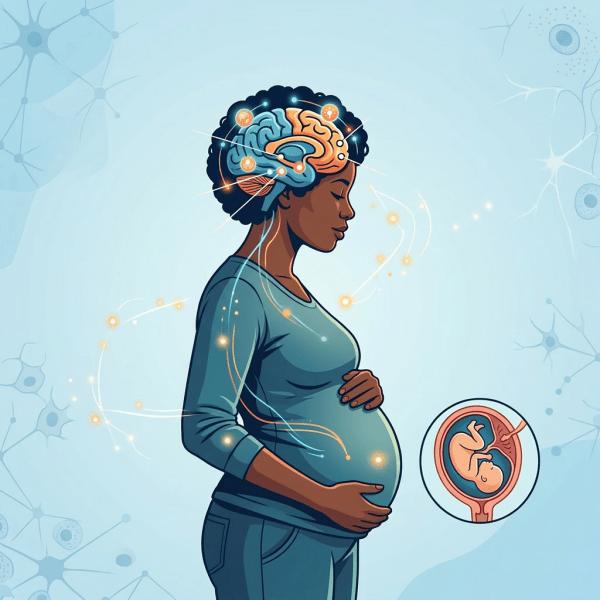
Diagram showing pregnant woman with brain regions labeled for hormone regulation, emotional processing, memory, planning, and neural plasticity, plus uterus and fetus.

As any person who has given birth will confirm, pregnancy transforms nearly every system in the body. The brain is no exception to this change. Much of this neurological alteration is remarkably positive, but, as with other major body occurrences, some of it is genuinely alarming.

Estrogen and progesterone, which surges throughout pregnancy, are now being studied as neuroprotective and neuroregenerative agents in strokes and other brain injuries. Research shows these hormones can reduce the injury cascade by enhancing antioxidant mechanisms, reduce excitotoxicity, and stimulate remyelination. As researchers put it: “Estrogen seems more effective as a prophylactic treatment in females at risk for ischemic brain injury, whereas progesterone appears more helpful in post-injury treatment of both male and female subjects with acute traumatic brain damage.” Additionally, the 2022 Rotterdam Study, available on PubMed, examined 2,835 women over decades, finding that pregnancy and childbirth are associated with a robustly larger global gray matter volume that persists for decades.

The story, though, isn’t all rosy. More recently, contradictory study results have been found. 2025 MRI research published in the International Journal of Molecular Sciences, found on PubMed, showed that pregnancy reduces total cortical gray matter volume by an average of 3%, with losses concentrated in regions linked to social cognition and self-awareness. More acutely, an estimated 7.7 – 15% of all maternal deaths worldwide are caused by stroke, and 30 – 50% of surviving women are left with persistent neurological deficits. “Female stroke survivors were more than twice as likely as their stroke-free counterparts to have another stroke while pregnant and in the six weeks after childbirth,” reported the 2026 American Stroke Association International Stroke Conference.

Ultimately, the pregnant brain endures, often emerging stronger. But, as with every activity that has a significant effect on the body’s function, proper monitoring is required, with even more caution needed for those with a history of brain injury.

Tiny “Brain” Yields Big Answers About Concussions

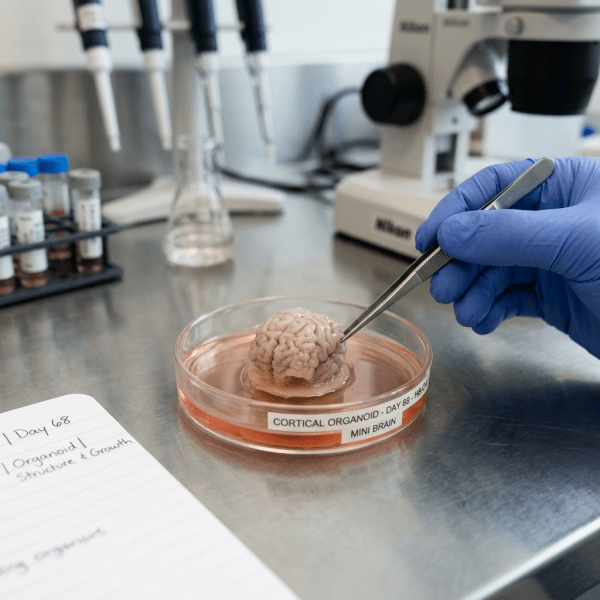
Gloved hand holding tweezers manipulating a miniature brain organoid in a petri dish on a lab bench

What if a pea-sized cluster of lab-grown cells could unlock the mysteries of brain injury? Researchers at the University of Cincinnati’s College of Engineering and Applied Science have been doing just that:

Reported by UC on April 21, 2026, UC Assistant Professor Volha “Olga” Liaudanskaya has engineered a tiny, functioning replica of human brain tissue that researchers can safely study. Termed a “mini-brain”, these lab-grown models combine three types of brain cells with two vascular cell types. This, then, creates a complex five-cell system she can observe in living tissue. Simulating concussions and mild traumatic brain injuries on this model, UC engineers can uncover how blunt-force impacts trigger cellular chain reactions that may ultimately lead to long-term neurodegenerative diseases. (Prior models lacked the vascular components, which researchers now recognize as key, driving brain inflammation and degeneration, perhaps reshaping how America protects its athletes, veterans, and kids.)

According to 2026 estimates by the Centers for Disease Control and Prevention, children alone sustain nearly 4 million concussions every year, so the results of this “mini” innovation may be enormous.

Kansas Official Honored for Championing Brain Injury Survivors

On April 17, 2026, Kansas Secretary of the Department for Aging and Disability Services Laura Howard was named the 2026 Brain Injury Champion for her work that has helped thousands of families in the State navigate life after a brain injury. Howard was recognized at the Brain Injury Association of Kansas & Greater Kansas City Annual Professional Conference in Topeka, a distinction that places her at the center of one of the most important disability policy conversations in the State.

As a gubernatorially-appointed cabinet secretary, Howard oversees Kansas’s Medicaid Brain Injury Waiver, a program that funds rehabilitation support for brain injury survivors. Under her leadership, the waiver was expanded to cover a broader range of injuries and now includes children under 16, nearly doubling the number of people it helps. Even Kansas Governor Laura Kelly took notice, publicly praising Howard’s “commitment to supporting Kansans with brain injuries and improving access to care.”

When the Floor Hits Back: Brain Injury in Basketball

Spurs player making a layup shot over a Portland Trail Blazers defender in a crowded basketball arena

San Antonio Spurs star Victor Wembanyama tumbled face-first on the court in the second quarter of Game 2, on Tuesday, April 21, at the NBA Playoffs against Portland. The accident was both a serious blow to the player and the team, as Wembanyama averages 25.0 points, 11.5 rebounds, and 3.1 blocks per game. Fortunately, he returned for Game 4 of the game series, which San Antonio ultimately won. However, it is a sobering reminder both that nobody is concussion-proof and of the immense importance of NBA’s Concussion Protocol.

Through the years, incidents like Wembanyama’s head trauma have become more common and with greater consequences, as today’s NBA players are stronger and more athletic than those from the past. Due to this situation, the NBA finally had the wherewithal to institute a Concussion Protocol in the 2011–12 season. Before it, reportedly just 5.7 concussions were recorded per season in the League. Afterward, that number nearly tripled, not because the game suddenly got much more dangerous, but because of more “accurate reporting secondary to advances in player education, medical knowledge, national media coverage, and standardized testing protocols,” states a 2019 study, Concussions in the National Basketball Association: An Analysis from 1999-2018, available on PubMed.gov.

“A player diagnosed with a concussion should be regularly monitored for 24 hours … the player may not begin the return-to-participation exertion process until 24 hours after the time of injury,” read the original Protocol. In 2026, the Protocol is more rigorous: a player cannot return to full participation for at least 48 hours and must successfully complete cognitive tests before clearance.

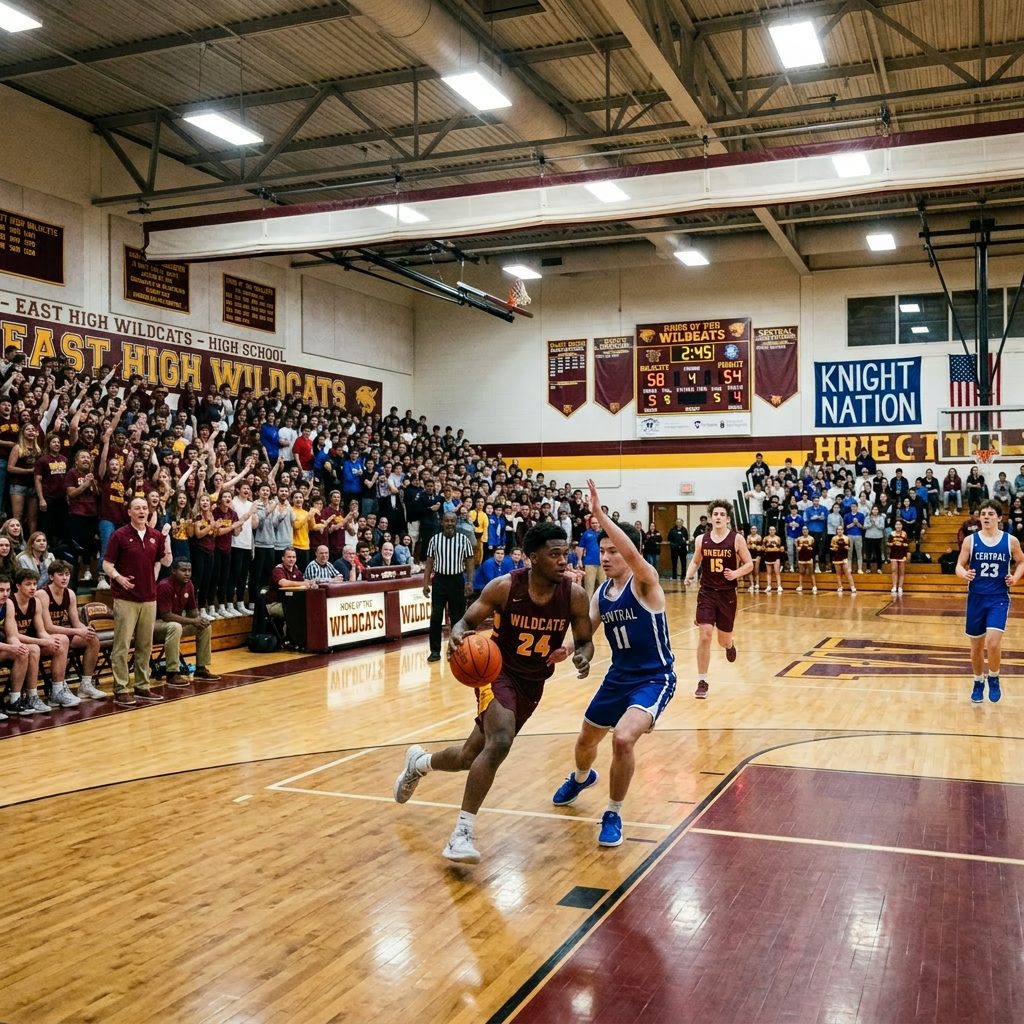
High school basketball players in action with one driving past defender near the basket

Beyond the pros, college players are at risk, as are basketball players still in high school and younger. In the 2023 – 2024 season, approximately 250,000 students sustained concussions across nine high school sports, according to the National Federation of State High School Associations. Accordingly, Senator Dick Durbin (IL) introduced Protecting Student Athletes from Concussions Act on September 18, 2025. At that time, S.2889 was read twice and referred to the Committee on Health, Education, Labor, and Pensions. On February 17, 2026, Protecting Student Athletes from Concussions Act was introduced to the House by Representative Mark DeSaulnier (CA). H.R.7590 was then referred to the House Committee on Education and Workforce. No action has been taken on either bill since their introductions. (While no federal sports concussion law yet exists, all 50 states have adopted youth sports concussion laws.)

Although injuries do happen, most notably in the NBA, ultimately a player is responsible for their own safety. In August 2024, the government published a systematic review, Sure Steps: Key Strategies for Protecting Basketball Players from Injuries, available on PubMed. Five of the six strategies highlight neuromuscular training, which includes strength work, stabilization or core, mobility, and agility.