McNabb Continues to Address “Cruelty”

Over 69,000 TBI-related deaths occur annually in the United States, yet survivors face mockery rather than support:

Recently, Payton McNabb—who suffered a traumatic brain injury during a 2022 volleyball game—was mocked by transgender comedian Stacy Cay, who called footage of McNabb’s injury “pretty funny” and criticized her for falling “like a toddler.” McNabb responded powerfully to those repugnant so-called jokes: “A grown man mocking a teenage girl’s traumatic brain injury isn’t comedy—it’s cruelty.” This is particularly notable since transgender discrimination is often at the foreword of the news and “cruelty” is one note that is used to rightfully describe it.

In schools, students with TBI face bullying from peers and even faculty. As for American adults, the percentage who have had a TBI, and are living with its consequences, ranges from 19-29%, according to recent statistics. Adults experience workplace discrimination in many ways, despite federal protections. These laws, specifically the 1996 TBI Act and Section 504 of the Rehabilitation Act of 1973, ostensibly protect survivors from discrimination but do not eliminate the problem.

Unrelated to McNabb’s trauma, President Trump previously dismissed TBIs as “just a headache”, in reference to service members. This 2020 ignorant statement is, unfortunately, shared by many who have no first- or second-hand experience with brain injury. As commonly is the case for those who interact with those who have a neurological injury, President Trump’s understanding of brain injury and respect for brain injury survivors has since changed. Recently, he honored Payton McNabb at his Congressional address. (McNabb also addressed the North Carolina General Assembly in 2023 and her bio is currently available to view in the congressional record.)

2025 CDC Youth Football Safety Report

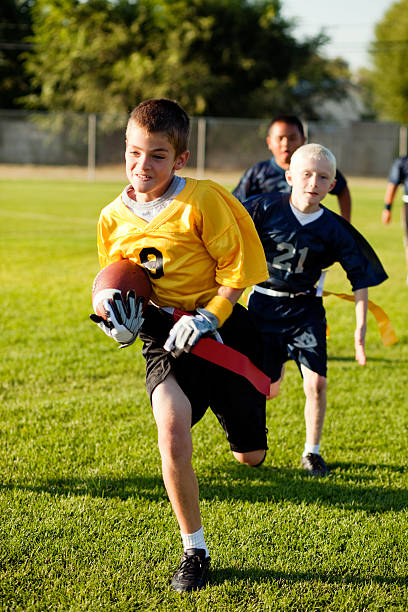
A CDC’s August 2025 report, Comparing Head Impacts in Youth Tackle and Flag Football, reiterates five key recommendations stated in 2021: expand flag football programs, reduce contact practices, enforce helmet-to-head penalties, teach proper tackling techniques, and provide comprehensive safety education. The research shows youth tackle players sustain 15 times more head impacts than flag football athletes.

These findings echo longstanding government concerns about youth football safety, that this website has noted since 2018. While the CDC’s rules remain sound, the persistence of these same conclusions suggests it may be time for more decisive action to accelerate the adoption of safer practices nationwide. (Some have recommended regulatory standards, funding incentives, or policy mandates, but others note concerns about overreach.)

Comparing Head Impacts in Youth Tackle and Flag Football (8/4/25): https://www.cdc.gov/traumatic-brain-injury/data-research/comparing-head-impacts/index.html#cdc_report_pub_study_section_2-more-efforts-needed-to-prevent-head-impacts-during-youth-football-games

Muhammad Ali American Boxing Revival Act Targets Brain Injury Prevention

Congressional lawmakers have introduced the Muhammad Ali American Boxing Revival Act to strengthen fighter safety protections. Representatives Brian Jack (GA) and Sharice Davids (KS) introduced this legislation in July 2025, building upon the Professional Boxing Safety Act of 1996.

The timing coincides with devastating losses in Tokyo, where Shigetoshi Kotari and Hiromasa Urakawa, both 28, died from subdural hematomas after competing on the same card at Korakuen Hall on August 2. Both fighters collapsed following their matches and underwent emergency brain surgery but died days later. Japan’s Boxing Commission subsequently reduced championship fights from 12 to 10 rounds.

The new legislation enhances the original Muhammad Ali Boxing Reform Act, enacted in 2000, which primarily addressed financial protections. This revival focuses heavily on medical safety, mandating comprehensive brain imaging including MRIs every three years and increased testing frequency after knockouts.

The lawmakers cite concerns about brain trauma in combat sports, with former MMA fighter Congresswoman Davids drawing from personal experience about ring dangers. The World Boxing Organization, a major international sanctioning body governing professional boxing globally, endorses these enhanced safety protocols to protect fighter welfare.

Call for More Studies, Not Solutions

At the start of 2019, Congress sought to showcase its “great concern” for brain injury, with Congresswoman Joyce Beatty’s (OH) introduction of H.R.280, the Concussion Awareness and Education Act of 2019.  Cosponsored by 36 others, the Bill seeks, “to provide for systemic research, treatment, awareness, and dissemination of information with respect to sports-related and other concussions.”  Specifically, it focuses on children, aged 5 to 21.  It is an admirable goal to care for America’s children, but just like similar bills that seem to go through Congress every year, it just calls for research.  Additionally, once introduced on January 8, the bill was referred to the House Committee on Energy and Commerce, where it still sits without action.

Citizens have expressed their concern over what they see as a lack of concern for the youth, but stateside, similar government pseudo-action seems to be present.  For example, the Salt Lake Tribune wrote, “there’s a dirty little secret plaguing high school sports in Utah.”  According to the newspaper, that “dirty little secret” is the incidence of concussions in high school sports.  In Washington, S.R. 5238, which is currently being considered in State Congress, “would require UW Medicine to publish and maintain a website making… research available to parents,” – again, the government is proposing research, not action.  (Some states have taken legislative action, though, by eliminating certain sports and certain actions in sports.  A bill introduced to Congress in Maryland this month, for example, “would… prohibit cheerleaders age 12 and younger from engaging in aerial stunts.”)

As I have noted in the past, this heightened concern (and, perhaps, this seeming lack of federal action) may be the cause of the decreased sports enrollment in schools.  While that is unfortunate, a positive outcome of this current parental concern could be a heightened concern for sports safety from school districts.  Even without legal mandate, this could lead to a lower concussion percentage rate for the millions of American children who, theoretically, stay on the field and court.

Skiing Into a Head Injury

Gliding down a ski slope at 60 mph, taking a ramp that lifts you up in the air with a heavy board attached to your feet and just snow below, or racing against others while doing both.  These three activities are all part of the winter routine for individuals who enjoy the extreme sports of freestyle skiing, snowboarding or snowcross.  Extreme sports are, by definition, dangerous.  A Google search of snowboarding, for example, found two pages of articles related to snowboarding deaths and accidents this year alone.

First coming into existence either in the 1950s, 1960s or 1970s, depending on which source you reference, extreme sports tap into a person’s sense of adventure.  Head and neck injuries due to winter extreme sports are common, when compared to other sports, partly because, “many extreme sports take place in environments where medical care may not be readily available.”

Throughout the years, extreme sports have become more popular, perhaps as the opportunity for adventure and physical risk of everyday life goes down and mental stress goes up.  Head and neck injuries due to winter extreme sports have also significantly increased through the years.  There is a cost to these injuries, both emotionally for the individual and monetarily for both the individual and the government through evacuation costs, rehabilitation costs and community costs in the future.  This month, the government pays more attention to these risks, as well as the needed research, as January is National Winter Sports Traumatic Brain Injury Awareness Month.

Although finding new means to treat traumatic brain injury in extreme winter sports is very important, “prevention is the top priority”.  The Office of Disease Prevention and Health Promotion reminds people to always wear a helmet and to make sure to watch your surroundings by staying in the boundaries in ski slopes and watching for obstacles and hazards on your path.  Just as importantly, “make sure medical care is close.”  Additionally, Dr. Pickett of the National Intrepid Center of Excellence reminds people that, “It’s important to consider how weather conditions… increase the risk for these injuries.”  While equipment is now safer and access to medical care has improved, prevention should always come first.  If you enjoy the thrill of extreme winter sports, I hope you enjoy it this winter, but know and use all available information to make it safe.

New School Year Brings New Athletic Guidelines

The new school year is well on its way and youth athletics have begun, including for “about 1 million youth between the ages of 6 and 12 [who] play tackle [football].”  However, even though this number may seem high, youth athletic participation has continued its decade-long decline again this year.  Head trauma, specifically concussions, are the major worry.

In response, the CDC has authorized new guidelines on the diagnosis and treatment of concussions and other such mild traumatic brain injuries in children. Published in the medical journal JAMA Pediatrics, and referenced by other publications nationwide since, the guidelines encompass over 25 years of research and include, “19 sets of recommendations on the diagnosis, prognosis, and management/treatment of pediatric mTBI that were assigned a level of obligation (i.e., must, should, or may) based on confidence in the evidence.”

Noting the decline in participation and increased parental concern, many states and school districts have updated their guidelines on concussion protocol.  This year, New York State Education Department stated that, “Local boards of education are strongly advised to develop a written concussion management policy.”  In Scarsdale, NY, for example, the school district announced, “the establishment of a Concussion Management Team, training for the Team and appropriate staff, protocol for student evaluation and return to play or activity, accommodations if necessary in academic areas, and a set of procedures that outline the role and responsibilities of all concerned.”  The website of the Central Valley District, NY has a thorough webpage regarding concussion protocol, as “[the] School District recognizes that protecting students from head injuries is one of the most important ways of preventing a concussion.”  (A list of all the webpages dedicated to concussion protocol, and a list of all the concussion protocols that have been recently altered due to increased public concern, is too lengthy to individually recognize.)

* It should also be noted that even with all the negative media coverage and medical concern, many school districts, parents and some publications still see the benefits of organized athletics in a child’s physical and social development.

The Importance of PLAY(S)

Children generally have more physical energy than their adult counterparts. As a consequence, many participate in youth sports leagues, which not only provide physical activity, but also teach them to work effectively with their peers.  Last year, Senator Capito (WV) proposed Senate Resolution 227 which marked July 16 – 22 as National Youth Sports Week.  According to the bill, the week is, “a celebration of youth sports participation and all of the benefits youth derive from engagement in sports.”

In 2018, “[this] week… thousands of youth sports coaches, athletic directors, recreation directors, association members, sponsors, young athletes, and parents across the country show their support focusing on P.L.A.Y.S. ~ Physical activity, Living healthy, Access, Youth development, Safety.”  While having access to the physical activity and youth development provided by sports, which is a key part of healthy living, is important, the S (safety) should always be included in the celebration.

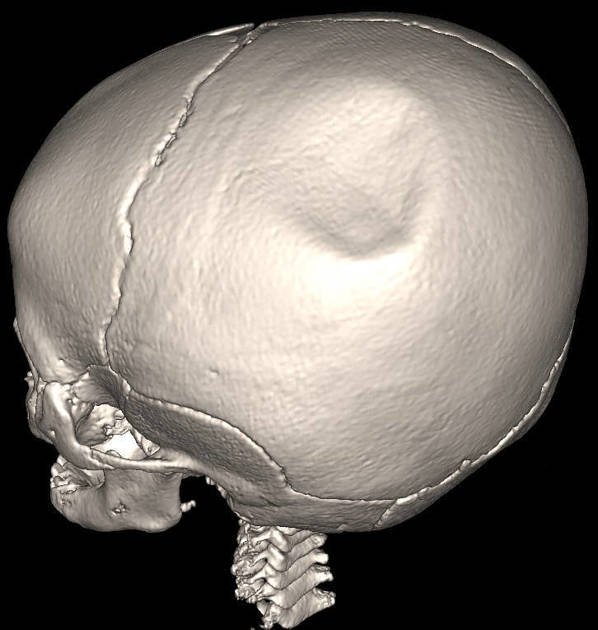
***The bones of children are still in development and, therefore, weaker.  Additionally, the coating of myelin, neuron fibers, in the brain of youth is still in development.  Because of this, physical injury, including skull injury, is more common and more severe in children, than in adults.  Particularly this can be found in sports, most notably in youth football, youth hockey and youth soccer, but the risk is present in all sports.  (For example, this month, the CDC published an article that identifies brain infection/injury as a rare, but possible result of fresh water swimming.)  Additionally, beyond physical safety, sports may affect the brain psychologically, but this affect can also be positive.  New Jersey, among other states, has a youth sports concussion law, “to help reduce the risk of student-athletes suffering concussion, and its long-term consequences.”  Included as a possible long-tern consequence is a traumatic brain injury.

Investigators Question America’s Football Crisis

People now see football and brain injury as a definite cause-and-effect.  Parents are much more hesitant to allow their school-aged children join the school football team.  In January, for example, laws related to youth football were proposed in Illinois and New York, both named after former NFL players who suffered the effects of CTE (chronic traumatic encephalopathy).  In Illinois, HB4341 was named after Dave Duerson, a former Chicago Bears player who committed suicide in 2011 and whose autopsy showed that he had a brain injury.  Officially known as the CTE Prevention Act (HB4341), the last action on the Duerson Act was on April 27, 2018 when it was referred the Rules Committee.  In New York, A1269A is named after former Baltimore Colts tight-end John Mackey, who showed signs of brain injury prior to his death at age 69.  The John MacKey Youth Football Protection Act is also still in Committee in the State Assembly.  (Notably, the MacKey Act only prevents children 11 years and younger from playing tackle football, not 12 or 13 years as other proposed laws restrict.)

In Maryland, a bill was introduced by Delegate Terri Hill, and failed, that would have changed the rules for youth soccer, lacrosse, hockey and [tackle] football.  (“I really did not expect it to pass, but I think it’s a conversation we have to have and I don’t think the conversation is over,” Hill said.)  In New Jersey, A3760 was introduced by Assemblywoman Valerie Huttle on April 5, 2018 to prohibit children under the age of 12 from participating in tackle football.  After its introduction, it was referred to the Assembly Women and Children Committee, where it sits now.  Last week, AB-2108 failed in the California Assembly, “but before the outrage and the mudslinging and the ‘Save Youth Football’ rallies, [the] resolution pass[ed] unanimously, with 69 co-authors.”

Many proponents of safer/more restrictive youth football cite a recent Boston University study that showed that hits to the head, not concussions, cause CTE.  Hits to the head are thought to be simply a means of defense in football, not just the residual effect of defense, like a concussion.  Therefore, it’s harder to eliminate them while keeping the competitive edge of the sport.  (Getting rid of the tackle part of professional football would be more difficult, but it is still difficult in youth football, without allowing it to become touch football.)

What the safety rules of youth football should be is a good discussion to have, especially now that a Court-appointed Special Investigator has shown that some NFL players who have claimed brain injury did not, if fact, have such neurological problems.  The Investigator found, for example, that a law firm shared by dozens of NFL players purportedly coached the players on how to fail a neurological test.  A review of the post-NFL lives of some players who claimed themselves to be too cognitively impaired to work did, in fact, work – as motivational speakers, coaches, bankers, etc.

However, no one is fully certain about the effects of football on the brain. In April 2018, former 19-year NFL player Brett Favre spoke of whether his forgetfulness was because of he is aging, as he is 48, or, “do I have [the] early stages of CTE?  I don’t know.”  Research and news have made brain injury and football seem to always coincide, so Favre’s personal questioning is understandable.  Just as was noted in this website’s article related to Shaken Baby Syndrome though, the horrific easy answer isn’t always correct.  Whether or not the news about the CTE-football connection affects a state’s or a school district’s decision on whether to continue to offer football, whether schools stricken their football rules, and whether a parent chooses to allow their child to play the sport rests solely on them.

Youth Football “Suits” Up


The Super Bowl may not be until next year, but the drama of football is already surfacing in California, as a “Judge OKs trial for brain-injury suit against Pop Warner.”  Specifically, the mothers claim their sons, who were 22 and 25 years old on their deaths, died as a result of the brain damage caused to them from participation in the Pop Warner Little Scholars, Inc. {PWLS) football league.  (They say that Pop Warner misrepresents its concern for safety when it says, “Pop Warner is the ONLY youth football program (local, regional and national) that sets and enforces a strict AGE & WEIGHT MATRIX that reduces the risk and reality of injuries.”)

In the past few years, the relationship between sports and brain injury has been extensively studied, primarily on the professional level.  However, studies have also been done on youth football players with results that are equally, if not more, troubling considering their still-developing brains.  “In the past 3 years, 47 children have died playing football in the United States.  Others found [that]… 21 out of 66 brains with clear evidence of CTE in males who played contact football when young.”

As terrible as the news about the relationship between youth sports and TBI may be, the solution is not clear.  A Google search shows that many schools are cancelling their football season, both for safety reasons and for fear of lawsuits.  However, a recent article reported parents’ dilemma:  “[We} talked about all of the risks involved with playing football, most notably the risk of concussions and head injuries that carry long-term health concerns. But we also talked about the risks of not letting our son play football. Not only did I not want to be a “dream killer” (no parent does), but I was also hesitant to waiver from a personal parenting philosophy to enthusiastically encourage controlled risk-taking.”

‘There’s Always a Risk’

On March 6, one of the jewels of the Triple Crown, the Kentucky Derby, was run.  To coincide with this, on Friday, May 5, NBC did a story about injury and horse racing.  Specifically, the article begins by mentioning Rajiv Maragh, a jockey with 13 years of professional horse racing experience and 13 years of injury to show from it, including a concussion.  The article then speaks more of horse racing and injury.  True, all sports have injury, but horse racing does not have concussion protocol, as other sports do.  Last year, the Jockeys’ Guild and the University of Kentucky announced a three-year study that seeks to bridge this gap.

“I choose to be a jockey and there’s always a risk of danger,” says Maragh.  However, the Guild can learn how to better protect its athletes, as professional sport leagues have done.

Note: While horse racing and government may not seem to be related, most states do have a racing commission that is “responsible for regulating the safety and integrity of the horse racing industry through the conduct of investigations, prosecutions and via regular monitoring.”  Because horse racing is a revenue earner for states, state commissions also focus on ensuring the welfare of the horse.