NHL Return Possible for Faber after Skull Fracture

Skull model labeled “Fracture: 1952 Hockey Incident,” “Hairline crack,” and “Break”

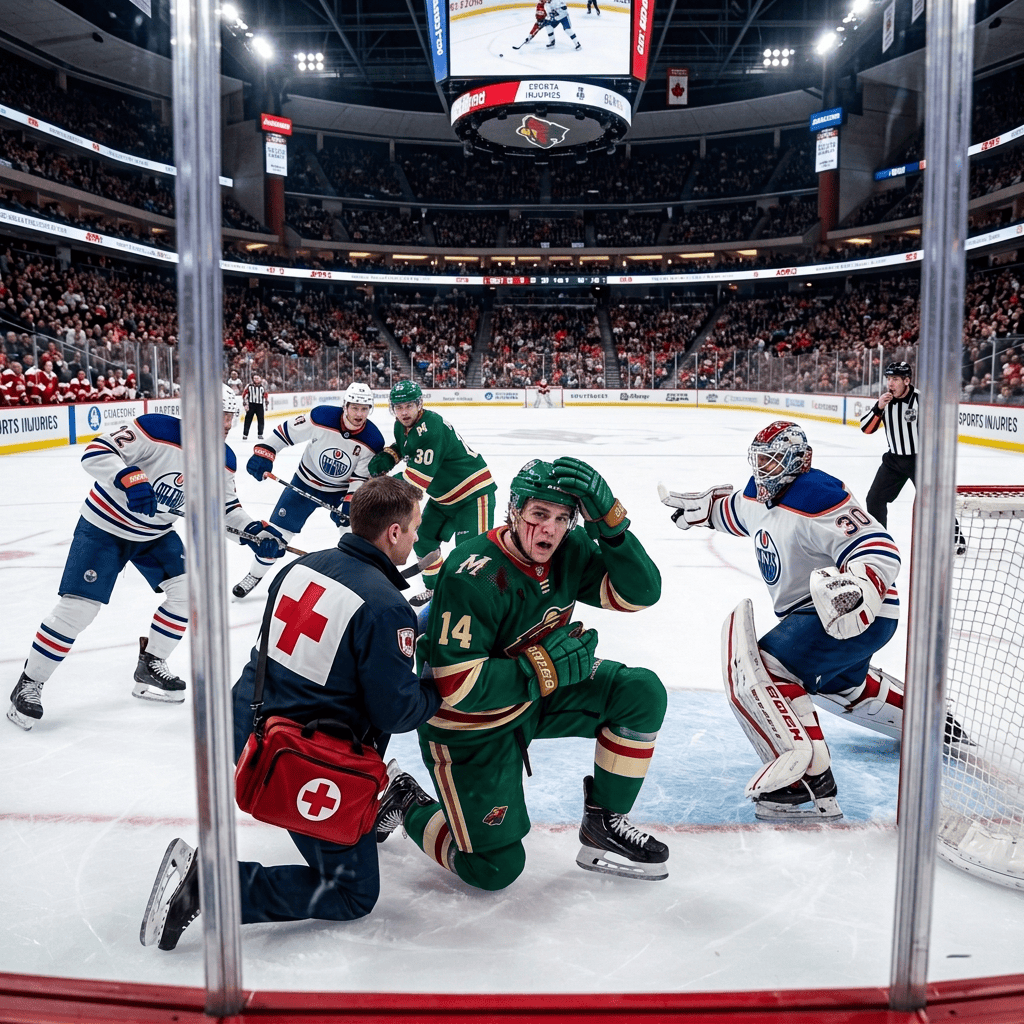
Minnesota Wild defenseman Brock Faber is out indefinitely after a deflected shot from Dallas Stars forward Sam Steel struck him near his left ear, an area the helmet doesn’t protect, on September 25, 2026. He had surgery two days later. The NHL team hasn’t said what kind of fracture it is, but a skull fracture is likely. According to the National Library of Medicine’s MedlinePlus, a skull fracture can damage brain tissue directly, or cause bleeding beneath the skull that compresses the brain. In a depressed skull fracture, broken bone is pushed inward toward the brain.

NHL history shows he can come back to play after his injury. Boston’s Ted Green suffered a life-threatening compound skull fracture in a 1969 stick fight. He needed three brain surgeries and a year of recovery. He then helped Boston win the 1972 Stanley Cup and played eight seasons of professional hockey.

Research indexed in NLM’s PubMed supports cautious optimism. A neurosurgery review found that after brain surgery for a sports injury, 40% to 50% of experts would advise those with such fractures to consider a return to play, but only after 6 to 12 months recuperation. However, about 80% opposed a return to collision sports if bleeding persisted.

“Marty Supreme” Brings Attention to Ping Pong’s Dual Role in Brain Health

As many anticipate 2026 Academy Award nominations to be announced tomorrow, one film, in particular, has gained Oscar buzz for cinematic acumen and, from me, its focus on an often overlooked sport. An A24 Films production Marty Supreme follows a 1950s ping pong hustler through his rise to glory. (Timothée Chalamet, who portrays the star table tennis player, has already won a Golden Globe for the role.) But beyond Hollywood, the sport at the heart of the film has proven transformative for brain injury patients.

Recent NIH research reveals that ping pong has remarkable therapeutic potential for traumatic brain injury recovery. A 2024 study published in Brain Research and indexed in NIH PubMed demonstrated that long-term table tennis training significantly alters dynamic functional connectivity and white matter microstructure in large-scale brain regions – enhancing cognitive function and attention in patients recovering from neurological injuries. This is due to the sport’s simultaneous engagement of visual tracking, motor coordination, and rapid decision-making, which triggers neuroplasticity, the brain’s ability to rewire itself. A 2024 stroke rehabilitation study in the database showed significant brainwave changes in patients practicing seated table tennis, with enhanced activity in frontal and temporal regions associated with sensorimotor integration. This additionally supports broader applications of the sport for traumatic brain injury rehabilitation.

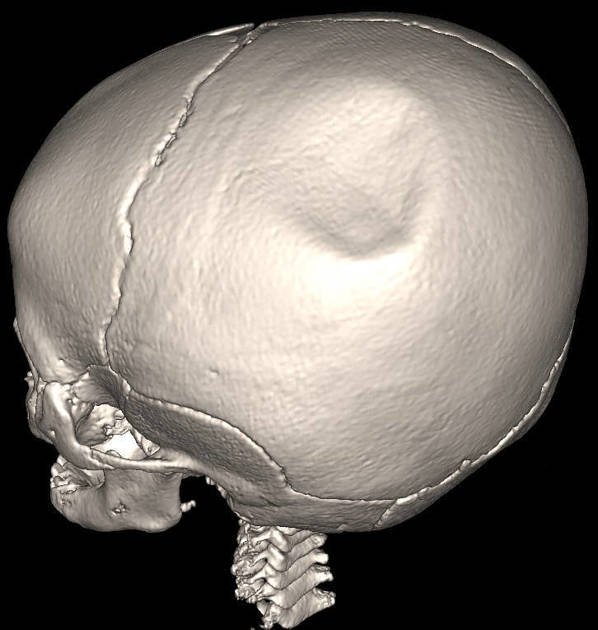
However, the term “ping pong” isn’t singly used to define the sport of table tennis. Ironically, “ping pong fracture” is the term used to describe a very serious infant condition: a depressed skull fracture that resembles a dented ball. These fractures occur in approximately 3 per 10,000 live births, often as the result of difficult deliveries. Fortunately, a 2022 World Neurosurgery systematic review of 228 cases found 96.4% achieve favorable outcomes without lasting neurological damage. Most resolve spontaneously within six months.

As is apparent, science continues to prove that ping pong’s medical connections, whether through the healing effects to the injured brain of gameplay or used to describe neonatal trauma, run deeper than any championship rally.