When Calcium Turns Against the Brain

Calcium usually conjures images of strong bones and glasses of milk. Those with a brain injury are often told by their doctors to increase their calcium intake, as low blood calcium often occurs in brain-injury patients. Inside your brain, though, calcium plays a very different role that scientists are learning can turn dangerous after an injury.

Diagram showing calcium ions entering a neuron through a voltage-gated calcium channel

Brain cells communicate through tiny gates called calcium channels, which let calcium atoms flow in and out. “Calcium channels are the major determinant of calcium influx,” explains Troy Littleton, a neuroscience professor at Massachusetts Institute of Technology. Following a stroke or head injury, these gates can jam open, flooding cells with calcium and igniting inflammation and cell death.

Recent discoveries, many of which are available to view on the NLM database, spotlight new culprits. In 2026, scientists found that a channel called Orai1 flips the brain’s immune cells into “attack mode”; blocking it in mice calmed inflammation. Another channel, Piezo1, physically senses damage.

Importantly, these new findings confirm that the danger isn’t calcium itself, but the broken channels letting too much rush in.
Morning Joe’s Benefits Come with Caution for TBI Survivors

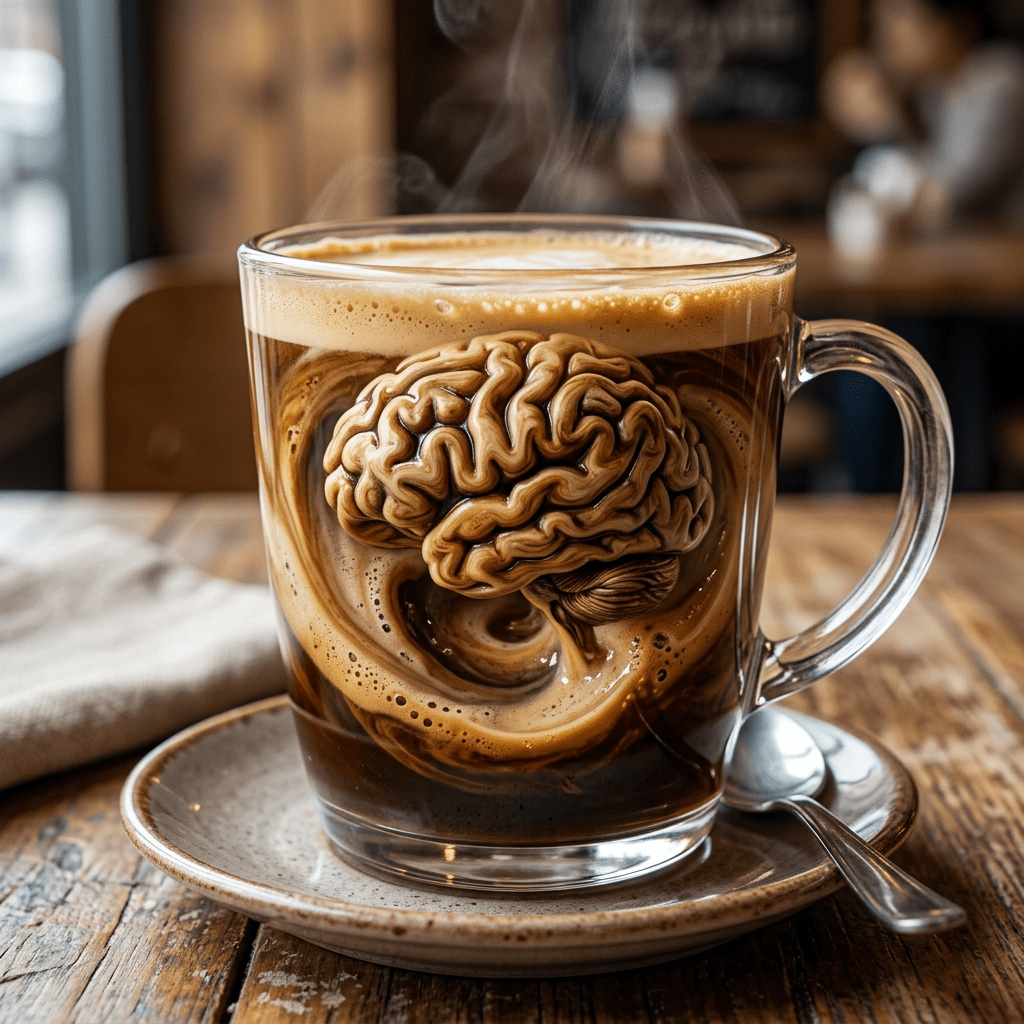
brain made of coffee swirling

The day doesn’t truly begin until that first cup of coffee is in hand for a countless number of people. It’s ritual, comfort, and fuel! However, what does caffeine do to an injured brain?

According to a June 2025 article from Nutrients, a peer-reviewed journal that is also available on PubMed, research revealed that caffeine can function both as a neuroprotectant and a neurotoxin for those with a traumatic brain injury. Whether it can be a boon or a burden hinges on dosage, timing, and context. At low-to-moderate amounts, such as a morning brew, caffeine may reduce TBI-associated inflammation, oxidative stress, and intracranial pressure, enhance alertness and reduce mental fatigue, critical for cognitive rehabilitation. On the other hand, in young people experiencing repetitive moderate TBI, it was found that caffeine consumption disrupts normal brain pruning processes. This can potentially lead to further neurological and behavioral impairments.

Adding to this complex connection, Neuropharmacology, a journal that focuses on research about neuroscience that can also be found on PubMed, published the findings of a 2026 University College London study about caffeine citrate, a medication used to treat a lack of breathing in premature babies: while intended to stimulate breathing centers, higher doses of caffeine citrate can result in toxicity. (However, it appears that the “babies” that were studied were piglets.)

The takeaway is similar to that of other treatment possibilities: your coffee habit may be doing your brain favors – or not – so caution is warranted.