Holly’s Trauma May Prevent Others from Neurological Harm

Holly, a single mother of three, was brutally beaten unconscious while trying to intervene in a downtown Cincinnati street fight on July 26 at around 3 a.m. Violently slammed to the ground by the attackers, she was left with severe injuries including neurological damage, specifically a concussion and vision problems.

In subsequent media appearances, Holly described the assault as “attempted murder” rather than just an incident, criticizing police for their inadequate response. She also expressed frustration that despite suffering life-threatening injuries, as of the date of her viral response, she had not been contacted by Cincinnati officials, apologizing for the attack.

Six individuals have been arrested in connection with the brutal beating that was witnessed by approximately 100 bystanders, though only one person called 911 for help.

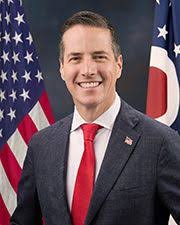
In response, on Wednesday, August 6, 2025, Ohio Senator Bernie Moreno introduced “Holly’s Act” – proposed legislation aimed at ending what he calls the justice system’s “revolving door” for repeat offenders. The act would raise minimum sentences and bail requirements for violent criminals, ensuring those with extensive criminal records cannot easily return to the streets.  Additionally, “[He] will convene the federal agencies that provide money to Cincinnati and ask them to suspend federal funding until [the city council and the mayor have] a plan in place.”

Cincinnati Mayor Aftab Pureval called Ohio Senator Bernie Moreno’s response “extremely disappointing,” stating that threats to suspend federal funding constitute “political theater” designed to harm residents. The mayor defended the city’s existing public safety initiatives, including drone programs and walking patrols, while acknowledging more work needed to be done downtown.

Holly supports the legislation, hoping her traumatic experience will be a catalyst to prevent similar attacks and improve police staffing statewide.

Texas First to Fund New Psychedelic Research

Texas has made history by becoming the first state to allocate significant public funding for psychedelic medicine research. Governor Greg Abbott signed Senate Bill 2308 into law in June 2025, committing $50 million to FDA-approved clinical trials of ibogaine, a psychedelic compound derived from an African shrub.

The groundbreaking legislation represents the largest government investment in psychedelic research to date, positioning Texas as a global leader in this emerging field. The initiative aims to develop FDA-approved treatments for opioid addiction, traumatic brain injury (TBI), and PTSD—conditions that have devastated countless lives across America.

Rick Perry’s Pivotal Role

Former Texas Governor Rick Perry has emerged as an unlikely but passionate advocate for ibogaine research. His involvement began through his relationship with Navy SEAL veterans Marcus and Morgan Luttrell, who found relief from combat-related trauma through ibogaine treatment in Mexico. After witnessing their remarkable recoveries, Perry dedicated himself to advancing this cause, even launching the nonprofit Americans for Ibogaine.

“I’ve spent most of my adult life in public service, and few things have moved me like what I’ve witnessed with this psychedelic drug,” Perry wrote in a recent op-ed, describing how ibogaine helped veterans overcome years of opioid dependence and psychological trauma.

Promising Results for Brain Injury

Recent Stanford Medicine research found that ibogaine, when combined with magnesium for heart protection, safely reduced PTSD symptoms by 88%, depression by 87%, and anxiety by 81% in combat veterans with traumatic brain injuries. The treatment appears to promote neuroplasticity, potentially helping the brain repair itself after injury.

While primarily focused on veterans, the research could benefit anyone suffering from brain trauma, including athletes with concussion-related injuries and accident victims. Texas’s historic investment may lead the way to finally bringing this promising treatment to American patients who have long traveled abroad seeking relief.

Texas SB 2308: https://capitol.texas.gov/BillLookup/History.aspx?LegSess=89R&Bill=SB2308

MO Brings Oxygen into TBI Recovery

Missouri has demonstrated remarkable commitment to our veterans with the ratification of SB 664 on July 14, 2025.  The “Veterans Traumatic Brain Injury Treatment and Recovery Act,” was passed with overwhelming support of 33-0 in the Senate and 156-1 in the House. Governor Mike Kehoe signed this groundbreaking legislation on Monday, establishing a fund to reimburse Hyperbaric Oxygen Therapy (HBOT) facilities treating veterans with TBI or PTSD, recognizing the treatment’s potential to combat veteran suicide and opioid addiction. The initiative represents a projected investment exceeding $5 million annually, underscoring the state’s confidence in this therapeutic approach.

HBOT works by delivering 100% oxygen in pressurized chambers at 1.4-3 times normal atmospheric pressure, dramatically increasing oxygen delivery to damaged brain tissues. Advocates report that this treatment “stimulates brain wound healing and can reverse soft tissue and neurocognitive damage” without requiring invasive surgery or pharmaceutical interventions. Patients can “experience recovery of cognitive and neurological functioning” through this non-invasive approach.

Clinical research has yielded encouraging results across multiple studies. For moderate-to-severe TBI cases, several high-quality studies demonstrated statistically significant improvements in consciousness recovery compared to standard care alone. Research has consistently shown better Glasgow Outcome Scale scores and reduced mortality rates in HBOT treatment groups. A comprehensive 2016 review highlighted that “most successes occurred within hours after TBI,” emphasizing the importance of early intervention. Particularly compelling evidence comes from pediatric research, where a study of 56 children with severe TBI found that HBOT “significantly improved quality of life and reduced complications” compared to control groups. Additional research involving 56 patients showed “significant improvement in symptoms and increased brain activity” measurable through SPECT (Single Photon Emission Computed Tomography) brain imaging.

The treatment maintains a generally acceptable safety profile, with most side effects being minor and temporary, including ear discomfort, headaches, and fatigue. Serious adverse events remain rare when HBOT is properly administered. This positive safety record, combined with growing clinical evidence and strong legislative support, has led some VA facilities to begin offering HBOT treatment to veterans, representing an important step toward broader acceptance of this promising therapeutic intervention.

Pandemic Accountability

About seven months ago, the U.S. government declared the COVID pandemic “over”.  As part of going forward, on May 9th, 2023, President Biden signed an Executive Order titled, “Moving Beyond COVID-⁠19 Vaccination Requirements for Federal Workers.”  Federal workers previously were required to get the COVID vaccine.  Currently, the vast majority of Americans walk in public without masks or fear.  However, the repercussions of government policies, actions and opinions about COVID-19 linger for some Americans.

Millions of people, in America and beyond, were initially eager to receive the vaccine shot, after their lives had been essentially halted for months due to the unforeseen COVID virus.  Before taking the jab, neither American citizens nor the government had information regarding its long-term effects. Soon after, though, we all became better educated on the topic.  “It was like playing Russian roulette,” said a father about the COVID-19 vaccine.  His previously healthy son died after receiving a dose of the Pfizer vaccine in April 2021.  In Louisiana, another such calamity occurred, this time with the Johnson & Johnson COVID vaccine.  The healthy 16-year-old woman who received the vaccine shot in April 2021 was left with a brain injury.  “Now, after three brain surgeries and thousands of hours of physical therapy, she struggles to walk, write, and care for herself,” says the lawsuit, filed in Louisiana, about the vaccine’s lifelong consequences for this woman. 

Last year, the federal government even acknowledged the connection between COVID vaccines and brain damage, noting that, “There is a greater than expected occurrence of severe neurological adverse events…following different kinds of COVID-19 vaccinations,” in the aptly titled 2022 report, Neurological Complications Following COVID-19 Vaccination.   Johnson & Johnson, Pfizer and others considered to be Big Pharma cannot, under law, be sued for these outcomes and, ultimately, Big Pharma did not mandate the vaccine – that was the purview of the federal and state governments, as well as various individual organizations.  While negative outcomes from the COVID vaccine were rare, they occurred and someone should be held accountable.         

NOTE: Though I penned this article months ago, I never posted it on my site.  If more up-to-date information is available, related specifically to this topic, please comment below.

Call for More Studies, Not Solutions

At the start of 2019, Congress sought to showcase its “great concern” for brain injury, with Congresswoman Joyce Beatty’s (OH) introduction of H.R.280, the Concussion Awareness and Education Act of 2019.  Cosponsored by 36 others, the Bill seeks, “to provide for systemic research, treatment, awareness, and dissemination of information with respect to sports-related and other concussions.”  Specifically, it focuses on children, aged 5 to 21.  It is an admirable goal to care for America’s children, but just like similar bills that seem to go through Congress every year, it just calls for research.  Additionally, once introduced on January 8, the bill was referred to the House Committee on Energy and Commerce, where it still sits without action.

Citizens have expressed their concern over what they see as a lack of concern for the youth, but stateside, similar government pseudo-action seems to be present.  For example, the Salt Lake Tribune wrote, “there’s a dirty little secret plaguing high school sports in Utah.”  According to the newspaper, that “dirty little secret” is the incidence of concussions in high school sports.  In Washington, S.R. 5238, which is currently being considered in State Congress, “would require UW Medicine to publish and maintain a website making… research available to parents,” – again, the government is proposing research, not action.  (Some states have taken legislative action, though, by eliminating certain sports and certain actions in sports.  A bill introduced to Congress in Maryland this month, for example, “would… prohibit cheerleaders age 12 and younger from engaging in aerial stunts.”)

As I have noted in the past, this heightened concern (and, perhaps, this seeming lack of federal action) may be the cause of the decreased sports enrollment in schools.  While that is unfortunate, a positive outcome of this current parental concern could be a heightened concern for sports safety from school districts.  Even without legal mandate, this could lead to a lower concussion percentage rate for the millions of American children who, theoretically, stay on the field and court.

Mercury on the Mind – 2

Following the posting of my last article, I found additional interesting information about mercury and dentistry (dentistry may not be the primary use of mercury, but it is the most visible one).  Although mercury is no longer toxic once it is absorbed into a compound in a dental filling, laws regarding the use, particularly the dental use, of mercury exist.  For example, in New York, the environmental conservation law was amended in 2002 to state, “no dentist shall use or possess elemental mercury in the practice of dentistry unless such elemental mercury is contained in appropriate pre-encapsulated capsules.”

As it relates to a medical procedure that many brain injury survivors undergo, this summer the journal Radiology published an article: High-Strength MRI May Release Mercury from Amalgam Dental Fillings.  Further study of the possible effects of MRIs and mercury, show that while MRIs on someone who has mercury in their body may not cause or cause harm to a brain injury per se, NIH studies, “provide further support for the noxious effect of MRI (exposure to strong magnetic field) and release of mercury from dental amalgam fillings.”  (Additionally, MRIs can harm implants, such as brain stimulators, which may contain mercury.)

(In relation to the use of the ten chemicals of health public concern, particularly as it relates to dentistry, I would also advice people to be wary of fluoride.  The World Health Organization warns of both inadequate or excess fluoride intake.  Just like mercury, fluoride can help teeth at certain levels, but overexposure can lead to such things as tooth decay and skeletal fluorosis.  Smile! New water fluoridation level called for by government read the title of a CNBC article related to the 2015 federal increase in the amount of fluoride allowed in drinking water.  In fact, all articles I found related to this increase were positive.)

Mitigation for Morality and Murder

In the modern world, our understanding of science changes rapidly.  Law, at large, does not change so rapidly.  What has changed, in the past 20 years, is that defense lawyers have begun, during the trial and/or sentencing phases of court, to use brain damage/injury as a mitigating factor for criminal acts.

Brain injury was first introduced as a defense in 1966 for Charles Whitman, the so-called Texas Tower Sniper.  (Whitman stabbed his mother and his wife, shot to death 16 people at the University of Texas at Austin and shot and injured 31 others.  An autopsy upon his death found a tumor in his brain.)  Since the start of this century, the exploration into the effects of brain injury on what some may see as moral quandaries for those with neurological deficits has broadened.  Generally, what has been found is that head injury, specifically a brain lesion, can hinder executive functioning, which governs the ability to plan ahead, think things through, manage impulse, etc.  However, this is basic knowledge that applies to all brain injury survivors; tests specifically related to the unique brains of those who commit criminal acts are inconsistent.

In 2015, the NIH published a report, Does TBI Lead to Criminality?.  Their conclusion states, “The results support a modest causal link between traumatic brain injury and criminality.”  Investigations have shown that while brain injury is not a sufficient defense for a criminal act, it may be a mitigating circumstance in the sentencing phase of a trial – treatment versus incarceration.

Since then, brain damage/injury has often been used as a defense, most recently earlier this month: a convicted murderer in Ohio said, during sentencing, “Not everyone is fortunate enough to have a caring family or outside guidance… I am proof [that] a young person – beaten and abused physically, emotionally, and mentally – becomes the abuser.”   Though the defendant now admits to the killing of five women, the testimony of one of two testifying doctors states that because Kirkland MAY have a brain injury, he should not receive the strictest punishment, the death penalty.

Perhaps, though, the “brain injury” defense will relatively soon become a thing of the past.  The above-mentioned NIH report further concludes, “Reducing the rate of TBI… might have benefits in terms of crime reduction.”  (Since this report was released, more defendants have used brain damage as a mitigating factor for criminal acts.)  According to a UK study, approximately 50 to 70% of the incarcerated population has a brain injury.  That percentage is thought to be in the same realm as those imprisoned in America.  Given these astonishing statistics and the continuing government-sponsored and private research on brain injury prevention and recovery, the NIH’s conclusion seems a definite possibility.

(See also Massachusetts General Hospital – Center for Law, Brain & Behavior, “an academic and professional resource for the education, research, and understanding of neuroscience and the law.”)

Brain Injury to be Revised in ND

To one who has a brain injury and their family and friends, the definition may seem relatively clear – a brain injury is something that disrupts the functioning of the brain.  Nationally, the CDC has only a specific definition of and webpage for traumatic brain injury, whereas the NIH notes that TBI is an acquired brain injury.  To support recovery from all types of brain injury, though, states must first each define what constitutes a brain injury.  In New Jersey, for example, the government-funded Traumatic Brain Injury Fund site states that, “to qualify for the Fund, an individual must have an acquired brain injury; defined as an injury to the brain caused by a blow or jolt to the head or a penetrating head injury/neuro-trauma that disrupts the normal brain function, where continued impairment can be demonstrated.  This definition does not include dysfunction caused by congenital or degenerative disorders, birth trauma, or injuries caused by other circumstances.”  The webpage produced by the New York State government is focused on traumatic brain injury, which they define as, “an injury to the brain or skull caused by an external force, such as a strike or impact.”  One must click further to get a definition of acquired brain injury

As can be seen in New York’s definition, many states define only traumatic brain injury – not acquired brain injury.  While many acquired brain injuries are traumatic, all traumatic brain injuries are acquired.  However, many states do not consider those brain injuries that are not defined as TBIs, such brain insults as strokes, to be a brain injury.  Strokes and other acquired brain injuries, however, often need such things as costly recovery too, which may require government funds.

North Dakota has realized this funding error.  As of last week, “the state legislature’s interim health committee is looking at a draft bill that would change the definition of a brain injury.”  This new definition would change the definition to allow the inclusion of all brain injuries, not only traumatic brain injuries.  Below is the proposed revision, with the crossed-out section noting the old definition:

“‘Brain injury’ meansany injury to the brain which occurs after birth and which is acquired through traumatic or nontraumatic insults. The term does not include hereditary, congenital, nontraumatic encephalopathy, nontraumatic aneurysm, stroke, or degenerative brain disorders or injuries induced by birth trauma an insult from physical force or internal damage to the brain or the coverings of the brain which produces an altered mental state and results in a decrease in cognitive, behavioral, emotional, or physical functioning. The term does not include an insult of a degenerative or congenital nature.”

Since it is important to have a full and clear definition in order to gain support, funding and full care for all those in need, it is critical that the North Dakota government votes on this more inclusive bill soon.

Note: If you are aware of an error regarding what I identified as the states’ definitions of brain injury, please comment and it will be researched and rectified.

The Importance of PLAY(S)

Children generally have more physical energy than their adult counterparts. As a consequence, many participate in youth sports leagues, which not only provide physical activity, but also teach them to work effectively with their peers.  Last year, Senator Capito (WV) proposed Senate Resolution 227 which marked July 16 – 22 as National Youth Sports Week.  According to the bill, the week is, “a celebration of youth sports participation and all of the benefits youth derive from engagement in sports.”

In 2018, “[this] week… thousands of youth sports coaches, athletic directors, recreation directors, association members, sponsors, young athletes, and parents across the country show their support focusing on P.L.A.Y.S. ~ Physical activity, Living healthy, Access, Youth development, Safety.”  While having access to the physical activity and youth development provided by sports, which is a key part of healthy living, is important, the S (safety) should always be included in the celebration.

***The bones of children are still in development and, therefore, weaker.  Additionally, the coating of myelin, neuron fibers, in the brain of youth is still in development.  Because of this, physical injury, including skull injury, is more common and more severe in children, than in adults.  Particularly this can be found in sports, most notably in youth football, youth hockey and youth soccer, but the risk is present in all sports.  (For example, this month, the CDC published an article that identifies brain infection/injury as a rare, but possible result of fresh water swimming.)  Additionally, beyond physical safety, sports may affect the brain psychologically, but this affect can also be positive.  New Jersey, among other states, has a youth sports concussion law, “to help reduce the risk of student-athletes suffering concussion, and its long-term consequences.”  Included as a possible long-tern consequence is a traumatic brain injury.

Illegal Immigrants and Brain Injury

A hot topic in the past few decades, illegal immigration has now come to the forefront because of America’s current president and his border wall.  (For the past 10 years, the estimated number of illegal immigrants in America has stayed relatively stable at about 11 million.  During the presidencies of Bill Clinton and George W. Bush, it was steadily rising.)  As for brain injury and undocumented residents, there are many cause-and-effect questions that, when answered, are quite sobering.

To begin, what if the illegal immigrant is the culprit?  What if the illegal immigrant causes someone to have a brain injury, either intentionally or inadvertently?  First, the police or whomever is pursuing the case must find them.  Since illegal immigrants are largely undocumented, this can be a hard task.  For better or worse, depending on your political ideology, a number of states are now allowing an illegal immigrant to legally obtain a driver’s license and register their car.  In January 2015, for example, California signed into law AB60, which, “requires the [DMV] to issue an original driver’s license to an applicant who is unable to submit satisfactory proof of legal presence in the United States.”  New Jersey, with the support of Governor Phil Murphy, is now preparing for a similar bill, Assembly Bill No. 1738, to pass.  If this bill passes, it will make New Jersey the 13th state, plus the District of Columbia, to allow this.  (What the consequences are for an illegal immigrant who inflicts injury on another person, such as through a car accident and even if they are legally licensed, is unclear.  They are subject to criminal charges, but civil action may be more difficult.  As they are illegal, and many do not submit tax returns, which would show their yearly income, monetary consequences to cover such things as rehabilitation costs are not possible.)

More so, the government does not seem to account for the economic costs of brain injury:  For the victim, there will be a lose of future wages as, even if the victim is able to return to work, they will be away for a bit.  Additionally, when returning to work, a brain injured individual may have to pursue a career that is less cognitively and/or physically demanding and often less lucrative than their previous occupation.  For the Internal Revenue Service (IRS), this means less taxable dollars are earned.  Also, the brain injured individual may stay longer or indefinitely on Medicare and/or Medicaid.  The government then is required to help pay for their doctors’ visits, their medication, etc.

But, how about when the illegal immigrant is the victim?  No one wants to see a person, legal or not, suffer or even die due to lack of medical care.  All told, the government is financing about $18.5 billion a year for medical care to unauthorized immigrants.  Of this total, “federal taxpayers provided $11.2 billion in subsidized care to unauthorized immigrants in 2016.”  (“A relatively small number of undocumented immigrants, perhaps in the tens of thousands, obtain health insurance through private employers,” states a 2016 article.)  However, a page on the NIH website, written by an individual who had authored other pages on ethics, as it relates to illegal immigrants, notes that, “the Patient Protection and Affordable Care Act of 2010 ignored the health care of undocumented immigrants and will not provide relief to undocumented patients with catastrophic illness like ESRD, cancer, or traumatic brain injuries.”

There are local health clinics, hospital emergency rooms and free medical school clinics that must treat everyone, regardless of legality.*  Additionally, some doctors will treat undocumented immigrants, off the record.  Treatment for brain injury though, requires more than a brief trip to the doctor.  As an article from 2009, when illegal immigrants were treated differently by the government than now, is titled, “Struggling to find post-acute care for undocumented and uninsured immigrants.”  Should ethics trump legality, no pun intended?

*Another article recounts the story of an illegal man, without insurance, who suffered a stroke.  Though the hospital legally had to treat him, his care would be uncertain the second he stepped out of the hospital grounds.  Would receiving care for his stroke result in a “medical deportation”?  Ultimately, the hospital was able to find the man’s family in Mexico, but the trip to return him to his family cost $50,000 and was paid entirely by the government.

Note: The above post is not a personal comment on illegal immigration.