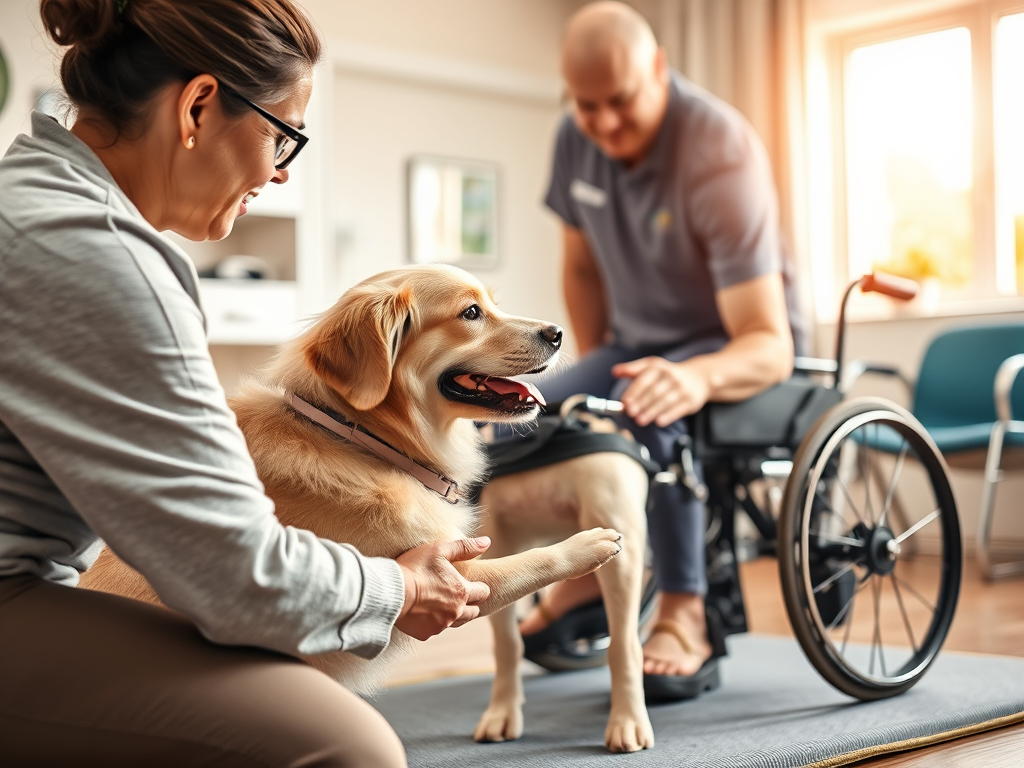
Man’s Best Friend Aids Brain Injury Recovery

Dogs are proving to be powerful partners in brain injury rehabilitation, offering benefits across physical, emotional, and speech therapy alike.

A March 2026 story from the University of Colorado Health (UCHealth) system documented Alan Tay, a 71-year-old stroke survivor who credits his border collie Olay with driving his recovery. Working with a neurological physical therapist, Alan used dog agility training to rebuild endurance, coordination, and memory – ultimately winning a national canine competition just three months after his stroke. Emotionally, dogs combat the depression and isolation that frequently accompany brain injury. The above-mentioned UCHealth story also notes that Olay gave Alan the will to push through. An NIH-funded clinical trial confirmed that service dogs may meaningfully reduce PTSD symptoms in military members and veterans.

Dogs can assist with speech recovery, as well. Research shows that aphasia patients produce more verbal and nonverbal communication around therapy dogs, which respond to tone and gesture rather than specific words. Speech therapy in such a uniquely low-pressure and therapeutic environment is highly beneficial for language practice.

The bipartisan SAVES Act, which reached the Senate calendar in February 2026, would fund service dogs for veterans with TBI and PTSD. Introduced by Rep. Morgan Luttrell (TX) on April 2, 2025, H.R.2605 explicitly lists “Traumatic brain injury” as a covered condition, recognizing that a trained service dog can be “optimal for the veteran to manage the disability, condition, or diagnosis and live independently.” In March 2026, America’s VetDogs launched a national campaign during this Brain Injury Awareness Month that highlights service dogs’ life-changing impact for TBI survivors, particularly as it relates to counter-balance support and deep pressure therapy.

Chewing Gum’s Surprising Brain Benefits Come with Caution

In 2026, publications from The Economics Times to National Geographic, have reported on the unexpected benefits of chewing gum. The U.S. government has a long-released study that confirms this.  Nearly 30 years ago, the NIH published a study that found, “[Chewing] increased regional cerebral blood flow in the primary sensorimotor areas by 25-28%, in the supplementary motor areas and insulae by 9-17%, and in the cerebellum and striatum by 8-11%.” (Cerebral blood flow activates the hippocampus, critical for memory, and reduces stress hormones by 16%.) Multiple trials confirm improvements in alertness, sustained attention, and reaction times from chewing gum.

These benefits seem to have been almost forgotten though, as what has been more widely reported in the past decade is the harm that chewing gum causes the body. A study indexed in the NIH database found that chewing commercially available gum can release over 250,000 microplastic particles per hour. Research shows microplastics cross the blood-brain barrier, potentially contributing to oxidative stress and neuroinflammation linked to cognitive decline.

Pertaining to brain injury patients, medical professionals have long known chewing gum may be a boon. The aforementioned statistics note gum’s ability to enhance blood flow and hippocampal stimulation support neural recovery, while stress reduction aids in healing. Gum chewing is used in speech and oral motor rehabilitation therapy, strengthening muscles while stimulating neural pathways, and improving reaction times. Additionally, during these cognitive rehabilitation exercises, gum still retains its ability to reduce stress levels.

To capture benefits while avoiding microplastics and without artificial sweeteners, consider homemade alternatives using natural chicle or beeswax. Many websites offer such recipes, including: Instructables Utopia CookTilYummy. (I do not known the quality or tastiness of these recipes. If you choose to make chewing gum for its cognitive benefits, I recommend using fresh mint as an ingredient because of its own proven cognitive benefits)