Man’s Best Friend Aids Brain Injury Recovery

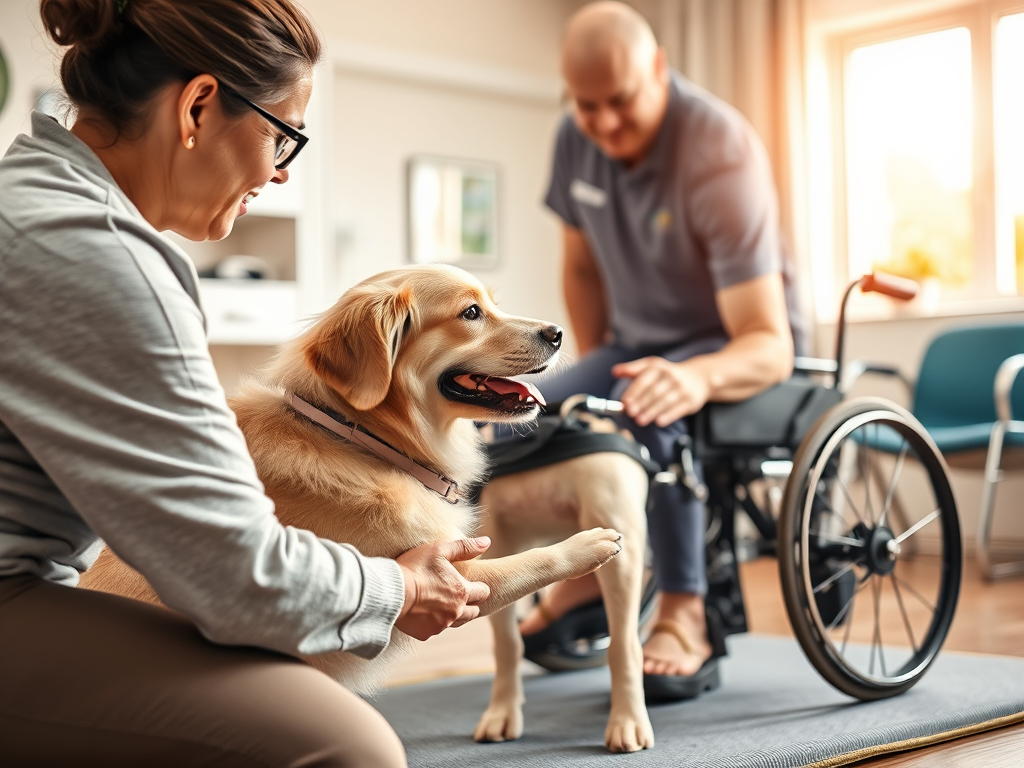
Dogs are proving to be powerful partners in brain injury rehabilitation, offering benefits across physical, emotional, and speech therapy alike.

A March 2026 story from the University of Colorado Health (UCHealth) system documented Alan Tay, a 71-year-old stroke survivor who credits his border collie Olay with driving his recovery. Working with a neurological physical therapist, Alan used dog agility training to rebuild endurance, coordination, and memory – ultimately winning a national canine competition just three months after his stroke. Emotionally, dogs combat the depression and isolation that frequently accompany brain injury. The above-mentioned UCHealth story also notes that Olay gave Alan the will to push through. An NIH-funded clinical trial confirmed that service dogs may meaningfully reduce PTSD symptoms in military members and veterans.

Dogs can assist with speech recovery, as well. Research shows that aphasia patients produce more verbal and nonverbal communication around therapy dogs, which respond to tone and gesture rather than specific words. Speech therapy in such a uniquely low-pressure and therapeutic environment is highly beneficial for language practice.

The bipartisan SAVES Act, which reached the Senate calendar in February 2026, would fund service dogs for veterans with TBI and PTSD. Introduced by Rep. Morgan Luttrell (TX) on April 2, 2025, H.R.2605 explicitly lists “Traumatic brain injury” as a covered condition, recognizing that a trained service dog can be “optimal for the veteran to manage the disability, condition, or diagnosis and live independently.” In March 2026, America’s VetDogs launched a national campaign during this Brain Injury Awareness Month that highlights service dogs’ life-changing impact for TBI survivors, particularly as it relates to counter-balance support and deep pressure therapy.

Caring for Man’s Best Friend

The benefits of dog ownership are well-known.  “Owning a dog can lift your mood or help you feel less stressed.”  For veterans and others with disabilities, the benefits of have a dog, specifically service dogs, go beyond this: dogs can serve by helping or even doing certain tasks that the handlers cannot do themselves.

However, what happens when the dog is the one with a brain injury?  Yes, dog’s skulls are harder than those of humans and surrounded by protective fluid, both of which make brain injuries less common in them.  (This is fortunate for animals who play/fight for fun, may bump into coffee tables as they chase after toys, etc.)  Canines though, can get brain injuries in the same ways that humans can: a car accident, a fall, etc.  The possible symptoms are also similar to those of humans:  bleeding from the nose or ears, coma, confusion, death, disorientation, facial weakness, lethargy, loss of consciousness, paralysis, pupil dilation, seizures, and stumbling.

Once these symptoms begin to occur what do you do?  For these members of the family, seeking medical help should be the next step.  Going to the local veterinarian is definitely the appropriate action, but there are also neuro-veterinarian specialists.  While this is a very limited profession, it’s not impossible to find.  It is fortuitous to an injured canine if their owner lives in Arizona, as they have access to this professional expertise.  (For example, Lucky, a dog found shot in the Arizona desert by border control officers earlier this year, was relatively fortunate that such help was available to him.)

One thing not to do is to abandon the dog.  This is what happened earlier this month to one dog in Sacramento, CA .  A woman, assuredly not the owner, found an injured dog on the streets and brought him to the Sacramento County Bradshaw Animal Shelter.  The dog, now named Thomas, has gone through multiple tests, yet the doctors still do not know what happened to him, just that it resulted in a severe brain injury.  “He is such a fighter… Baby Thomas wants everyone to know he is determined to heal, grow up and live a long, mischievous life!”  This and so many other examples show the need for Sacramento Counties non-profit T.E.A.M. – Teaching Everyone Animals Matter.  (As of March 16, the owner of Thomas has still not been found.  T.E.A.M. is now offering a $1,000 reward for information that leads to an arrest.)

(Most states have laws prohibiting animal cruelty.  For example, 3 weeks ago, a 27-year-old man was sentenced to 12 years in prison in Texas for abusing his boxer puppy.  Most of these states also have a law prohibiting animal abandonment.)