Tackles and Trauma: As Rugby Booms in U.S., Brain Science Sounds the Alarm

Major League Rugby logo with player running holding rugby ball

This past weekend’s Major League Rugby Championship underscored rugby’s arrival in Illinois. With over 50,000 youth registrations in 2024 and more than 370,000 children introduced to the sport through outreach programs in 21 states, the game is one of the fastest-growing youth sports in the country.

For those who have already sustained a brain injury, structured aerobic activity, like the non-contact formats of tag and flag rugby, offer genuine therapeutic benefit. The sport’s emphasis on teamwork and communication also supports psychosocial recovery, reducing isolation among those navigating long-term concussion symptoms.

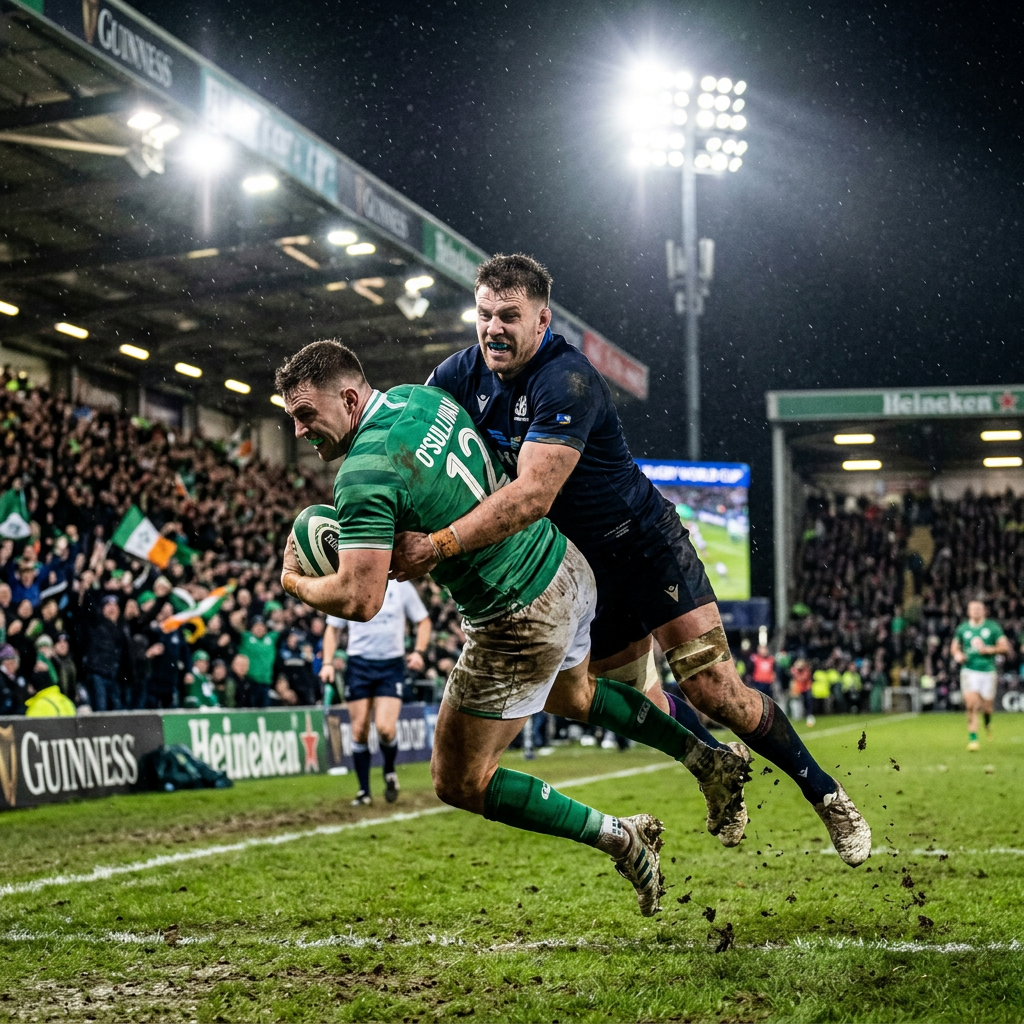
Irish rugby player O'Sullivan holding ball and scoring while tackled by a Scottish player in muddy conditions

Yet the neuroscience demands caution. A 2023 study in Acta Neuropathologica found CTE in 68% of donated former-rugby brains, with risk rising 14% per additional year of play. A 2023 NIH-backed study in JAMA Neurology found CTE in 41% of contact-sport athletes under 30. The CDC estimates up to 3.8 million sports concussions annually. Sen. Maggie Hassan (NH) has called for action, stating that “the full scope of these injuries often goes unrecognized.”

All-American Head Injury

Though many people outside of the southern and western United States may find this surprising, rodeo, involving such events as roping and barrel racing, is a top sport in America.  Beyond these events, when most Americans think of rodeo, they automatically think of one of its most dangerous events: bull riding.  Bull riding and similarly dangerous events, such as bareback riding and saddle bronc riding, can easily result in physical and cranial harm to the competitor.  Therefore, it seems quite discordant that on Saturday, March 18th, Lubbock, TX is having its 4th Annual Brain Injury Awareness Rodeo.

Protect your brain and put your skills to the test with this fun educational event!” says Lubbock Park and Recreation of the event, open to people 4 ages and older.  In fact, the “rodeo” isn’t actually a rodeo – it is a bike-riding educational event, to be held at Safety City, “a unique kid-sized town where school age children learn hands-on the rules of pedestrian, bicycle and traffic safety.”  In New Mexico, another such children’s “rodeo” event will be happening in Albuquerque.

Although calling the event a rodeo may misconstrue its purpose, the name does give notice to the connection between brain injury and rodeo.  Rodeo is one of the most dangerous of popular sports, with riders ten times more likely to be seriously injured than football players. Earlier this year, for example, a 25-year-old professional bull rider who had numerous concussions and suffered from depression and anxiety, likely signs of chronic traumatic encephalopathy (CTE), committed suicide.

However, as the headline of this article notes, rodeo is an All-American sport.  Therefore, it is often connected to politics.  At the public University of Arizona, Rodeo is a club sport.  At Fall Creek and Houston, TX elementary schools, they just planned a rodeo for their students.  And last February, Sylvester Turner, the mayor of Houston, TX, had a Rodeo Kickoff Breakfast, “to highlight the economic and social impact the Houston Livestock Show and Rodeo has on the city of Houston.”

It is not my place to comment on the legitimacy of Rodeo as a sport, as it is enjoyed by millions and its athletes are aware of its risks.  However, I find it counterintuitive for the government to promote a sport that actually injuries or kills some of its constituents.